10 Tips to Make Ground Beef Stick Together for Burgers
To make ground beef stick together for burgers, start by choosing meat with 15-20% fat content and keep it chilled until shaping. Handling the meat gently is key—avoid overmixing or overworking it to maintain the right texture.
Add a binding agent such as a bit of egg or breadcrumbs to enhance cohesion. Mixing in finely chopped, drained onions can also help the patties hold together better.
Press the patties firmly but not too tight, and create a small center indentation to prevent puffing up during cooking. Let the patties rest before grilling to ensure juicy, well-formed burgers that hold up on the grill.
Choose the Right Fat Content

Although it might seem minor, choosing the right fat content is essential for ground beef that sticks together well. When you pick ground beef with about 15-20% fat, you get enough moisture and binding without excess grease.
Choosing ground beef with 15-20% fat ensures juicy, well-bound patties without excess grease.
Too lean, like 90% lean or higher, and your patties can crumble because there’s not enough fat to hold the meat together.
On the other hand, if you go over 20% fat, your burgers might fall apart from excess oil leaking out.
The fat acts like a natural glue, helping the meat fibers bind during cooking. So, aim for that sweet spot around 80/20 ground beef.
It’s the perfect balance to keep your patties juicy and firm without being greasy or crumbly.
Keep the Meat Cold

Because cold meat holds together better, you should keep your ground beef chilled until you’re ready to shape it. Cold temperatures help the fat stay firm, which acts like a natural glue, binding the meat together.
When the meat warms up, the fat softens and becomes greasy, making it harder for the patties to hold their shape. To maintain the chill, keep your ground beef in the fridge until just before forming your patties.
If you need to handle the meat for a while, consider returning it to the fridge intermittently. You can also chill your mixing bowl and utensils beforehand to avoid warming the meat during preparation.
Keeping everything cold ensures your burgers stay intact during cooking and results in a juicier, better-textured patty.
Use Minimal Handling

Keeping your ground beef cold helps it hold together, but how you handle it also makes a big difference. When you form your patties, avoid overworking the meat. The more you press, squeeze, and mix, the more the fat breaks down, causing the beef to lose its natural binding properties.
Instead, gently shape the meat with your hands just enough to hold the patty form. Use light, even pressure and stop as soon as your patty holds together. Overhandling can make the burgers tough and crumbly when cooking.
Add a Binding Agent
When you want your ground beef to hold together better, adding a binding agent can make all the difference. Binding agents help the meat stick by filling gaps and creating a firmer texture.
Common options include breadcrumbs, egg, or even a bit of mustard. Just mix a small amount into your ground beef, about one egg or a quarter cup of breadcrumbs per pound of meat works well. These ingredients lock moisture in and improve the patty’s structure without changing the flavor too much.
Be careful not to overdo it, though; too much binder can make your burgers dense or dry. Adding a binding agent is a simple step that gives your burgers a better shape and holds them together during cooking, making your grilling experience much easier.
Incorporate Finely Chopped Onions
Another way to help ground beef hold together is by adding finely chopped onions. Onions release natural moisture and sugars, which act like a glue, helping the meat bind better. Plus, they add flavor and juiciness to your burgers.
To get the best results:
Use finely chopped onions, squeeze out moisture, and mix evenly for better binding and flavor.
- Use very fine pieces to avoid large chunks that can break apart.
- Squeeze out excess moisture after chopping to prevent sogginess.
- Mix the onions evenly into the meat for consistent binding.
- Use raw onions rather than cooked to keep the texture firm.
- Combine with your usual seasoning to enhance taste and structure.
Incorporating onions this way not only improves binding but also elevates your burger’s flavor profile, making every bite deliciously satisfying.
Use Breadcrumbs for Structure
Although ground beef naturally contains fat and moisture, adding breadcrumbs gives it extra structure and helps it hold together better. When you mix in a small amount of breadcrumbs, they absorb excess moisture and bind the meat particles. This prevents your patties from falling apart during cooking.
You don’t need much; just a handful per pound of ground beef is enough. Choose plain or seasoned breadcrumbs depending on your flavor preference. Be sure to mix them evenly into the meat so every bite benefits from the improved texture.
Breadcrumbs also keep your burgers juicy by locking in moisture, giving you a perfect balance between tenderness and firmness. Using breadcrumbs is an easy, effective way to create well-formed, delicious burgers every time.
Avoid Overmixing the Meat
Adding breadcrumbs helps bind your ground beef, but handling the meat carefully is just as important. Overmixing breaks down the proteins too much, making your burgers tough and crumbly instead of juicy and cohesive.
When you mix, aim to combine ingredients just until evenly distributed.
To avoid overmixing:
Use your hands gently, folding rather than kneading. Combine ingredients quickly, within a minute or two. Stop mixing once the meat looks uniform in color and texture.
Avoid adding too many ingredients that require heavy mixing. Chill the meat before shaping to keep it firm.
Press Patties Firmly but Gently
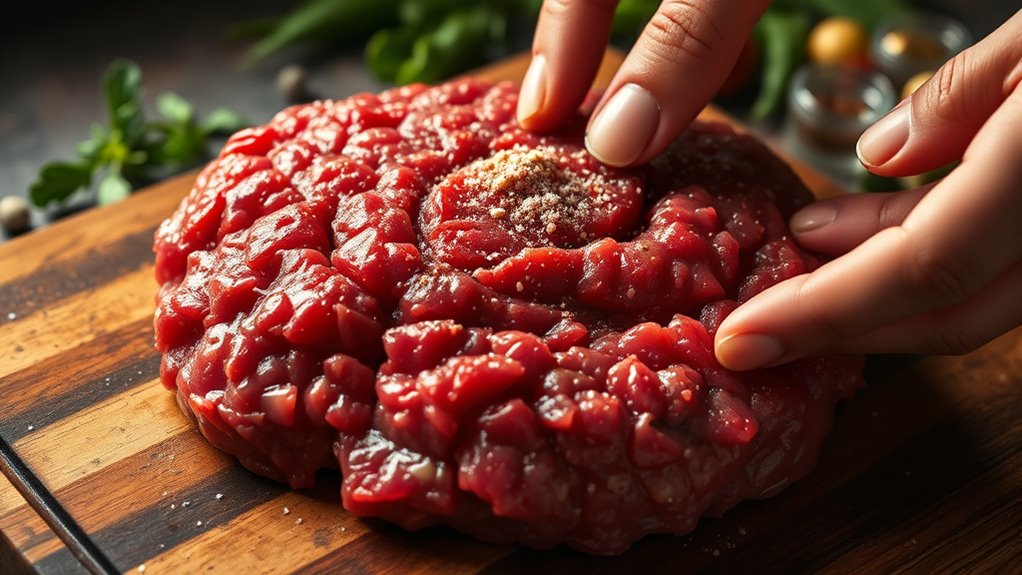
When you shape your patties, press them firmly enough to hold together but gently enough to keep the texture tender. Use your hands to compact the meat just until it sticks without squeezing out the juices.
If you press too hard, your burgers can turn dense and dry, losing that juicy bite you want. Aim for a balance. Apply steady, even pressure to shape the patty without overworking the meat.
This approach helps the proteins bind, so the patty keeps its shape on the grill or skillet. Remember, gentle pressing also prevents the fat from melting too quickly, which helps maintain moisture.
Create a Small Indentation in the Center
If you want your burger to cook evenly and hold its shape, create a small indentation in the center of each patty. This simple step prevents the burger from puffing up as it cooks, ensuring a flatter, juicier result. Here’s how to do it effectively:
Use your thumb or the back of a spoon to press a shallow dip in the middle. Make the indentation about half an inch deep and slightly wider than a quarter.
Don’t press too hard; just enough to create a visible groove. This technique helps heat distribute evenly, cooking the patty uniformly.
It also reduces the chance of the edges overcooking while the center remains underdone.
Let Patties Rest Before Cooking
Before you cook your patties, let them rest for a few minutes after shaping. This brief resting period allows the proteins in the ground beef to relax and bind together more firmly, helping the patties hold their shape on the grill or pan.
When you skip this step, the meat tends to shrink and crumble during cooking.
Place the formed patties on a plate or tray and let them sit at room temperature for about 5 to 10 minutes. This also helps the patties cook more evenly.
Avoid stacking them to prevent sticking.
Frequently Asked Questions
Can I Use Ground Turkey Instead of Ground Beef for Burgers?
Yes, you can use ground turkey for burgers. Just remember, turkey is leaner, so add moisture like an egg or breadcrumbs to help it stick and stay juicy.
Don’t forget seasoning for flavor!
How Long Should I Cook Burgers for Medium Doneness?
You should cook burgers about 4 minutes per side on medium-high heat for medium doneness. Use a meat thermometer to check for 140-145°F internally to guarantee they’re juicy and safely cooked.
What Are Some Good Toppings for Homemade Burgers?
Tantalizing toppings transform your tasty treat! Try crispy cheddar, tangy tomatoes, fresh lettuce, zesty pickles, sizzling sautéed onions, smoky bacon, and creamy avocado.
Mix and match to make your mouthwatering masterpiece truly memorable!
Can I Freeze Formed Burger Patties Before Cooking?
Yes, you can freeze formed burger patties before cooking. Just place them on a baking sheet and freeze until solid. Then transfer to a freezer bag. This keeps them fresh and ready whenever you want to grill.
How Do I Prevent Burgers From Shrinking During Cooking?
You can prevent burgers from shrinking by using ground beef with about 20% fat, avoiding overworking the meat, and making a small indentation in the center of each patty before cooking. This helps maintain shape and size.
Conclusion
Think of making burgers like building a sandcastle—if the sand’s too dry or you rush, it crumbles. When you keep your ground beef cold, add just a touch of binder, and handle it gently, your patties hold firm like a well-packed castle.
Remember, a little patience and care turn loose meat into juicy, sturdy burgers that stay together on the grill and your plate. With these tips, you’ll never face a falling-apart burger again!
By following these 10 tips to make ground beef stick together for burgers, you’ll create flavorful, perfectly formed patties every time.