How to Render Beef Tallow in the Oven in 10 Easy Steps
To render beef tallow in your oven, start by gathering fresh beef fat and trimming it into small, even pieces. Rendering beef tallow is a simple process that transforms raw fat into a versatile cooking ingredient. Preheat the oven to 250°F and spread the fat evenly in a roasting pan.
Let the fat slowly melt in the oven for 2-3 hours. Stir it every 10-15 minutes to prevent burning and ensure even rendering. Once the fat has fully melted and turned into liquid tallow, remove it from the oven.
Strain the liquid fat through cheesecloth into a heat-safe container to remove any solids. Allow the tallow to cool and solidify at room temperature. Store your homemade beef tallow properly in an airtight container, ready for cooking, frying, or baking.
Follow these steps carefully, and you’ll soon have flavorful, homemade tallow that enhances your recipes and provides a natural cooking fat.
Gather Quality Beef Fat

Before you begin rendering beef tallow, you need to gather high-quality beef fat. Look for fresh, clean fat that’s free from any strong odors or discoloration.
The best choice is usually leaf fat, found around the kidneys, or suet, the hard fat from around the kidneys and loins.
You can also use trimmings from butchered beef, but avoid fat that’s mixed with too much meat or connective tissue.
If you’re buying from a butcher, ask specifically for beef fat or suet. They often have it available.
Make sure to get enough fat to yield a good amount of tallow, typically a few pounds.
Quality fat ensures your tallow will have a pure, clean flavor and a smooth texture when finished.
Prepare Your Workspace and Equipment
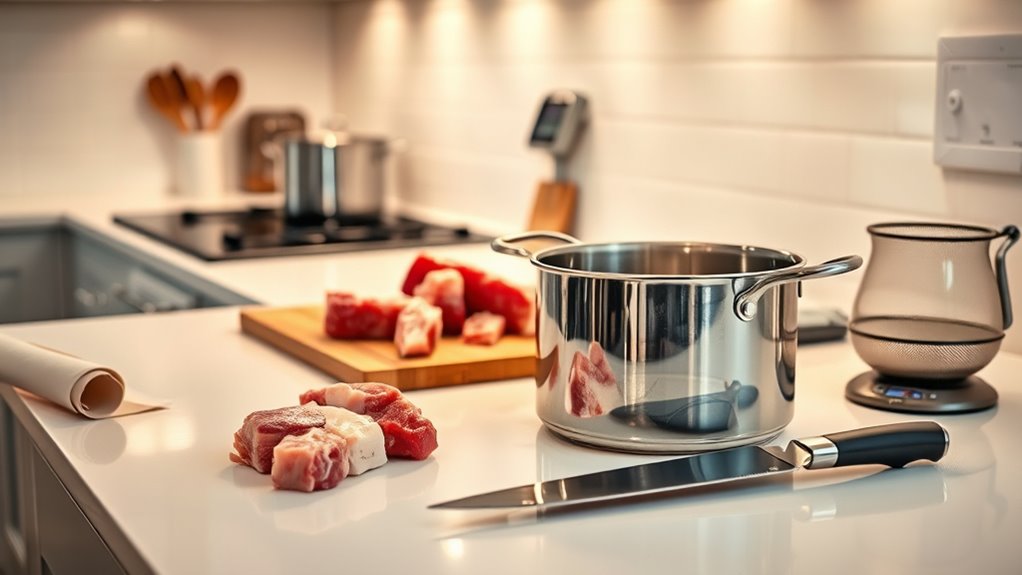
Since rendering beef tallow involves heat and hot fat, you’ll need to set up a clean, well-ventilated workspace with easy access to your stove and tools. Clear your countertop and make sure your oven is ready to use.
Open a window or turn on a fan to help with ventilation, as melting fat can produce strong odors. Gather essential equipment: a sturdy roasting pan or Dutch oven, a fine mesh strainer or cheesecloth, heatproof containers for storing the tallow, and oven mitts for safety.
Lay down paper towels or a silicone mat nearby to catch any drips. Having everything organized before you start will make the process smoother and safer, allowing you to focus fully on rendering your beef tallow.
Cut the Beef Fat Into Small Pieces

When you start cutting the beef fat, aim for small, uniform pieces to guarantee even melting during rendering. Using a sharp knife, trim off any meat or sinew, then slice the fat into manageable chunks.
Smaller pieces melt quicker and help prevent scorching. Here’s how to approach it:
Work on a clean cutting board to keep things safe and tidy.
Cut the fat into roughly 1-inch cubes for consistent rendering.
Use a sharp, sturdy knife to make clean cuts without slipping.
Keep your fingers clear and work slowly for safety and precision.
Preheat Your Oven to the Right Temperature
Although rendering beef tallow is a slow process, you’ll want to preheat your oven to a steady 250°F (120°C) to guarantee the fat melts evenly without burning. Setting the right temperature prevents scorching and helps maintain the pure flavor of the tallow. Avoid higher heat, which can cause uneven melting and a burnt taste.
Here’s a quick temperature guide for rendering fats:
| Temperature (°F) | Temperature (°C) | Effect |
|---|---|---|
| 225 | 107 | Slow, gentle melt |
| 250 | 120 | Ideal, even render |
| 275 | 135 | Faster, risk of burn |
Stick to 250°F for best results and a smooth, clean render.
Place the Beef Fat in a Roasting Pan
After setting your oven to the perfect 250°F (120°C), you’ll want to prepare the beef fat for rendering by placing it in a suitable roasting pan.
Choose a pan that’s sturdy and has enough space to hold the fat without overcrowding. Cutting the fat into evenly sized pieces helps it render more evenly.
Spread the pieces out in a single layer to allow heat to circulate properly.
Keep these tips in mind when placing your beef fat:
Use a heavy-duty roasting pan or baking dish
Cut fat into uniform chunks about 1-2 inches
Avoid stacking pieces on top of each other
Leave some space around the edges for airflow
These steps ensure your beef fat is ready for a slow, even render.
Render the Fat Slowly in the Oven
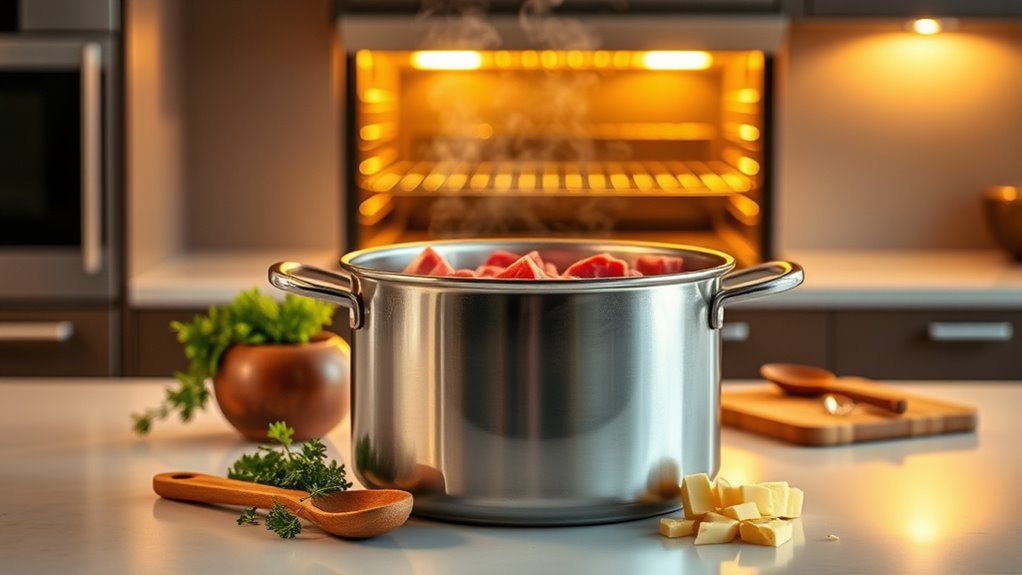
Since slow, steady heat is essential, set your oven to 250°F (120°C) and place the roasting pan with the beef fat inside. This low temperature allows the fat to melt gently, preventing burning and preserving flavor.
Expect the rendering process to take about 2 to 3 hours. As the fat melts, liquid tallow will separate from the solid bits.
| Time Elapsed | Temperature | Expected Result |
|---|---|---|
| 0-1 hour | 250°F | Fat begins softening |
| 1-2 hours | 250°F | Fat fully liquefies |
| 2-3 hours | 250°F | Solid bits brown, tallow clear |
Rendering fat slowly guarantees a clean, high-quality tallow perfect for cooking or storage.
Stir Occasionally to Prevent Burning
While the fat renders, you’ll want to stir it occasionally to keep the solid bits from sticking to the pan and burning. This simple step guarantees your tallow stays clean-tasting and avoids any burnt flavors.
Use a wooden spoon or heat-safe spatula to gently move the fat and solids around every 10-15 minutes.
Here’s why stirring matters:
- Prevents scorching and burnt particles
- Promotes even heat distribution
- Helps separate pure fat from solids
- Makes it easier to remove solids later
Strain the Rendered Tallow
Once the fat has fully rendered and the solids have settled, you’ll want to strain the tallow to remove any remaining impurities. Begin by preparing a fine mesh strainer or cheesecloth over a heatproof container.
Carefully pour the hot liquid fat through the strainer, catching leftover bits of meat or connective tissue. This step guarantees your tallow is smooth and pure, improving its shelf life and cooking quality.
Be cautious, as the tallow will be extremely hot.
If needed, strain it a second time for extra clarity. After straining, let the tallow cool slightly before moving on to storage.
Properly strained tallow looks clear and golden, free of any sediment or cloudiness, signaling it’s ready for use in your recipes.
Store the Tallow Properly
After straining your tallow, you’ll want to store it properly to maintain its freshness and quality. Proper storage prevents spoilage and keeps your tallow ready for use whenever you need it.
Here’s how to do it right:
Use an airtight container like a glass jar or metal tin to avoid exposure to air. Store the container in a cool, dark place such as your pantry or refrigerator. Label the container with the date you rendered the tallow to track its freshness.
If you want to keep it long-term, freezing is an excellent option; just thaw as needed.
Storing your tallow correctly guarantees it stays fresh, flavorful, and ready for your cooking or skincare projects.
Tips for Using Your Homemade Beef Tallow
Because homemade beef tallow is versatile and rich in nutrients, you can use it in many ways to enhance both your cooking and skincare routines. Use it as a high-heat cooking fat for frying or roasting, as it imparts a delicious, savory flavor.
Swap it for butter or oil in baking to add moisture and richness. You can also use it to grease pans, preventing sticking naturally.
For skincare, apply a small amount to dry skin or lips; it moisturizes deeply and helps heal chapped areas.
Remember to store tallow in a cool, dark place to maintain freshness. Always start with clean utensils to avoid contamination, and try small batches first to ensure you enjoy its taste and texture in your recipes.
Frequently Asked Questions
Can Beef Tallow Be Used for Skincare Purposes?
Yes, you can use beef tallow for skincare. It’s rich in vitamins and fatty acids that nourish and moisturize your skin naturally.
Just make sure it’s clean and rendered properly before applying it to avoid irritation.
How Does Beef Tallow Compare to Other Cooking Fats Nutritionally?
Ever wonder which fat fuels your body best? Beef tallow packs a rich mix of saturated and monounsaturated fats, offering stable cooking benefits and vitamins A, D, E, and K, making it nutritionally unique compared to many oils.
Is Beef Tallow Suitable for High-Heat Frying?
Yes, you can use beef tallow for high-heat frying since it has a high smoke point around 400°F (204°C). It won’t break down easily, making it great for crispy, flavorful fried foods.
What Are the Environmental Benefits of Using Beef Tallow?
Imagine turning kitchen scraps into liquid gold. Using beef tallow reduces waste and lowers your carbon footprint. You’re recycling animal fat that might otherwise be discarded, making your cooking greener and more sustainable with every crispy bite.
Can Rendered Beef Tallow Be Used in Soap Making?
Yes, you can use rendered beef tallow in soap making. It creates a hard, long-lasting bar with a creamy lather.
Just make sure your tallow is well-rendered and clean for the best soap quality.
Conclusion
Now that you’ve mastered rendering beef tallow in your oven, you’re holding liquid gold in your hands. With just a bit of patience and care, you’ve transformed simple fat into a versatile kitchen treasure.
Remember, like any good recipe, practice makes perfect—don’t be afraid to experiment with your tallow in cooking and baking. Store your rendered beef tallow well to maintain its quality and flavor.
Enjoy the rich, flavorful boost that homemade beef tallow brings to your meals, making your dishes more delicious and nutritious. Rendering beef tallow in the oven is a simple process that rewards you with a valuable cooking fat.