What Makes Beef Loin Top Sirloin a Good Steak?
You’ll appreciate beef loin top sirloin steak because it strikes a great balance of rich, bold flavor and moderate tenderness. This popular cut comes from the beef loin section, known for its quality and taste. It comes from a well-muscled but less exercised part of the cow, giving you a satisfying chew without toughness.
Moderate marbling adds juiciness and enhances meatiness without excess fat. Plus, it’s lean and packed with protein and nutrients. Keep exploring, and you’ll discover how to pick, season, and serve this versatile steak perfectly.
Understanding the Cut: Beef Loin Top Sirloin

Although it might seem complex at first, understanding the beef loin top sirloin cut is straightforward once you know its location and qualities. You’ll find this cut near the rear of the cow, just behind the short loin and above the round.
It’s a well-muscled, lean section that offers a balance between tenderness and flavor. When you pick up a top sirloin, you’re getting a cut that’s firmer than ribeye but more tender than other sirloin parts.
Because it comes from a less exercised area, it maintains good texture without being tough. This cut is versatile, suitable for grilling, roasting, or pan-searing, making it a popular choice for those who want quality and value in one steak.
Flavor Profile of Top Sirloin

When you bite into a top sirloin steak, you’ll notice a bold, beefy flavor that stands out without being overwhelming. This cut delivers a rich, savory taste thanks to its moderate marbling, which enhances the natural meatiness without excess fat.
You’ll also detect subtle nutty and slightly sweet undertones that develop when cooked properly, especially over high heat. The flavor balances well with a variety of seasonings and marinades, making it versatile for grilling, pan-searing, or broiling.
Unlike fattier cuts, top sirloin maintains a clean, straightforward beef essence, letting you savor pure, meaty goodness every time. Its distinct taste makes it a favorite for those who want robust flavor without the heaviness of more marbled steaks.
Texture and Tenderness Factors

Because top sirloin comes from a well-exercised muscle group, its texture is firmer than more tender cuts like filet mignon, but it still offers a satisfying chew that many steak lovers appreciate. You’ll notice that its moderate tenderness comes from a balance between muscle use and connective tissue content.
How you cook it can enhance or diminish this texture. Here’s a quick look at factors influencing texture and tenderness:
| Factor | Description | Effect on Texture |
|---|---|---|
| Muscle Usage | More exercised muscles | Firmer, chewier |
| Connective Tissue | Moderate amount present | Slight resistance |
| Cooking Method | Grilling, broiling | Maintains tenderness |
| Aging Process | Dry or wet aging | Softens muscle fibers |
| Slice Thickness | Thicker vs. thinner cuts | Affects chewiness |
Marbling and Its Impact on Taste
Understanding the texture and tenderness of top sirloin sets the stage for appreciating how marbling influences its flavor. When you look closely, marbling refers to the thin streaks of fat running through the lean meat.
This fat melts during cooking, enhancing juiciness and imparting a rich, buttery taste to each bite. You’ll notice that steaks with more marbling tend to have a deeper, more complex flavor profile.
It also helps keep the meat moist, preventing it from drying out even if cooked beyond medium rare.
While top sirloin generally has moderate marbling, the balance between lean meat and fat is what makes it both flavorful and satisfying without being overly greasy.
Nutritional Benefits of Top Sirloin
Top sirloin offers a powerful nutritional punch, making it a smart choice for anyone focused on a balanced diet. You’ll get a great source of high-quality protein, essential for muscle repair and overall health.
This cut is also relatively lean compared to other steaks, so it provides plenty of nutrition without excessive fat. You’ll find important vitamins and minerals like iron, zinc, and B vitamins, which support energy production and immune function.
Plus, top sirloin contains creatine and conjugated linoleic acid (CLA), which have been linked to improved muscle strength and fat metabolism.
Best Cooking Methods for Top Sirloin
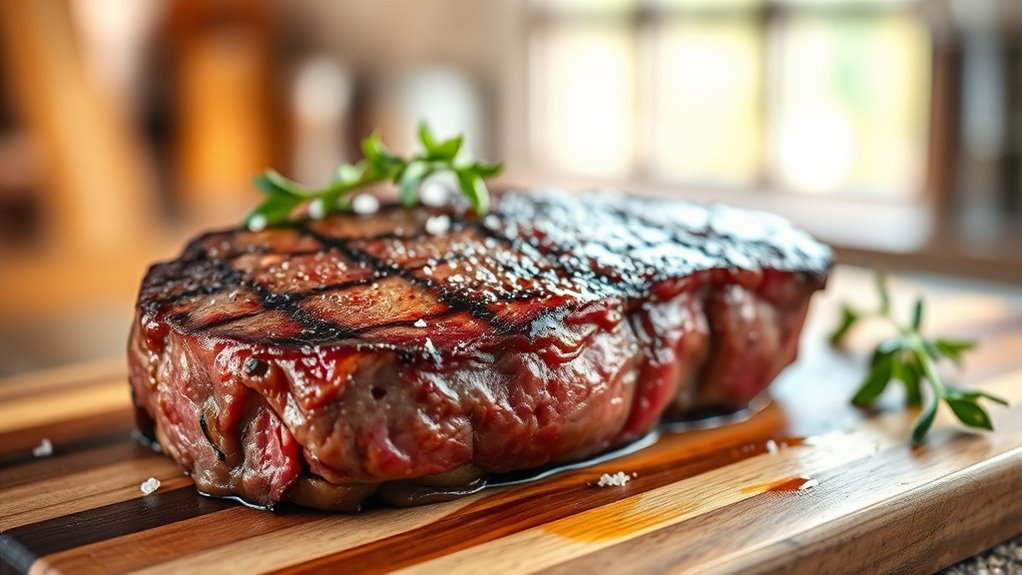
To make the most of the nutritional benefits in top sirloin, you’ll want to choose the right cooking methods that preserve its flavor and tenderness. Grilling is a great option. It quickly sears the outside, locking in juices while giving you that delicious char.
Pan-searing followed by finishing in the oven also works well, allowing you to control the internal temperature precisely. Avoid overcooking, as top sirloin can become tough if cooked too long.
Rest your steak for a few minutes after cooking to let the juices redistribute.
If you prefer, marinating the steak beforehand can enhance tenderness and add flavor. Overall, quick, high-heat methods best showcase top sirloin’s natural qualities without sacrificing its lean, flavorful profile.
Comparing Top Sirloin to Other Steak Cuts
While you might enjoy the rich flavor and lean texture of top sirloin, it’s helpful to see how it stacks up against other popular steak cuts. Understanding these differences helps you choose the right steak for your meal.
- Ribeye: Known for its marbling and tenderness, ribeye offers a richer, juicier bite than top sirloin but usually comes at a higher price and more fat content.
- Filet Mignon: This cut is the most tender but less flavorful than top sirloin. If you want buttery softness, filet is ideal, but it lacks the beefy punch you get from sirloin.
- New York Strip: It balances tenderness and flavor well, sitting between ribeye and top sirloin, making it a versatile choice if you want a bit of both.
Tips for Selecting Quality Top Sirloin
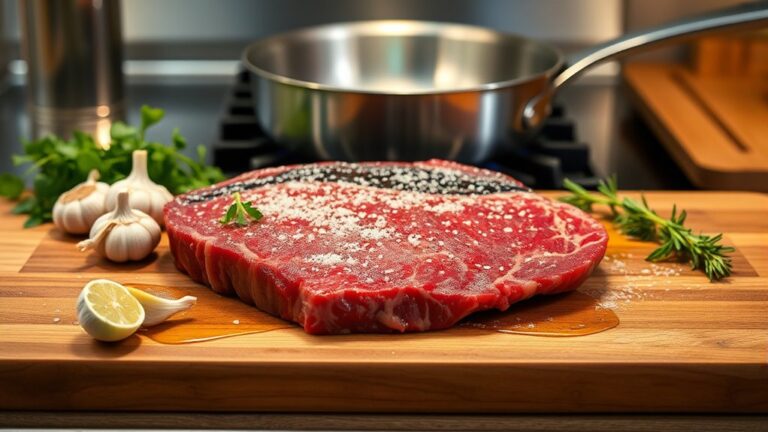
Choosing the right cut is only part of the equation; knowing how to spot quality top sirloin guarantees you get the best flavor and texture. Look for steaks with a bright, rich red color. This indicates freshness. Avoid cuts with dark spots or excessive browning.
Check the marbling: fine streaks of fat throughout the meat enhance juiciness and tenderness. Don’t pick overly fatty pieces; a moderate amount of marbling is ideal.
Also, make sure the meat feels firm to the touch, not mushy.
Pay attention to the thickness; steaks about one to one-and-a-half inches thick cook evenly and retain moisture.
Ultimately, buy from reputable sources where meat is properly stored and handled. Following these tips ensures you select a top sirloin that’s flavorful and satisfying every time.
How to Season and Marinate Top Sirloin
A well-seasoned and properly marinated top sirloin can transform a simple cut into a flavorful centerpiece. To get the best flavor, start with these steps:
- Season generously: Use kosher salt and freshly ground black pepper to enhance the beef’s natural taste. Don’t be shy. Season both sides evenly.
- Choose your marinade: Combine olive oil, garlic, soy sauce, and a bit of acidity like lemon juice or vinegar. This mixture tenderizes and adds depth without overpowering the steak.
- Marinate time: Let the steak sit in the marinade for at least 30 minutes, but no more than 4 hours to maintain texture.
If short on time, the seasoning alone still packs a punch.
Follow these tips, and your top sirloin will be juicy, tender, and packed with flavor.
Serving Suggestions and Pairings
Once your top sirloin is perfectly seasoned and marinated, it’s time to think about how you’ll serve it. You can slice it thin for fajitas or serve it whole as a classic steak.
Pair it with grilled vegetables like asparagus or bell peppers to add a smoky contrast. For starch, roasted potatoes or a creamy risotto complement the beef’s rich flavor.
Don’t forget a fresh salad with a tangy vinaigrette to cut through the meat’s richness. When it comes to drinks, a bold red wine such as Cabernet Sauvignon or Malbec enhances the steak’s depth.
If you prefer beer, opt for a robust stout or porter. These pairings elevate your top sirloin experience with balanced flavors and textures.
Frequently Asked Questions
Where Is Top Sirloin Sourced on the Cow?
You find top sirloin on the cow’s upper rear section, right behind the ribs. It comes from the loin primal, offering a balance of tenderness and flavor, perfect for grilling or roasting.
How Long Can You Store Top Sirloin in the Freezer?
Like a trusty time capsule, you can store top sirloin in the freezer for up to 6 to 12 months.
Just make sure to wrap it tightly so it stays fresh and full of flavor.
Is Top Sirloin Suitable for Grilling or Pan-Searing?
Yes, you can grill or pan-sear top sirloin easily. It cooks quickly, stays juicy, and develops great flavor with high heat.
Just don’t overcook it, and you’ll enjoy a tender, delicious steak every time.
What Are Common Side Dishes Served With Top Sirloin?
You’ll often find top sirloin paired with roasted vegetables, mashed potatoes, or a fresh salad. Grilled asparagus, garlic bread, and sautéed mushrooms also complement its rich flavor perfectly, making your meal balanced and satisfying.
Can Top Sirloin Be Used in Recipes Other Than Steak?
You can definitely use top sirloin beyond steak. It’s a versatile gem in your kitchen. Slice it thin for stir-fries, cube it for kabobs, or brown it for hearty stews, making every meal a flavor adventure.
Conclusion
When it comes to choosing a steak, you know that “you get what you pay for.” Beef loin top sirloin offers a great balance of flavor, tenderness, and marbling without breaking the bank.
Its lean yet juicy texture makes it perfect for a variety of dishes. By selecting quality cuts and seasoning them right, you’ll enjoy a delicious, nutritious steak that stands out.
Give top sirloin a try—you won’t be disappointed! The beef loin top sirloin is an excellent choice for steak lovers seeking flavor, tenderness, and value in every bite.