Are Beef Mince and Ground Beef the Same?
You might notice “beef mince” and “ground beef” mean the same thing—finely chopped beef—but the term varies by region, with “beef mince” common in the UK and “ground beef” in the US. These keywords highlight the regional terminology differences.
The main difference often lies in fat content, which affects texture and flavor. Both beef mince and ground beef come from various cuts of beef. Your choice depends on cooking methods and nutritional preferences.
Keep exploring to uncover how these variations impact your recipes and culinary results. Understanding these differences can help you select the best option for your meals.
Definitions of Beef Mince and Ground Beef

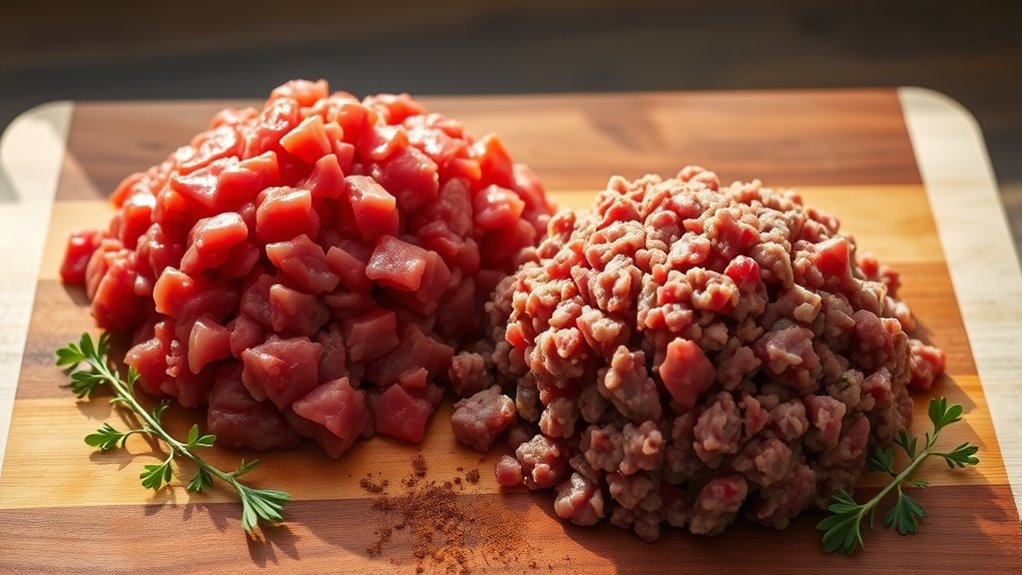
What exactly do the terms beef mince and ground beef mean? Both refer to beef that’s been finely chopped or processed through a grinder. When you buy beef mince, you’re getting beef cut into tiny pieces, often using a meat grinder or a knife.
Ground beef is essentially the same. It’s beef that’s been ground up to a fine texture. The main point is that both describe beef prepared by breaking it down into smaller bits, making it easier to cook and mix with other ingredients.
You’ll find these terms used interchangeably in many places, as the product itself doesn’t differ substantially. So, whether you pick beef mince or ground beef, you’re getting a similar form of beef ready for recipes like burgers, meatballs, or sauces.
Regional Differences in Terminology

Although beef mince and ground beef refer to the same product, the terms you see on packaging often depend on where you are. In countries like the UK, Australia, and New Zealand, “beef mince” is the common term you’ll find.
Meanwhile, in the United States and Canada, “ground beef” is the preferred label. This difference in terminology can sometimes cause confusion if you’re shopping or cooking internationally, but rest assured, both terms describe beef that’s been finely chopped or ground.
If you travel or follow recipes from different regions, knowing these naming conventions will help you pick the right product without second-guessing. So, don’t let the wording trip you up. Just focus on the quality and intended use of the meat.
Differences in Meat Cuts Used

When you buy beef mince or ground beef, the specific cuts of meat used can vary depending on the producer and region. You might find that beef mince commonly uses trimmings from various primal cuts, such as chuck, round, or sirloin, combined to achieve a balance of flavor and affordability.
Ground beef, particularly in the U.S., often comes from similar cuts but may emphasize leaner or more uniform parts, like chuck or brisket. Producers sometimes mix different cuts to meet certain quality or fat standards, but the main goal is to deliver consistent taste and texture.
Knowing which cuts are used helps you understand the flavor profile and cooking behavior of the mince or ground beef you choose.
Variations in Fat Content and Texture
Since fat content greatly influences both taste and texture, understanding its variations in beef mince and ground beef can help you choose the right option for your recipe. Beef mince often comes with a higher fat percentage, which gives it a richer flavor and a softer, more tender texture.
Ground beef, on the other hand, typically offers a range of fat contents, from lean to extra fatty, depending on the blend of cuts used. If you want a juicier result, choosing ground beef with higher fat works well. But for leaner, firmer dishes, go for lower-fat options.
Keep in mind that fat also affects cooking behavior. Higher fat content means more shrinkage and grease, while leaner meat holds shape better but can dry out faster.
Common Uses in Cooking
Understanding the fat content differences helps explain why beef mince and ground beef suit different recipes.
Recognizing fat content differences clarifies why beef mince and ground beef are better for certain recipes.
When you use beef mince, which often has a higher fat content, it’s perfect for dishes that benefit from extra juiciness and flavor, like meatballs, burgers, or bolognese sauce. The fat keeps the meat tender and moist during cooking.
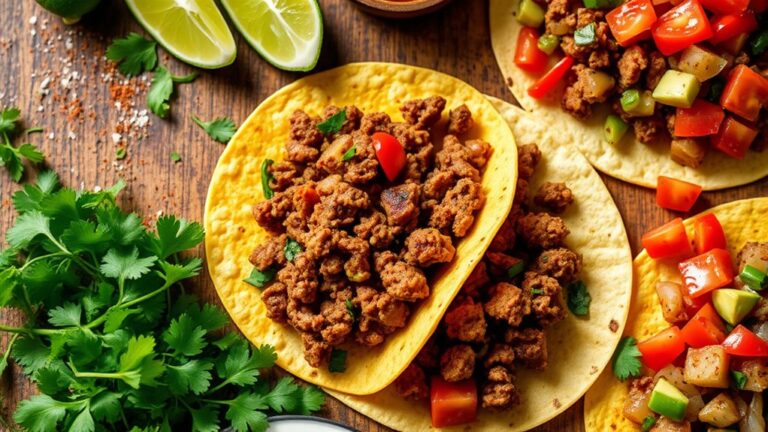
On the other hand, ground beef usually has leaner options, making it ideal for recipes where you want less grease, such as chili, tacos, or casseroles. You can also adjust cooking methods accordingly.
Grilling suits higher-fat mince, while leaner ground beef works well in slow-cooked meals.
Knowing these uses helps you pick the right type for your dish, ensuring the best taste and texture every time.
Nutritional Comparisons
Although beef mince and ground beef often come from the same cut, their nutritional profiles can vary considerably, especially in fat content and calorie count. When you compare the two, keep in mind that the key differences usually depend on the fat percentage and how finely the meat is processed.
Here’s what you should consider:
- Fat Content: Ground beef often comes labeled with specific fat percentages (e.g., 80/20), while beef mince might have variable fat levels depending on the supplier.
- Calories: Higher fat content means more calories, so choose based on your dietary goals.
- Protein: Both offer similar protein amounts, making them good sources of essential amino acids.
Understanding these differences helps you pick the right option to meet your nutritional needs.
Tips for Choosing the Right Option
When selecting between beef mince and ground beef, consider how you’ll use the meat and your dietary priorities. If you want leaner meat for health reasons, look for ground beef labeled with a lower fat percentage, as beef mince can vary more widely.
For recipes needing a specific texture, like meatballs or burgers, choose the option with consistent grind size. Always check the label for added ingredients or preservatives, especially if you prefer all-natural options.
Freshness matters too—buy from trusted sources and use the meat quickly or freeze it. Remember, cooking methods affect flavor and fat content, so pick the meat that suits both your recipe and your taste preferences.
This way, you’ll get the best results and enjoy your meal more.
Frequently Asked Questions
Can Beef Mince or Ground Beef Be Frozen Safely?
Yes, you can freeze beef mince or ground beef safely. Just wrap it tightly in plastic wrap or freezer bags, label it, and use it within 3-4 months to maintain freshness and avoid freezer burn.
How Long Does Ground Beef Last in the Refrigerator?
Ground beef lasts about 1 to 2 days in your refrigerator when stored properly. To keep it fresh longer, make sure it’s tightly wrapped or in an airtight container.
Always check for spoilage before cooking.
Are There Any Health Risks Associated With Eating Raw Ground Beef?
You absolutely shouldn’t risk eating raw ground beef. It’s like inviting a bacterial army into your stomach. Harmful bacteria like E. coli and Salmonella can cause severe illness, so always cook it thoroughly to stay safe.
Can Beef Mince Be Substituted With Other Meats in Recipes?
Yes, you can substitute beef mince with other meats like pork, lamb, or turkey in recipes. Just remember each meat has a different flavor and fat content, so you might need to adjust cooking times and seasoning accordingly.
What Is the Best Way to Cook Ground Beef Evenly?
To cook ground beef evenly, you should use medium heat, break it into small pieces, and stir frequently. This helps it brown uniformly and prevents clumps, ensuring every bite is perfectly cooked and flavorful.
Conclusion
Whether you call it beef mince or ground beef, understanding their differences helps you make better cooking choices.
Did you know ground beef in the U.S. can contain up to 30% fat, while beef mince in the UK often has less? This affects flavor and healthiness, so pick according to your recipe and dietary needs.
Next time you shop, use these tips to choose the perfect option for your meal. Remember, knowing whether you need beef mince or ground beef can make all the difference in your cooking results.