How Long to Pressure Can Vegetable Beef Soup in 7 Essential Steps
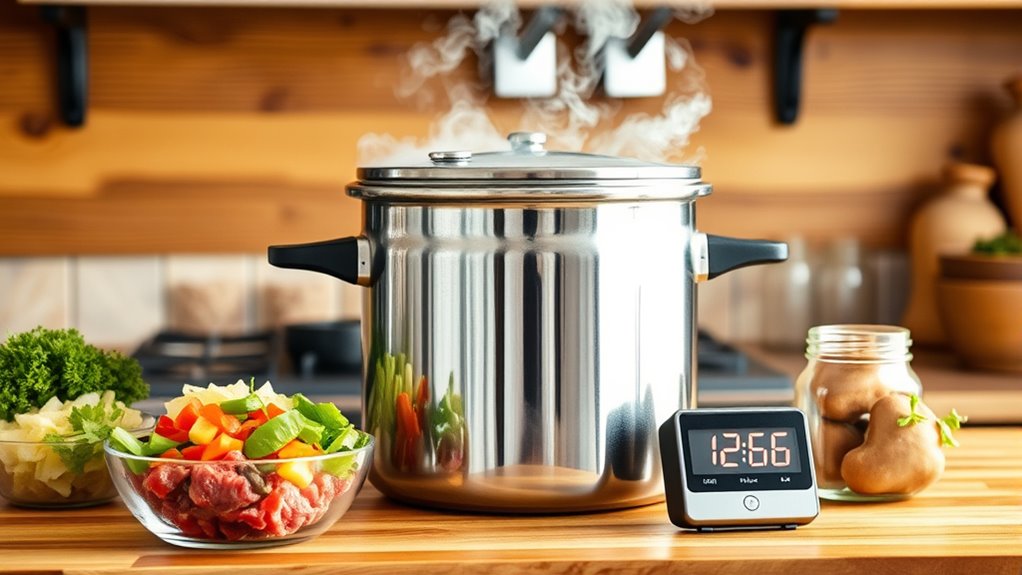
To pressure can vegetable beef soup safely and effectively, begin by cooking and cooling the soup thoroughly. This initial step ensures the flavors meld and the soup reaches the proper temperature for canning.
Next, fill sterilized jars with the cooled soup, leaving a 1-inch headspace to allow for expansion during processing. Using a pressure canner equipped with reliable gauges is essential for maintaining the correct pressure.
Adjust the pressure to 10-15 psi, depending on your altitude, to ensure safe preservation. Process quart jars for about 75 minutes, with additional time added as elevation increases.
Before sealing, vent steam from the canner for 10 minutes to expel air pockets. Allow the pressure to drop naturally after processing to prevent jar breakage.
Once sealed, store the jars in a cool, dark place to maintain quality. Following these detailed steps will help you perfect the pressure canning process for vegetable beef soup.
Prepare Your Vegetable Beef Soup for Canning
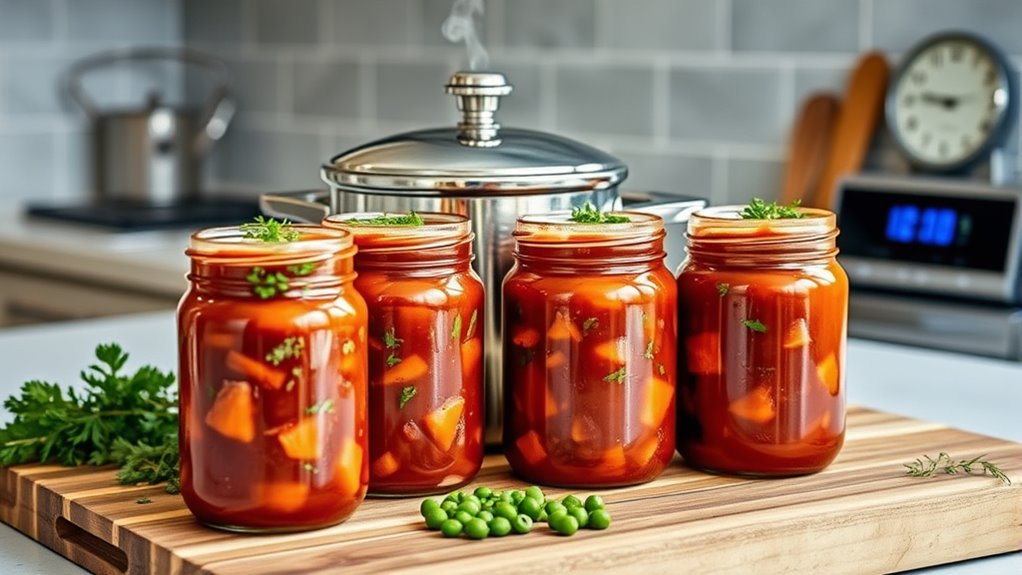
Before you begin canning, make sure you’ve cooked your vegetable beef soup thoroughly and let it cool slightly. This step is vital because partially cooked ingredients can affect the final texture and safety of your canned soup.
Cook your vegetable beef soup fully and cool slightly before canning for best texture and safety.
Next, skim off any fat or foam from the surface to prevent spoilage. Remove large bones or tough pieces that won’t soften during canning.
Stir the soup well to evenly distribute the beef, vegetables, and broth. Fill your sterilized jars, leaving about an inch of headspace to allow for expansion.
Wipe the rims clean to guarantee a proper seal. Finally, place the lids and screw bands on finger-tight.
Now, your soup is ready to be safely pressure canned for long-term storage.
Choose the Right Pressure Canner and Equipment
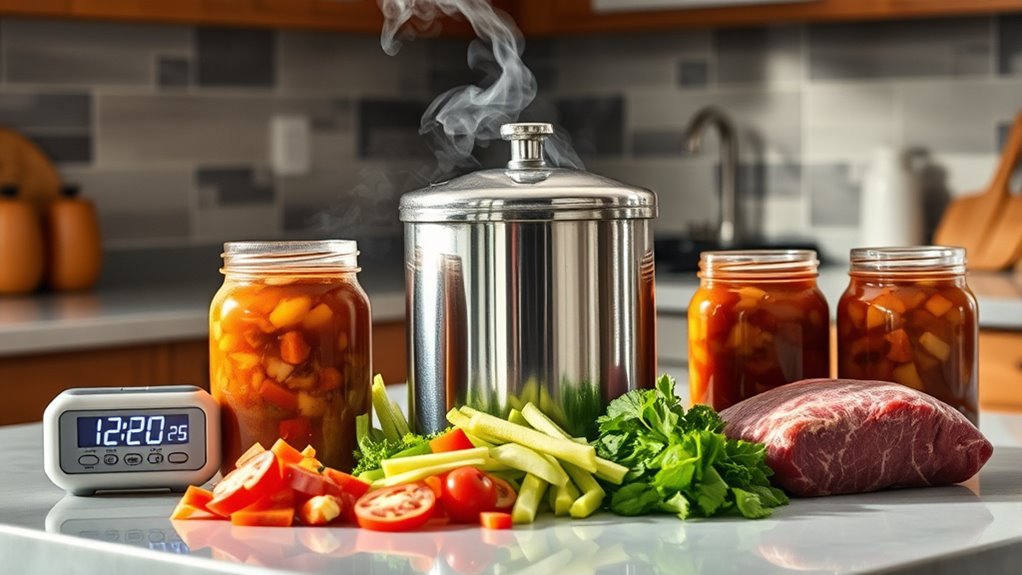
While selecting your pressure canner, consider the size and type that best fits your kitchen and canning needs. You’ll want a canner that holds at least four quart jars to make the process efficient.
Decide between a weighted gauge canner, which regulates pressure automatically, or a dial gauge canner, which requires you to monitor pressure manually but offers precise control.
Make sure your canner’s seals and valves are in good condition to maintain safety.
Besides the canner, gather the right equipment: sturdy jars, new lids, and a wide-mouth funnel for easy filling.
A jar lifter and magnetic lid lifter help handle hot jars safely.
Choosing the right gear ensures your vegetable beef soup is canned safely and efficiently every time.
Fill Jars Correctly and Leave Appropriate Headspace
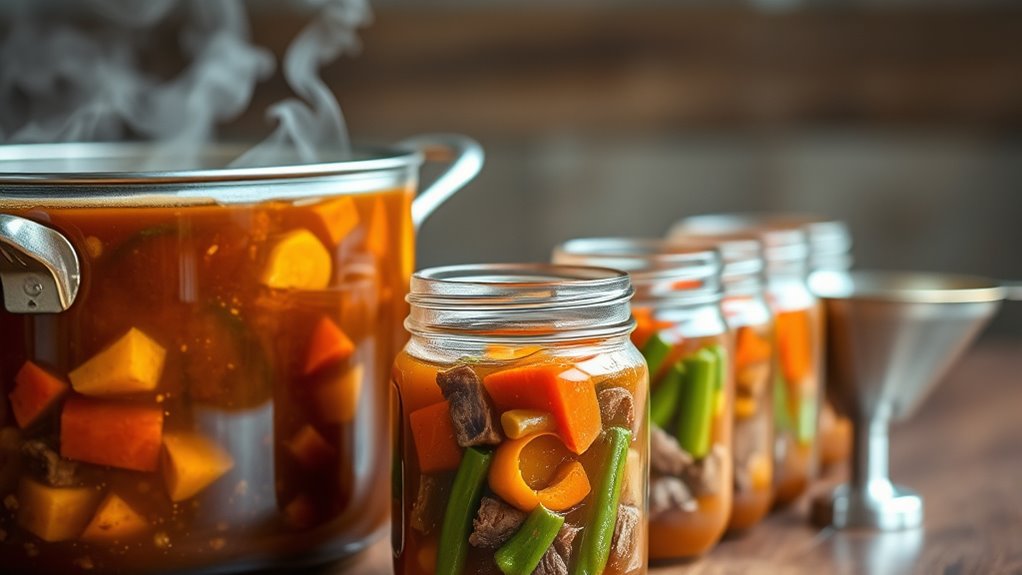
Since proper jar filling and headspace are essential for safe canning, you’ll want to pack your vegetable beef soup jars carefully to prevent spoilage. Start by ladling the hot soup into sterilized jars, leaving the recommended 1-inch headspace at the top.
This space allows for food expansion during processing and creates a proper vacuum seal as the jars cool.
Avoid overfilling, which can cause the contents to bubble out and interfere with sealing. After filling, remove any trapped air bubbles by running a non-metallic spatula around the jar’s inside.
Wipe the jar rims clean with a damp cloth to guarantee a tight seal when you place the lids.
Following these steps will help maintain the soup’s quality and safety during pressure canning.
Set the Pressure Canner to the Recommended Pressure Level
When you set your pressure canner, make sure to adjust it to the recommended pressure level for vegetable beef soup, which varies depending on your altitude. This step is vital because the pressure level ensures that the soup reaches a high enough temperature to kill harmful bacteria and safely preserve it.
Check your canner’s manual or trusted canning resources to find the exact pressure setting for your altitude. Most recipes call for 10 to 15 pounds of pressure.
Once the canner reaches the desired pressure, maintain it steadily throughout the processing time.
Avoid letting the pressure drop or spike, as inconsistent pressure can affect the safety and quality of your canned soup. Proper pressure adjustment sets the foundation for safe, long-lasting preservation.
Determine the Processing Time Based on Jar Size and Altitude
Because processing time varies with jar size and altitude, you need to adjust it carefully to guarantee your vegetable beef soup is safely preserved. Larger jars require longer processing times to ensure heat penetrates thoroughly.
At the same time, higher altitudes reduce boiling points, demanding longer canning periods.
Here’s what to take into account:
- Use 10-minute increments for adjusting processing times between pint and quart jars.
- Add 5 minutes for every 1,000 feet above 1,000 feet elevation.
- Consult official canning guidelines or your pressure canner’s manual for specific times.
- Keep a reliable altimeter or local elevation guide handy for accuracy.
Start and Monitor the Pressure Canning Process
Although pressure canning might seem complex at first, you’ll find it straightforward once you get started. Begin by placing your filled jars into the pressure canner on the rack, ensuring they don’t touch each other or the canner’s sides.
Secure the lid tightly and start heating the canner on medium-high heat. Allow steam to vent for 10 minutes to remove air, then close the vent or place the weight on the vent pipe.
Adjust the heat to maintain the recommended pressure, monitoring the gauge closely. Keep an eye on the pressure throughout the processing time, adjusting the burner as needed to maintain steady pressure.
Don’t rush this step. Accurate pressure is essential for safe, effective canning of your vegetable beef soup.
Safely Depressurize and Store Your Canned Soup
Once the processing time ends, turn off the heat and let the pressure drop naturally. Don’t rush opening the lid; sudden depressurization can be dangerous. Wait until the pressure gauge reads zero or the weighted gauge stops rocking before removing the lid.
After opening, carefully lift the jars out using a jar lifter and place them on a towel to cool.
To safely store your canned soup:
Check each jar’s seal by pressing the center of the lid; it shouldn’t flex. Label jars with the date and contents for easy identification. Store in a cool, dark, and dry place to maintain quality. Use within one year for best flavor and safety.
Following these steps ensures your vegetable beef soup stays safe and delicious.
Frequently Asked Questions
Can I Use Fresh or Frozen Vegetables for Vegetable Beef Soup Canning?
You can use fresh or frozen vegetables for canning vegetable beef soup, but fresh is preferable to guarantee texture.
Make sure to follow proper pressure canning guidelines to ensure safety and preserve flavor effectively.
How Do I Adjust Seasoning After Canning Vegetable Beef Soup?
You can’t adjust seasoning inside the jar after canning, so add less salt before processing.
After opening, taste and add more salt, pepper, or herbs as needed to suit your preference before reheating.
What Are the Best Beef Cuts for Making Vegetable Beef Soup?
You’ll want to use chuck roast or stew beef for vegetable beef soup. They’re flavorful, tender when cooked long, and hold up well during pressure canning, giving your soup a rich, hearty taste you’ll love.
Can I Substitute Beef Broth With Vegetable Broth in the Recipe?
You can definitely substitute beef broth with vegetable broth; it’ll change the flavor but keep it hearty and comforting.
If you’re aiming for a vegetarian twist, this swap works perfectly without sacrificing taste or warmth.
How Long Can Canned Vegetable Beef Soup Be Stored Safely?
You can safely store canned vegetable beef soup for up to one year in a cool, dark place.
After opening, keep it refrigerated and consume within 3-4 days to maintain freshness and prevent spoilage.
Conclusion
Now that you’ve mastered these seven essential steps, your vegetable beef soup will be canned so perfectly, it might just win awards for preservation wizardry! With the right pressure, timing, and care, you’re not just storing soup—you’re creating a culinary masterpiece that defies spoilage and time.
By following the proper pressure canning techniques, you ensure your vegetable beef soup stays safe and flavorful for months to come. The key is maintaining the correct pressure and processing time during canning to eliminate harmful bacteria.
So go ahead, impress your friends and family with your canning prowess; you’ve turned a simple soup into a sealed jar of pure, savory magic! Remember, pressure canning vegetable beef soup is the secret to long-lasting, delicious meals ready whenever you crave them.