How Many Calories Are in an Italian Beef Sandwich?
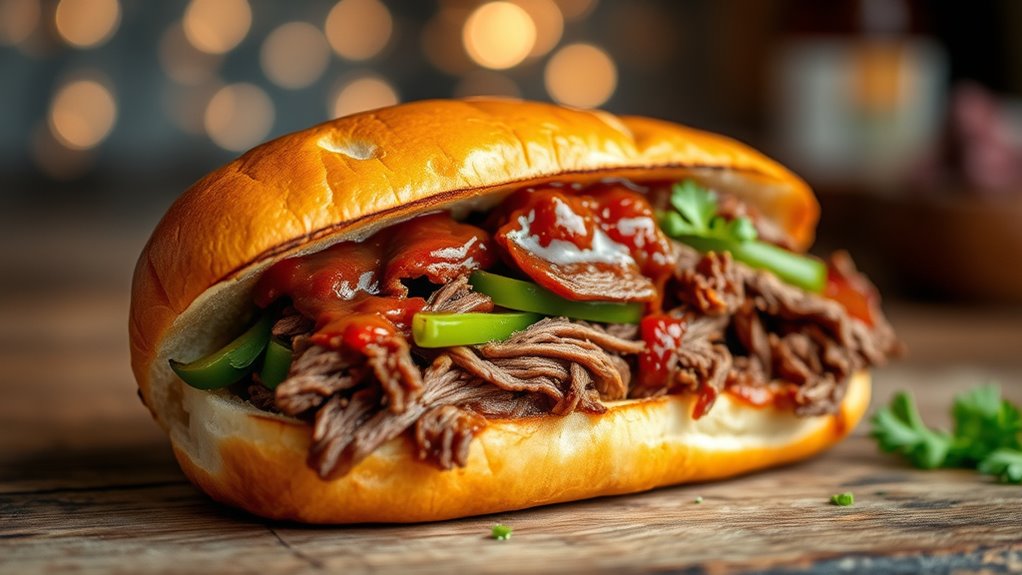
You’re probably eating between 400 and 700 calories when you have an Italian beef sandwich. The calorie count depends on the size, bread type, and toppings you choose. Thinly sliced beef and cheese add calories, while giardiniera and peppers add minimal amounts.
Dipping in au jus also increases calories but not by much. Opting for lighter bread or fewer extras can help if you want to cut calories. There’s more to understand about how ingredients and preparation impact its nutrition.
Typical Calorie Range of an Italian Beef Sandwich
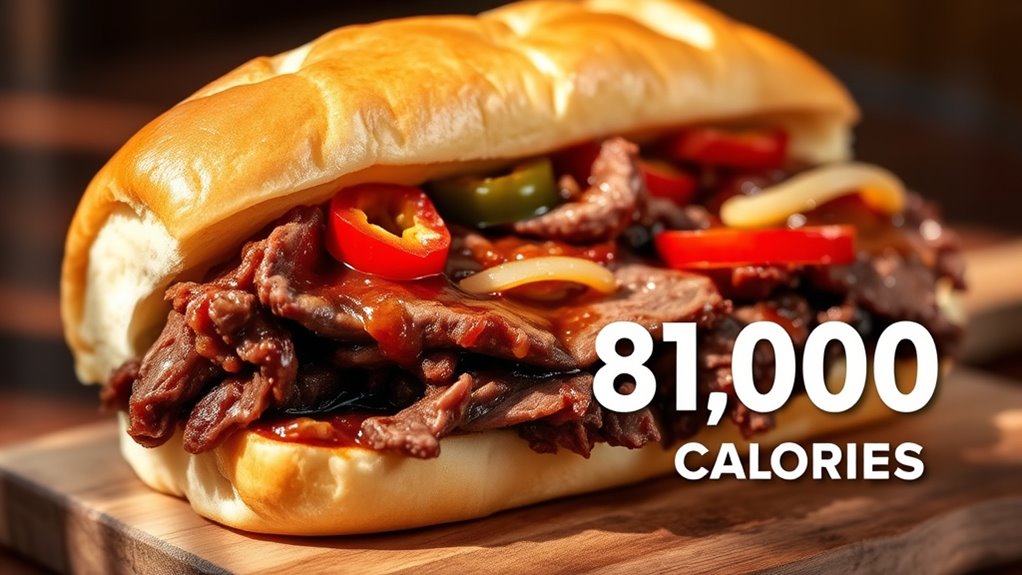
Although the exact calorie count can vary, you’ll typically find that an Italian beef sandwich contains between 400 and 700 calories. When you order one, the calories depend on portion size and preparation style.
If you choose a smaller sandwich or hold back on extras, you’ll stay toward the lower end of that range. On the other hand, piling on cheese, giardiniera, or dipping the sandwich in au jus can push the calories higher.
You’ll also notice that different restaurants may serve varying amounts of beef and bread, which changes the calorie total. Knowing this range helps you make smarter choices without sacrificing flavor.
Keep this in mind when you want to enjoy an Italian beef sandwich while managing your daily caloric intake.
Key Ingredients Contributing to Calories
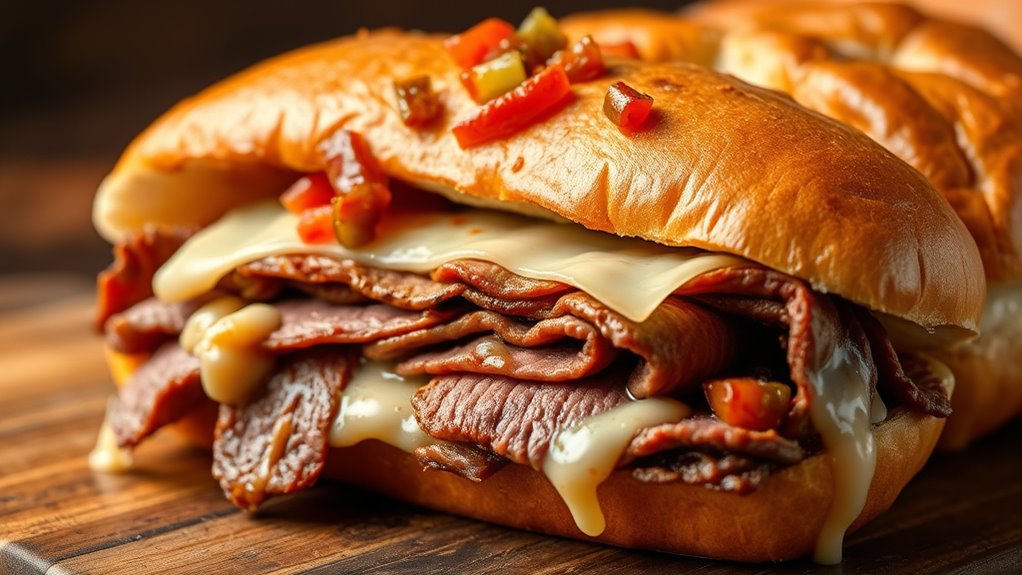
Several key ingredients drive the calorie content in an Italian beef sandwich. The main component, thinly sliced roast beef, provides a significant portion of the calories due to its protein and fat content. The cooking method and fat level in the beef can vary, affecting the total calories.
Cheese is often added, which boosts calories with its fat and protein. Giardiniera or sweet peppers add flavor but contribute minimal calories. The au jus dipping sauce, made from beef drippings, adds richness and calories, especially if you dunk your sandwich.
While these toppings and sauces enhance taste, they also increase calorie intake more than you might expect. Understanding these ingredients helps you gauge how rich or light your sandwich might be before considering bread choices.
Impact of Bread Choice on Calorie Count
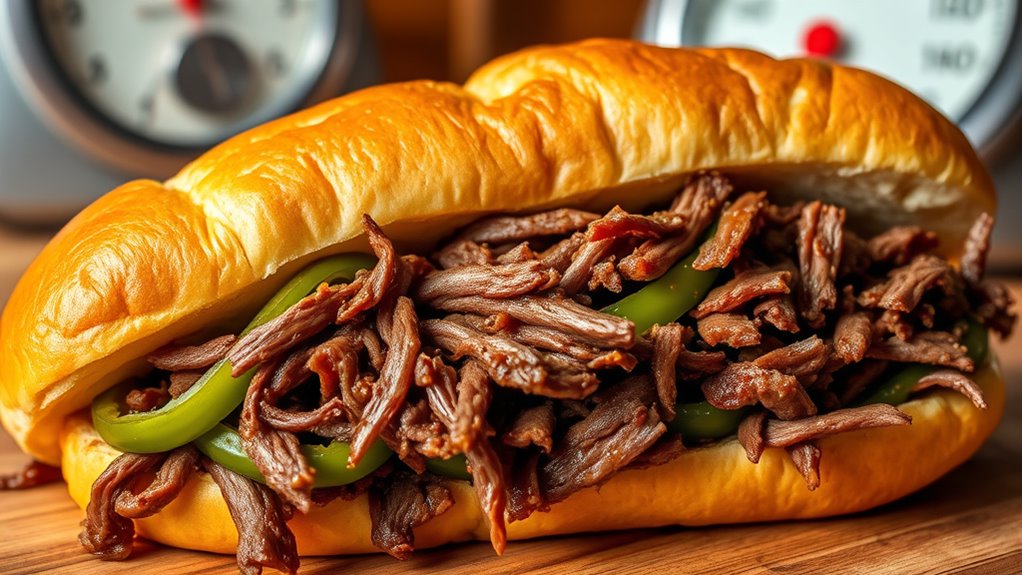
When you choose the bread for your Italian beef sandwich, you directly affect its calorie count. Different breads vary in size, density, and ingredients, which all influence the total calories.
For example, a traditional Italian roll packs more calories than a lighter hoagie bun or a whole wheat option. If you want to cut calories, choosing a smaller or lower-calorie bread makes a noticeable difference without sacrificing taste.
| Bread Type | Approximate Calories per Roll |
|---|---|
| Italian Roll | 200 |
| Hoagie Bun | 150 |
| Whole Wheat Roll | 170 |
| Ciabatta | 220 |
Selecting your bread wisely helps you manage calorie intake while enjoying your sandwich.
Role of Au Jus and Its Caloric Value
How much does the au jus add to your Italian beef sandwich’s calorie count? Au jus, the savory beef broth served alongside, can add a modest number of calories, typically around 20 to 50 per serving, depending on the portion size and how much you dip or pour over your sandwich.
Since it’s primarily made from beef drippings and seasonings, it’s relatively low in fat but adds flavor and moisture. Keep in mind, if you soak your bread heavily in au jus, the calories can add up more than you expect.
However, compared to the meat and bread, au jus contributes a smaller fraction of the overall calorie load. So, while it enhances taste, its caloric impact remains moderate unless consumed in large amounts.
How Toppings Affect Total Calories
Although the meat and bread form the base of your Italian beef sandwich, the toppings you add can considerably change its calorie count. Adding cheese, for example, boosts calories markedly. Just a slice of provolone can add around 100 calories.
Peppers, whether sweet or spicy, contribute minimal calories but pack flavor and texture. If you pile on giardiniera, a tangy pickled vegetable mix, expect a slight calorie increase due to oil content.
On the other hand, skipping high-calorie condiments like mayonnaise or creamy dressings keeps your sandwich lighter. Mustard and hot sauce offer flavor without many calories.
Comparing Homemade vs. Restaurant Versions
Since homemade Italian beef sandwiches give you full control over ingredients and portions, you can tailor the calorie content to fit your needs more easily than with restaurant versions. When you make it yourself, you can choose leaner cuts of beef, control the amount of oil, and limit high-calorie toppings.
On the other hand, restaurants often use generous portions and richer sauces to enhance flavor, which can quickly increase calories.
Consider these emotional points:
- You feel empowered crafting your sandwich exactly how you want it.
- You avoid surprise calorie overloads that come with restaurant servings.
- You enjoy freshness and quality control, making it healthier and tastier.
- You save money while still indulging in a favorite comfort food.
Homemade lets you savor without guilt, unlike many restaurant versions.
Tips for Reducing Calories Without Sacrificing Flavor
When you want to cut calories in your Italian beef sandwich, you can still keep the bold flavors that make it so satisfying. Start by choosing leaner cuts of beef and trimming visible fat before cooking.
Use low-sodium beef broth for dipping to reduce sodium and calorie content without losing that rich taste.
Swap out traditional white sandwich rolls for whole grain or lighter options to save calories and add fiber.
Load up on fresh or pickled vegetables like peppers and giardiniera to enhance flavor and texture without extra fat.
Skip or limit cheese and mayo-based sauces, opting instead for mustard or a light vinaigrette.
These simple swaps help you enjoy a flavorful Italian beef sandwich that fits your calorie goals perfectly.
Nutritional Benefits Beyond Calories
Beyond just counting calories, an Italian beef sandwich offers several nutritional benefits that can support your overall health. When you choose this flavorful meal, you’re not only satisfying hunger but also fueling your body with essential nutrients.
- High Protein Content: The beef provides a good amount of protein, which helps build and repair muscles.
- Iron Boost: Beef is rich in iron, vital for energy levels and preventing fatigue.
- Vitamin B12: This sandwich delivers vitamin B12, important for brain health and red blood cell production.
- Vegetable Nutrients: Adding peppers or giardiniera introduces vitamins and antioxidants that support your immune system.
Frequently Asked Questions
What Is the History of the Italian Beef Sandwich?
You’ll find the Italian beef sandwich originated in Chicago during the Great Depression, created by Italian immigrants who slow-roasted beef, sliced it thin, and served it on Italian bread with flavorful juices and peppers.
Where Did the Italian Beef Sandwich Originate?
You’d never guess, but the Italian beef sandwich came from Chicago, not Italy. Created by Italian immigrants, it’s an ironic twist—a hearty American creation with Italian roots.
It’s become a beloved Chicago classic you’ll crave.
What Are Traditional Side Dishes Served With Italian Beef?
You’ll often find Italian beef sandwiches paired with crispy fries, tangy giardiniera, or a side of mild peppers.
Sometimes, a simple salad or pickles complement the rich, savory flavors perfectly, enhancing your meal experience.
How Should an Italian Beef Sandwich Be Properly Stored?
Like a treasure, your Italian beef sandwich deserves careful care. Wrap it tightly in foil or plastic wrap, then refrigerate within two hours.
Eat within 3-4 days, or freeze for up to two months to keep it fresh.
Are There Regional Variations of the Italian Beef Sandwich?
Yes, you’ll find regional variations of the Italian beef sandwich, especially around Chicago. Some add giardiniera, others use sweet peppers, and the bread or dipping style might change, reflecting local tastes and traditions.
Conclusion
When you bite into an Italian beef sandwich, you’re savoring more than just flavors—you’re balancing calories, choices, and cravings. Remember, the bread, toppings, and au jus all play their part in the calorie dance.
But don’t worry, you can still enjoy this classic without tipping the scale. Like a well-composed symphony, small tweaks can keep the taste alive while lightening the load.
So, go ahead—indulge wisely and relish every flavorful note. Understanding how many calories are in an Italian beef sandwich helps you make better choices and enjoy this delicious meal guilt-free.