How Much Beef Comes From a Quarter Cow?
You can expect about 100 to 150 pounds of beef from a quarter cow, giving you a variety of cuts like steaks, roasts, and ground beef without taking up too much freezer space. Understanding how much beef comes from a quarter cow helps you plan your meals and storage efficiently.
Since a whole cow typically weighs between 1,000 and 1,200 pounds before processing, your quarter share comes from roughly one-fourth of the carcass weight. Factors like breed and butchering style can affect your total yield.
Here’s what else you should know to make the most of your purchase.
Understanding the Size of a Quarter Cow
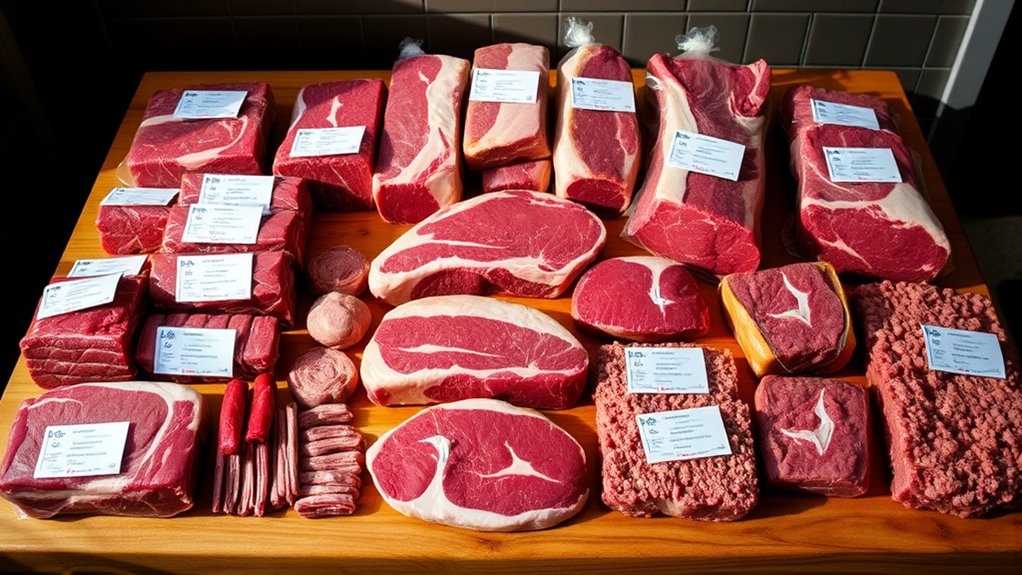
Although a quarter cow might sound like a small portion, it actually provides a substantial amount of beef. When you buy a quarter cow, you’re fundamentally getting one-fourth of the total meat from a processed animal.
This means you’ll receive various cuts—steaks, roasts, ground beef—all in smaller quantities but still enough to feed your family for months.
You’ll typically get around 100 to 150 pounds of beef, depending on the animal’s size and butchering choices.
This size works well if you want a steady supply of quality meat without committing to a half or whole cow. It’s a practical option that balances quantity with manageable storage and usage, giving you variety without overwhelming your freezer space.
Average Weight of a Whole Cow
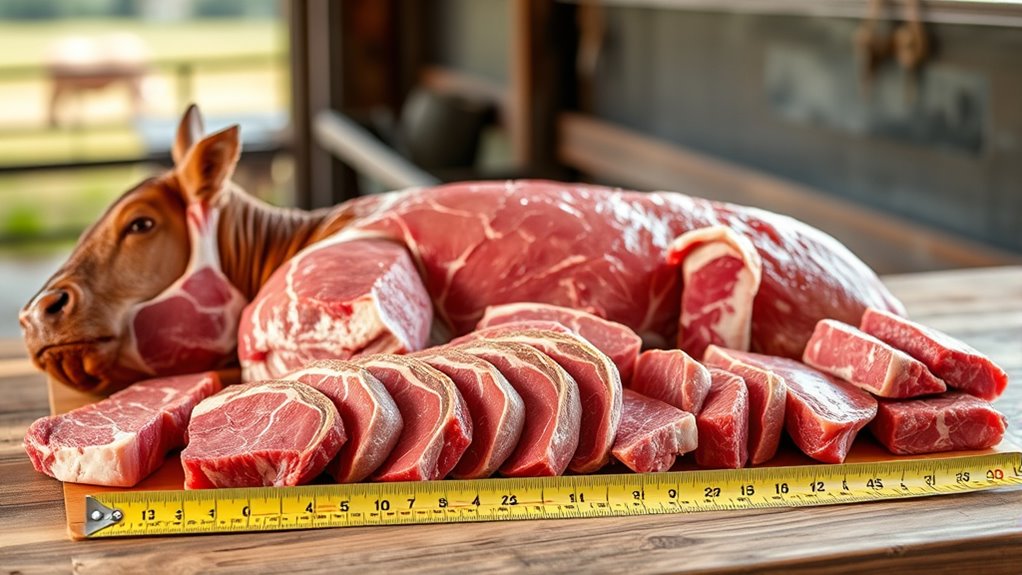
A whole cow typically weighs between 1,000 and 1,200 pounds before processing. When you consider this, it’s important to know that this weight includes bones, organs, and other parts you won’t eat.
The actual amount of meat you get is much less, as the cow loses weight during slaughter and butchering. Depending on the breed, age, and diet, the weight can vary, but this range gives you a solid baseline.
Knowing the average weight helps you estimate how much beef you’ll receive if you purchase a whole or partial cow. This insight is essential before you delve into figuring out the specific cuts and portions, ensuring you have realistic expectations about your beef supply.
Calculating the Weight of a Quarter Cow
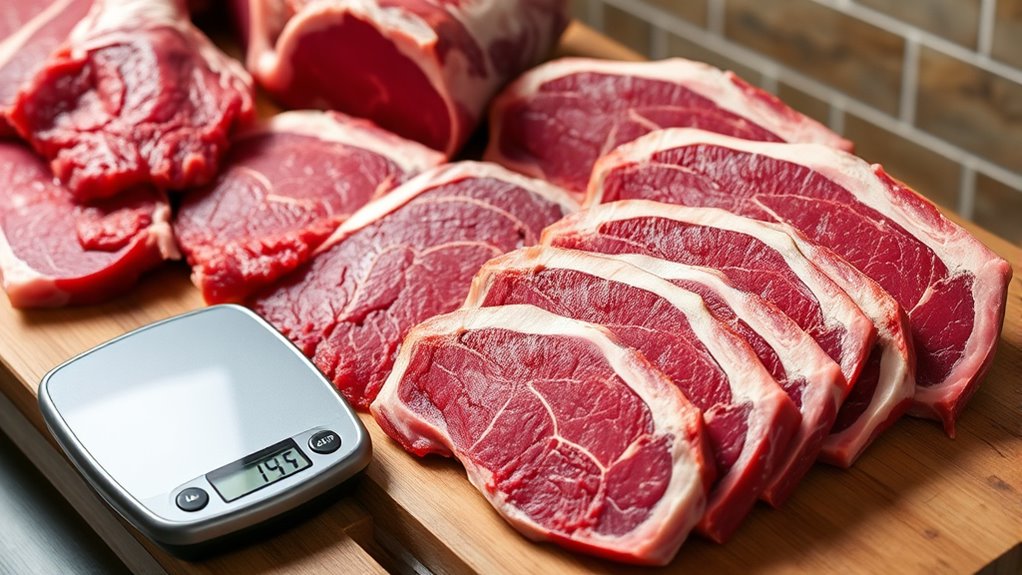
When you buy a quarter cow, you’re fundamentally purchasing about 25% of the total carcass weight after processing. To calculate the weight of that quarter, start with the hanging weight, the carcass weight post-slaughter but before butchering.
For example, if the hanging weight is 600 pounds, your quarter cow would weigh roughly 150 pounds hanging weight. Keep in mind, this weight includes bones and fat that will be trimmed during butchering.
Once processed, expect the final edible meat to be less than this initial number. So, if you’re planning your freezer space or meal prep, knowing the quarter cow’s weight helps set realistic expectations for how much beef you’ll actually get.
This simple calculation keeps you informed about your meat purchase.
Factors Affecting the Yield of Beef
Understanding the weight of a quarter cow is just the starting point; several factors influence how much usable beef you’ll actually receive. First, the breed and age of the cow affect muscle-to-bone ratio, impacting the final yield. Younger animals usually have more tender meat but slightly less weight.
Second, the butchering method matters. How the processor trims fat, removes bone, and prepares cuts changes your usable meat quantity.
Third, shrinkage during aging and storage reduces weight because moisture evaporates.
Finally, the amount of fat and bone varies between individual cows, so two quarters from similar-sized cows might yield different amounts of beef.
Knowing these factors helps you set realistic expectations and plan your meat storage and usage accordingly.
Breakdown of Cuts From a Quarter Cow
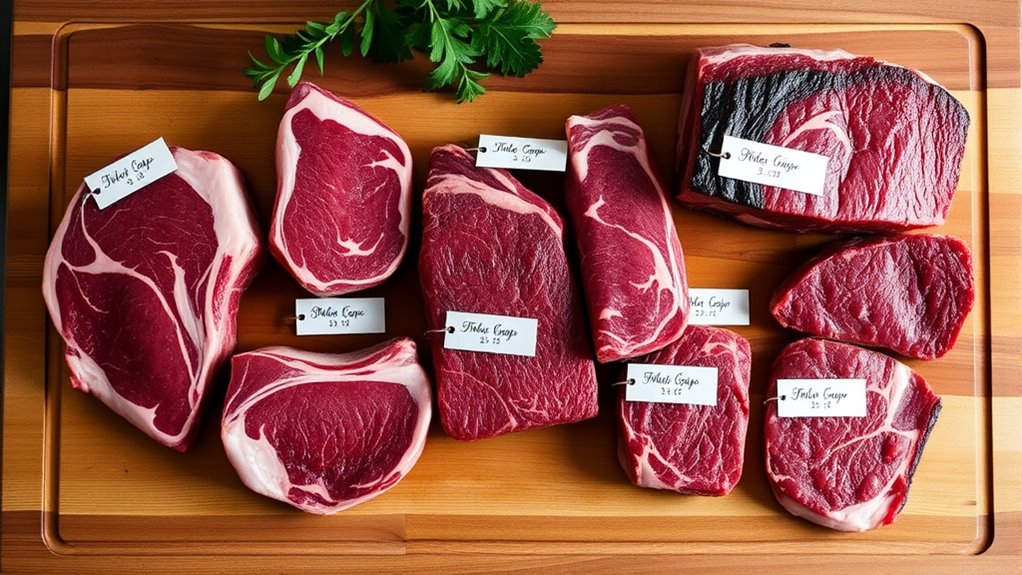
Although the exact cuts can vary, you’ll typically receive a variety of beef portions from a quarter cow, including steaks, roasts, ground beef, and stew meat.
From the front quarter, expect cuts like chuck roast, shoulder steak, and stew meat. These are perfect for slow cooking or grinding.
Front quarter cuts like chuck roast and shoulder steak are ideal for slow cooking or making ground beef.
The hindquarter usually provides sirloin steaks, round roasts, and ground beef. You’ll also get smaller cuts like brisket, ribs, and short ribs, depending on how the butcher divides the meat.
Usually, about 60% of the quarter is made up of steaks and roasts, while the rest is ground beef or stew meat.
Knowing this breakdown helps you plan meals and storage effectively, ensuring you make the most of your quarter cow purchase.
How Butchering Choices Impact Your Meat Selection
Since butchering methods vary, your meat selection can change considerably based on the choices you and your butcher make. You can opt for traditional cuts or request custom portions tailored to how you cook.
For example, asking for thicker steaks means fewer pieces but more substantial servings.
Choosing to grind more trim results in extra ground beef, while keeping larger roasts gives you versatile cooking options.
You might also decide between bone-in or boneless cuts, affecting both weight and cooking time.
Communicating your preferences clearly guarantees you get the balance of cuts that fits your lifestyle and recipes. Remember, your butcher can guide you on what works best to maximize value and minimize waste, so don’t hesitate to ask questions and plan ahead.
Packaging and Freezing Tips for Bulk Beef
When you buy beef in bulk, proper packaging and freezing are essential to preserve flavor and prevent freezer burn. Start by portioning the meat into meal-sized packages.
Wrap each piece tightly in plastic wrap, then cover it with heavy-duty aluminum foil or place it in vacuum-sealed bags. Removing as much air as possible prevents oxidation and moisture loss.
Label each package with the cut and date so you can easily track freshness.
Freeze the meat flat to maximize space and speed up freezing, which helps maintain quality. Store your beef at 0°F (-18°C) or lower, and try to use it within six months for the best taste.
Following these steps ensures your bulk beef stays delicious and ready for your meals.
Cost Benefits of Buying a Quarter Cow
Choosing to buy a quarter cow can save you a significant amount of money compared to purchasing individual cuts at retail prices. When you buy in bulk, the price per pound drops dramatically because you’re cutting out the middleman.
Plus, you get a variety of cuts, so you’re not just paying for steaks but also roasts, ground beef, and stew meat, making your dollars stretch further.
You’ll also avoid frequent trips to the store, which can add up in time and fuel costs.
While the upfront cost might seem high, the long-term savings and convenience balance it out.
Just be sure you have enough freezer space and a plan to use all the meat, so none goes to waste.
Frequently Asked Questions
How Long Does Beef From a Quarter Cow Stay Fresh in the Freezer?
Beef from a quarter cow stays fresh in your freezer for about 6 to 12 months if properly wrapped and sealed. Make sure you use airtight packaging to prevent freezer burn and keep the quality at its best.
Can I Share a Quarter Cow Purchase With Friends or Family?
Yes, you can share a quarter cow purchase with friends or family. It’s a smart way to split costs, storage, and portion sizes.
Just coordinate the pick-up and payment to keep things smooth and fair for everyone.
What Are the Best Cooking Methods for Different Quarter Cow Cuts?
You’ll want to grill steaks, braise tougher cuts like chuck, and slow-cook brisket or short ribs. Roasting works great for roasts, while ground beef is perfect for burgers or meatballs.
How Does Grass-Fed Beef Differ From Grain-Fed in a Quarter Cow?
Grass-fed beef is leaner, with a grassier, richer flavor and higher omega-3s. Grain-fed beef tends to be fattier, more tender, and milder in taste.
You’ll notice these differences in your quarter cow cuts.
Are There Any Health Benefits to Eating Beef From a Quarter Cow?
You’ll get more omega-3s eating beef from a quarter cow, which can boost heart health. Plus, it’s often grass-fed, meaning fewer antibiotics and hormones.
Conclusion
Buying a quarter cow is like opening a treasure chest of fresh, flavorful beef right in your freezer. You’ll get a generous portion that’s easier to manage than a whole cow, with a variety of cuts suited to your cooking needs.
By understanding the weight, butchering options, and packaging tips, you’ll make smart choices that save you money and time.
Embrace the process—it’s a rewarding way to enjoy quality beef at home. Knowing how much beef comes from a quarter cow helps you plan meals and storage efficiently, ensuring you get the most out of your purchase.