How Much Does 1/4 Beef Cost?
You’ll typically pay between $400 and $800 for 1/4 beef, depending on factors like breed, feed type, and where you live. Grass-fed beef costs more, while grain-fed is usually cheaper. Processing and delivery fees also add to the price.
Buying in bulk saves money per pound, but be sure to take into account storage options. If you want to get the best deals and understand all costs involved, there’s plenty more to explore about this purchase.
Factors Influencing the Price of 1/4 Beef
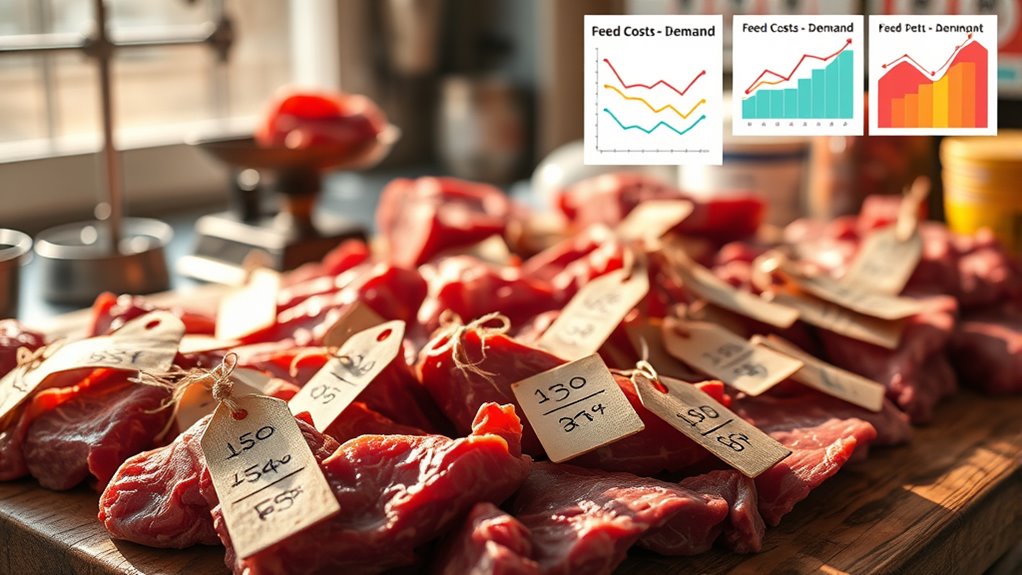
Although the price of 1/4 beef can vary widely, several key factors directly influence what you’ll pay. First, the breed and quality of the cattle matter. Premium breeds or grass-fed, organic beef usually cost more.
Second, the weight and yield grade affect the price. You’ll pay based on the hanging weight and how much usable meat you get after processing.
Third, regional differences come into play; prices can fluctuate depending on where you buy due to supply and demand.
Fourth, processing fees and butchering services can add to the total cost, so consider how the meat will be cut and packaged.
Finally, market conditions, such as feed prices and seasonal demand, also impact beef costs, so timing your purchase can make a difference.
Average Cost Range for a Quarter Beef
When you decide to buy a quarter beef, expect to pay anywhere between $400 and $800 on average, depending on various factors like quality and processing.
This price range reflects differences in the breed, feed, and aging of the beef, as well as the butcher’s fees.
Price varies due to breed, feed, aging, and butcher’s fees.
Grass-fed or organic beef tends to be on the higher end, while conventionally raised beef usually costs less.
Processing options such as custom cuts, packaging, and freezer wrapping can also affect the total price.
Keep in mind that you’re buying approximately 100 to 150 pounds of meat, which offers considerable savings compared to purchasing individual cuts at a grocery store.
Understanding this average range helps you budget smartly and choose the best option for your needs.
Cost Breakdown by Meat Cuts in a Quarter Beef
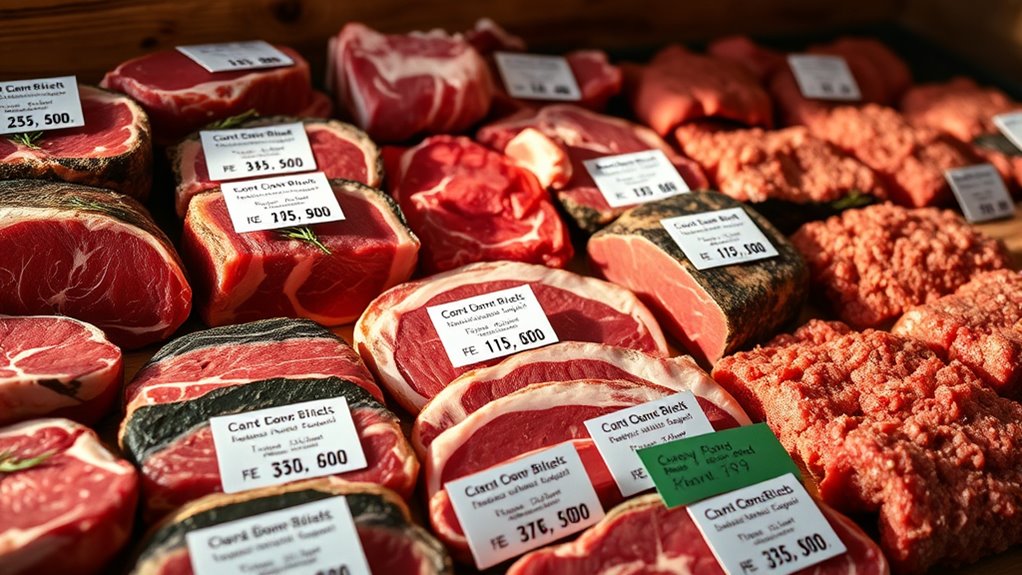
Understanding the average cost range for a quarter beef gives you a general idea of the investment, but breaking down the price by specific meat cuts helps you see where your money goes.
Typically, premium cuts like ribeye, tenderloin, and strip steak command higher prices due to their tenderness and flavor. These cuts can make up about 30-40% of the total cost.
Ground beef and stew meat, which are more economical, often account for roughly 20-30%. Other cuts such as roasts and brisket fall somewhere in between, offering good value for slow cooking.
Comparing Grass-Fed vs. Grain-Fed Beef Prices
Because grass-fed and grain-fed beef differ in raising methods and flavor profiles, their prices can vary considerably.
Grass-fed and grain-fed beef differ in raising methods and flavors, leading to notable price differences.
When you choose grass-fed beef, you’re often paying more for a product that’s raised naturally on pasture, without added grains or hormones.
This method typically requires more time and space, which increases costs.
Grass-fed beef usually offers a leaner, earthier flavor that some prefer for its health benefits.
On the other hand, grain-fed beef tends to be more affordable because the cattle grow faster on grain-based diets, producing a more marbled, tender cut.
If you prioritize taste and sustainability, grass-fed might be worth the extra cost.
But if you want a budget-friendly option with a familiar flavor, grain-fed beef could suit you better.
How Location Affects Quarter Beef Pricing
Where you live can considerably impact the price you pay for a quarter beef. Prices fluctuate based on several regional factors, so understanding these can help you anticipate costs better.
Here are key location-based influences:
- Local demand and supply dynamics
- Proximity to cattle farms or ranches
- Transportation and distribution expenses
- State and local taxes or regulations
- Availability of processing facilities
For example, if you’re closer to a cattle-producing area, you might pay less due to lower transport costs.
Conversely, urban areas with fewer farms nearby often incur higher prices. Additionally, regions with stringent agricultural policies may see increased costs.
Additional Fees and Processing Costs to Consider
While the base price of a quarter beef might seem straightforward, you’ll want to factor in additional fees and processing costs that can considerably affect the total expense. These often include butchering fees, which cover the slaughter, cutting, and packaging of your meat. Prices vary depending on the processor, but expect to pay anywhere from $0.30 to $0.50 per pound.
You might also encounter costs for freezer storage if you can’t pick up the meat immediately. Some sellers charge a deposit upfront and a balance upon delivery, so clarify payment terms early.
Don’t forget transportation fees if you need the beef delivered.
Benefits of Buying Beef in Bulk
If you’re looking to save money and guarantee a steady supply of quality meat, buying beef in bulk offers clear advantages. When you purchase a quarter or more, you get better prices per pound compared to buying smaller cuts.
Plus, you reduce frequent trips to the store and control the quality and cuts you prefer. Here are key benefits:
Cut down store trips while choosing your preferred quality and cuts for a tailored beef experience.
- Significant cost savings on premium beef
- Consistent supply for meal planning
- Ability to customize cuts and packaging
- Reduced packaging waste, environmentally friendly
- Opportunity to support local farmers directly
Buying in bulk means you can stock up your freezer, enjoy fresh beef whenever you want, and avoid the unpredictability of store sales or shortages. It’s a smart move for both your budget and your dinner table.
How to Find Reliable Local Farms for Bulk Beef
When you decide to buy beef in bulk, finding a reliable local farm becomes vital to guarantee quality and transparency. Start by researching farms with good reviews and certifications, then visit them if possible to see their practices firsthand.
Ask about their feeding methods, animal welfare, and processing standards to ensure you get top-grade beef.
Here’s a quick guide to evaluating farms:
| Factor | What to Look For | Why It Matters |
|---|---|---|
| Certifications | Organic, grass-fed labels | Ensures quality & safety |
| Transparency | Open farm visits | Builds trust |
| Customer Feedback | Positive reviews | Indicates satisfaction |
Taking these steps helps you secure fresh, ethically raised beef that fits your needs and budget.
Storage and Freezing Tips for Quarter Beef Purchases
After choosing a reliable local farm for your quarter beef, you’ll want to make sure you store and freeze it properly to maintain freshness and flavor. Proper storage prevents spoilage and helps you enjoy your beef over time without waste.
Follow these tips to handle your meat correctly:
Divide the beef into meal-sized portions before freezing. Use vacuum-sealed bags or airtight freezer bags to prevent freezer burn. Label each package with the cut type and date of freezing.
Store beef in the coldest part of your freezer, ideally at 0°F (-18°C) or lower. Thaw frozen beef in the refrigerator, not at room temperature, to keep it safe.
Budgeting Tips for Buying a Quarter of Beef
Though buying a quarter of beef can save you money in the long run, careful budgeting guarantees you don’t face unexpected costs. First, account for the initial purchase price, including any processing fees. These can vary markedly, so ask your butcher upfront.
Next, consider storage expenses. Vacuum-sealed bags and freezer space might require investment. Plan your meals to avoid waste and maximize your beef’s use.
Also, factor in seasoning and cooking supplies if needed. Don’t forget to set aside funds for transportation, especially if you need to keep the meat cold during travel.
By calculating these expenses ahead, you’ll get a clearer picture of the total cost and avoid surprises.
Sticking to your budget ensures your quarter beef purchase stays a smart, cost-effective choice.
Frequently Asked Questions
How Long Does Quarter Beef Typically Last in the Freezer?
A quarter beef typically lasts about 6 to 12 months in your freezer if properly wrapped and stored. Make sure to use airtight packaging to keep it fresh and prevent freezer burn during that time.
What Are the Best Cooking Methods for Different Beef Cuts?
You’ll want to grill steaks, braise tougher cuts like chuck, roast roasts, and slow-cook brisket or short ribs. Using the right method brings out the best flavor and tenderness in each beef cut you choose.
Can I Customize the Cuts in My Quarter Beef Order?
You can usually customize your quarter beef cuts, but it depends on the supplier. Don’t assume all offer this. Call ahead, specify your preferences, and they’ll often accommodate to make sure you get exactly what you want.
How Do I Safely Thaw Frozen Quarter Beef?
You should thaw your frozen quarter beef in the refrigerator to keep it safe. It takes about 24 hours per 5 pounds.
Avoid thawing at room temperature to prevent bacteria growth. You can also use cold water or a microwave.
What Are Common Signs of High-Quality Beef?
You’ll spot high-quality beef by its bright red color, fine marbling, and firm texture. It shouldn’t be too wet or slimy, and it should have a fresh, meaty smell without any sour or off odors.
Conclusion
Buying a quarter beef is like planting a seed that grows into a bountiful harvest in your freezer. With prices swaying like leaves in the wind—shaped by factors like feed type and location—you hold the reins to smart budgeting.
By choosing local farms and mastering storage, you turn chunks of meat into a steady feast. This way, you savor savings and flavor with every cut.
Immerse yourself, and let your kitchen bloom with fresh, hearty goodness. Understanding how much does 1/4 beef cost helps you plan better and enjoy quality meat all year round.