7 Factors That Affect How Much a Pound of Beef Tenderloin Costs
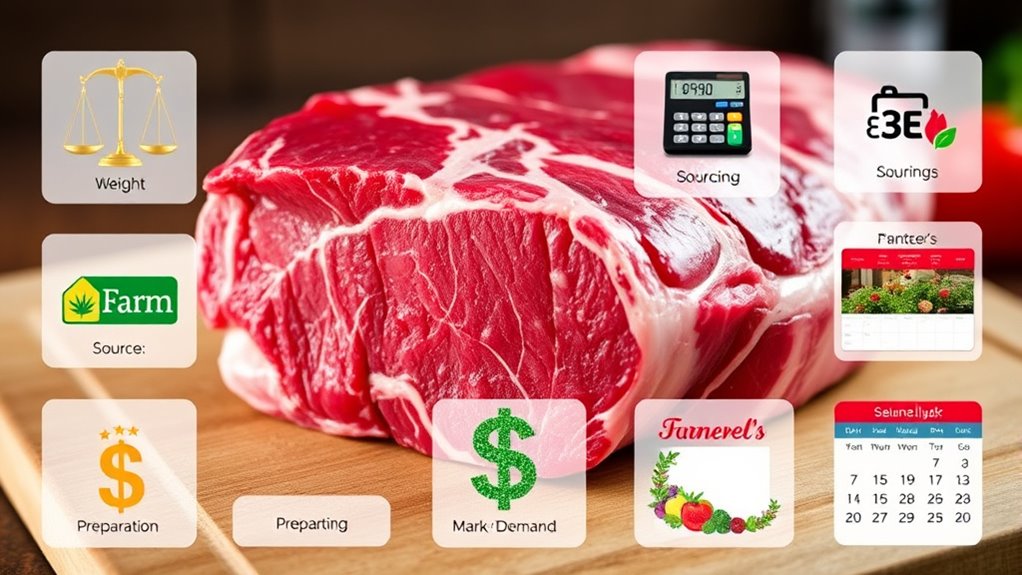
You’ll pay more for beef tenderloin based on its quality and grade, with prime cuts offering better marbling and tenderness. The meat’s source matters too—local or grass-fed options often come with higher price tags. How the cut is trimmed, organic certifications, and supply chain costs all add up.
Seasonal demand and store pricing strategies also influence what you see at checkout. Keep going to uncover exactly how each factor shapes the price you pay.
Quality and Grade of the Beef

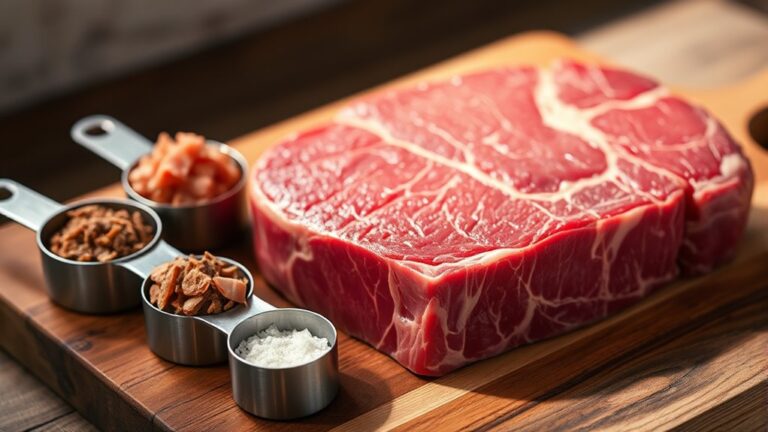
Although many factors influence beef tenderloin prices, the quality and grade of the beef play a crucial role. When you choose a higher-grade tenderloin, like USDA Prime, you’re paying for superior marbling, tenderness, and flavor.
This marbling enhances juiciness and richness, making your meal more enjoyable. On the other hand, Select grade beef, which has less marbling, generally costs less but may not offer the same tenderness or taste.
You’ll notice that Certified Angus Beef commands a higher price because it meets strict quality standards beyond government grading. When shopping, keep in mind that grading isn’t just a label; it reflects the beef’s eating experience.
Source and Origin of the Meat

Where your beef tenderloin comes from can considerably impact its price and quality. Different regions and farms have unique practices that influence the meat’s flavor, tenderness, and cost.
When choosing your tenderloin, consider these factors:
Local vs. imported: Local beef often costs less due to lower transport fees, but imported varieties might offer distinct flavors or breeds.
Grass-fed vs. grain-fed: Grass-fed beef usually carries a premium for its natural diet and perceived health benefits.
Farm reputation: Meat from farms known for ethical practices and quality controls often comes with a higher price tag.
Understanding the source helps you balance cost with the experience you want, ensuring your tenderloin meets your expectations in both taste and value.
Cut and Trim Level

Since the cut and trim level directly influence the tenderness and presentation of your beef tenderloin, you’ll want to choose carefully. Selecting a center-cut portion usually costs more because it offers the most uniform texture and consistent thickness, making it ideal for even cooking.
The trim level also affects price; a tenderloin with minimal fat and silver skin removed will cost you extra since it requires more labor to prepare. If you prefer a less trimmed option, you might save money, but you’ll need to spend more time trimming it yourself.
Ultimately, the cleaner and more precise the cut and trim, the higher the price, reflecting the added effort and quality you get with your purchase. Choose based on your cooking skill and presentation goals.
Organic and Grass-Fed Certifications
How do organic and grass-fed certifications influence the price of beef tenderloin? When you choose certified organic or grass-fed beef, you’re paying for more than just the meat itself. These certifications mean the cattle were raised under specific standards, which often increases production costs. Here’s why prices tend to be higher:
Choosing organic or grass-fed beef means paying more for higher standards and quality care.
Stricter farming practices: Organic means no synthetic pesticides or hormones, and grass-fed means cattle eat natural forage, which slows growth.
Smaller scale: Certified farms usually operate on a smaller scale, limiting supply and raising costs.
Certification expenses: Farms pay for inspections and certifications to prove they meet organic or grass-fed standards.
Supply Chain and Distribution Costs
Although you might focus on the quality of the beef itself, supply chain and distribution costs play a big role in the final price of beef tenderloin. From the moment the cattle are processed, the meat passes through multiple hands: packers, transporters, and retailers, all adding to the cost.
You’ll find that shipping beef tenderloin requires careful refrigeration, which raises expenses. Plus, longer distances between the farm and your local store mean higher fuel and labor costs.
If the supply chain is inefficient or disrupted, prices can spike.
Seasonal Demand and Availability
When demand for beef tenderloin rises during holidays or special occasions, prices often increase accordingly. You’ll notice this especially around Christmas, Thanksgiving, and Valentine’s Day when many people want to serve something special.
Availability also plays a big role; if supply dips during certain seasons, prices climb even more. To help you understand, consider these factors:
- Holiday spikes: More people buy premium cuts, pushing up demand.
- Seasonal supply fluctuations: Weather or farming cycles can limit beef production.
- Special event trends: Weddings or celebrations boost short-term demand.
Retail Markup and Store Pricing Strategies
Since retailers set their prices based on various factors, you’ll often see beef tenderloin costs vary between stores. Each store applies a markup that covers overhead, labor, and desired profit margins.
You might notice premium grocery stores charge more due to higher service levels, while discount chains offer lower prices but less personalized service. Stores also use different pricing strategies like promotional discounts or loyalty programs to attract you.
| Pricing Strategy | Description |
|---|---|
| Keystone Markup | Doubling wholesale cost |
| Psychological Pricing | Prices ending in .99 to attract buyers |
| Loss Leader | Selling below cost to draw traffic |
| Volume Discounts | Lower prices for bulk purchases |
Understanding these can help you shop smarter for beef tenderloin.
Frequently Asked Questions
How Should Beef Tenderloin Be Stored at Home?
You should store beef tenderloin in the coldest part of your fridge, wrapped tightly in plastic wrap or butcher paper.
If you won’t use it within a few days, freeze it to keep it fresh longer.
What Is the Best Cooking Method for Beef Tenderloin?
Imagine a tender flame kissing your beef; roasting is your best method.
You’ll sear the outside for a crust, then finish in the oven, locking in juicy, melt-in-your-mouth perfection every time.
How Long Can Beef Tenderloin Be Frozen Safely?
You can freeze beef tenderloin safely for up to 6 to 12 months. Just make sure to wrap it tightly to prevent freezer burn, and you’ll keep its quality and flavor intact during that time.
Are There Health Benefits to Eating Beef Tenderloin?
Yes, you’ll gain protein, iron, and B vitamins from beef tenderloin, which support muscle growth and energy.
Just watch your portions and choose lean cuts to enjoy health benefits without excess fat or calories.
How Can I Tell if Beef Tenderloin Is Fresh?
You can tell beef tenderloin is fresh if it looks bright red, feels firm but slightly springy, smells clean without sour odors, and has minimal liquid in the packaging.
Trust your senses for the best quality.
Conclusion
You might think paying more for beef tenderloin isn’t worth it, but understanding these factors shows why quality varies so much. When you choose carefully, you’re not just buying meat—you’re investing in flavor, nutrition, and ethical sourcing.
Next time you shop, remember that price reflects more than just weight; it reflects the story behind your steak.
So, don’t hesitate to spend a bit more for a truly exceptional experience with your beef tenderloin purchase.