
How Much Protein Is in Grass-Fed Ground Beef?
If you’re wondering how much protein is in grass-fed ground beef, a 3-ounce cooked serving typically offers between 22 and 25 grams of high-quality protein. Grass-fed ground beef is leaner than conventional beef, so you get slightly more protein per ounce.
Factors like the animal’s age and diet can affect protein levels, and portion size directly impacts your intake. Grass-fed beef also packs other nutrients that support your health. There’s plenty more to discover about its benefits and selection.
Nutritional Profile of Grass-Fed Ground Beef

Although the exact nutritional content can vary, grass-fed ground beef generally offers a rich source of protein that supports muscle growth and repair.
Grass-fed ground beef is a protein-rich choice that aids muscle growth and repair.
When you choose grass-fed, you’re also getting a good balance of essential nutrients like iron, zinc, and B vitamins, all important for energy and overall health.
This type of beef tends to be leaner, so it contains less fat compared to conventional beef, which can make it a healthier option.
Plus, grass-fed beef often has higher levels of omega-3 fatty acids and conjugated linoleic acid (CLA), which may benefit your heart and immune system.
When you include grass-fed ground beef in your meals, you’re fueling your body with quality nutrients that contribute to better wellness and sustained energy throughout your day.
Comparing Protein Content: Grass-Fed vs. Conventional Ground Beef

When you compare grass-fed ground beef to conventional options, you’ll notice subtle differences in protein content that can influence your dietary choices.
Grass-fed beef typically contains slightly more protein per serving, often around 22-25 grams per 3-ounce cooked portion, compared to 20-24 grams in conventional beef.
This difference arises because grass-fed cattle tend to have leaner meat with less fat, concentrating the protein.
While the variation isn’t huge, choosing grass-fed beef can marginally boost your protein intake, especially if you eat beef regularly.
However, both types provide high-quality complete proteins, so your overall diet and preferences should guide your choice more than protein content alone.
Understanding these nuances helps you make informed decisions about the beef you include in your meals.
Factors Affecting Protein Levels in Grass-Fed Beef

Understanding why protein levels vary in grass-fed beef can help you choose the best cuts for your nutritional needs. Several factors influence protein content, including the animal’s age, diet quality, and breed.
Younger cattle generally have higher protein concentration, while older animals might show slight decreases.
The quality and variety of grasses the cattle consume also impact muscle development and protein synthesis.
Additionally, different breeds have inherent genetic differences affecting their muscle composition.
How the beef is processed and trimmed matters too; leaner cuts naturally contain more protein per serving.
By knowing these factors, you can make informed choices when selecting grass-fed ground beef, ensuring you get the most protein possible for your diet.
Keep these variables in mind for ideal nutrition from your beef choices.
Serving Sizes and Protein Intake From Grass-Fed Ground Beef
A typical 4-ounce serving of grass-fed ground beef provides about 22 to 26 grams of protein, depending on the leanness of the meat.
When planning your meals, keep in mind that portion size directly impacts your protein intake.
If you need more protein, increasing your serving to 6 ounces can give you roughly 33 to 39 grams.
Conversely, smaller portions will lower your intake accordingly.
Make sure you measure your servings accurately, especially if you track your macros or follow specific dietary goals.
Remember, the protein content varies slightly with fat content, so leaner options pack more protein per ounce.
Benefits of High-Protein Grass-Fed Ground Beef
Increasing your intake of grass-fed ground beef not only boosts protein but also offers several health advantages. You get higher levels of omega-3 fatty acids and conjugated linoleic acid (CLA), which support heart health and may reduce inflammation.
Grass-fed beef is also richer in antioxidants like vitamin E, helping protect your cells. Plus, the protein quality is excellent, aiding muscle repair and growth.
| Benefit | Impact |
|---|---|
| High Protein | Supports muscle growth and repair |
| Omega-3 Fatty Acids | Promotes heart and brain health |
| Antioxidants (Vitamin E) | Protects cells from damage |
Choosing grass-fed ground beef means you’re fueling your body with nutrient-dense protein that supports overall wellness efficiently.
Incorporating Grass-Fed Ground Beef Into a Balanced Diet
When you include grass-fed ground beef in your meals, you tap into a rich source of protein and essential nutrients that complement a balanced diet. To make the most of it, pair your beef with plenty of colorful vegetables and whole grains, ensuring you get fiber, vitamins, and minerals alongside protein.
Portion control is key. Aim for about 3 to 4 ounces per serving to meet your protein needs without overdoing calories. You can easily swap grass-fed ground beef into recipes like stir-fries, tacos, or salads for a nutritious boost.
Also, balance your fats by incorporating healthy oils and limiting processed foods. By thoughtfully including grass-fed ground beef, you support muscle maintenance and overall health while enjoying flavorful, nutrient-rich meals.
Common Myths About Protein in Grass-Fed Beef
Although grass-fed ground beef is praised for its nutritional benefits, you might’ve heard several misconceptions about its protein content. One common myth is that grass-fed beef contains less protein than grain-fed beef. In reality, both types offer similar protein levels, typically around 22-26 grams per 3-ounce serving.
Another myth suggests grass-fed beef is only for bodybuilders or athletes. While it’s great for muscle repair, its protein benefits suit anyone aiming for a balanced diet.
Some believe grass-fed beef is too lean to provide enough protein, but the leaner fat content doesn’t reduce protein.
Understanding these facts helps you make informed choices and appreciate the real benefits of grass-fed ground beef without falling for misleading claims.
Tips for Selecting Quality Grass-Fed Ground Beef
To choose quality grass-fed ground beef, you’ll want to focus on factors like color, texture, and sourcing.
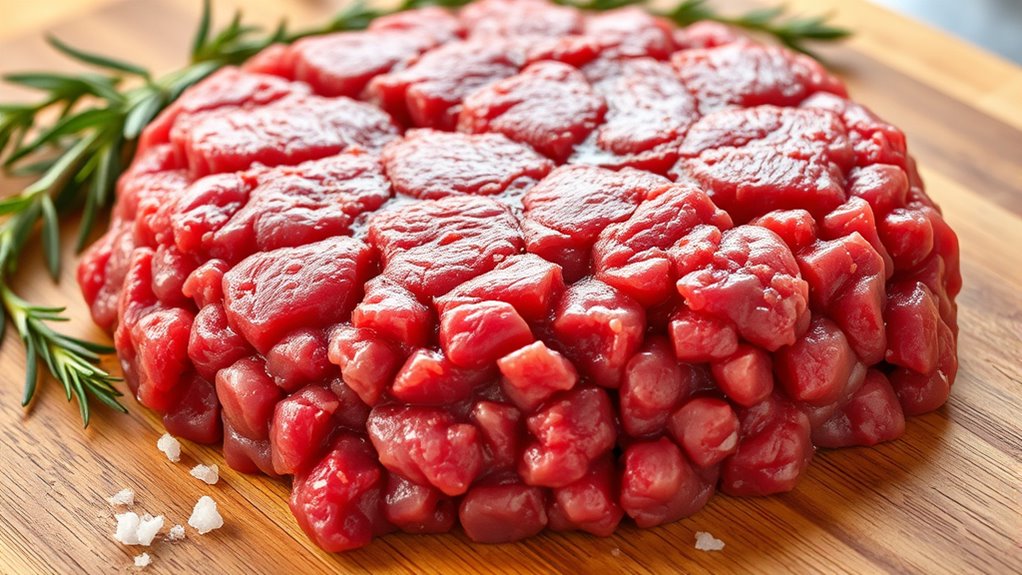
Look for beef with a bright, deep red color, which indicates freshness and proper handling. Avoid meat that looks brownish or grayish, as it may be older or improperly stored.
Feel the texture; it should be firm but slightly springy, not mushy or slimy.
Check the label or ask your butcher about the source. Grass-fed should mean the cattle were pasture-raised and not fed grains.
Certifications like USDA Organic or Animal Welfare Approved can offer added assurance.
In conclusion, buy from trusted local farms or reputable brands to ensure quality and transparency.
Following these tips helps you get nutritious, flavorful ground beef every time.
Frequently Asked Questions
How Is Grass-Fed Ground Beef Sourced and Processed?
You source grass-fed ground beef from cattle raised on natural pasture without grain feed. The beef is processed in facilities following strict standards, ensuring quality and traceability before it reaches your store or kitchen.
What Are the Environmental Impacts of Grass-Fed Beef Production?
You reduce chemical use, preserve soil health, and promote biodiversity by choosing grass-fed beef.
But you also increase land use and methane emissions. You balance benefits and drawbacks while supporting sustainable practices.
Is Grass-Fed Ground Beef More Expensive Than Conventional Beef?
Yes, grass-fed ground beef usually costs more than conventional beef because it’s raised more sustainably and takes longer to produce.
You’re paying for higher animal welfare and environmental benefits when you choose grass-fed options.
How Does Grass-Fed Beef Taste Compared to Grain-Fed Beef?
You’ll think grass-fed beef tastes like a flavor explosion from nature’s own kitchen: leaner, earthier, and slightly gamey compared to grain-fed’s richer, fattier, and milder profile. Your taste buds won’t forget the difference!
Are There Any Allergens Associated With Grass-Fed Ground Beef?
You typically won’t find allergens in grass-fed ground beef itself, but if you’re allergic to beef or have a red meat allergy, you should avoid it. Cross-contamination during processing might also cause reactions in sensitive individuals.
Conclusion
Choosing grass-fed ground beef for your meals is like picking a fresh, vibrant garden over a typical grocery store bouquet—it’s packed with protein and nutrients that support your health. You’ll enjoy a richer, leaner protein source that fuels your body effectively.
By understanding its benefits and how to select quality cuts, you can confidently add grass-fed ground beef to your diet. This choice not only boosts your nutrition but also helps you savor delicious, wholesome meals every time.
In conclusion, knowing how much protein is in grass-fed ground beef helps you make informed dietary decisions. Incorporating this nutrient-rich option into your meals ensures you get the protein and health benefits you need.