How to Cook Tender Shoulder Beef Steak in 10 Easy Steps
Choose a bright, moderately marbled shoulder beef steak about 1 to 1.5 inches thick for the best tenderness. Trim off any excess fat to prevent flare-ups during cooking. Marinate the steak with acidic ingredients and seasonings for a few hours to enhance flavor and tenderness.
Bring the steak to room temperature before seasoning it generously. Sear each side on medium-high heat for 3-4 minutes to develop a rich crust. Then, cook slowly on medium-low heat with a bit of liquid, covered, to tenderize the meat thoroughly.
Rest the steak before slicing against the grain to preserve juiciness. This step is crucial for a tender bite. Keep going to discover more tips for perfect tenderness.
Choose the Right Cut of Shoulder Beef
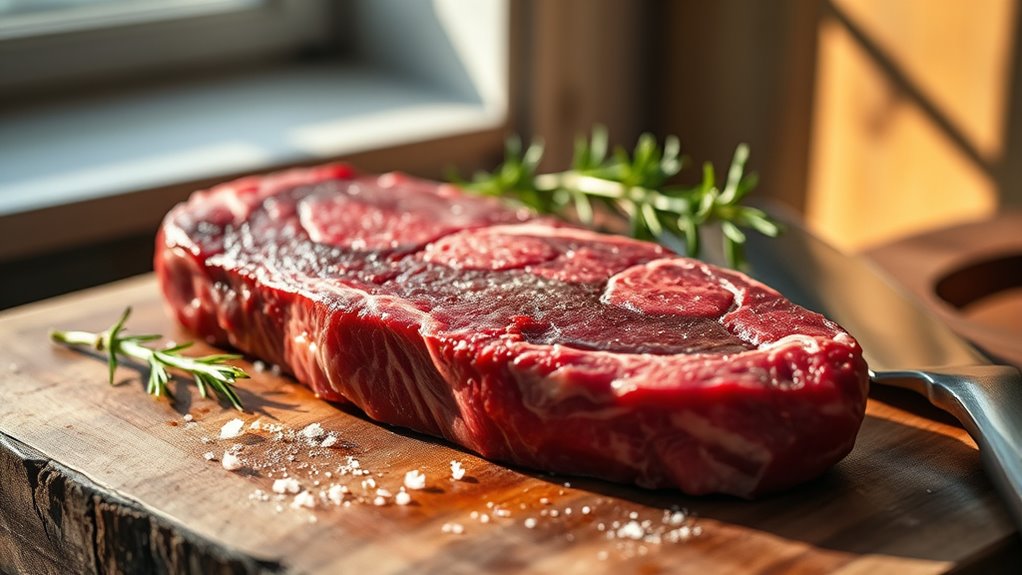
Although shoulder beef can be tougher than other cuts, selecting the right portion makes all the difference in flavor and tenderness. When choosing shoulder beef steak, look for cuts like the chuck eye or shoulder center steak, which balance marbling and muscle.
Choosing the right shoulder beef cut like chuck eye ensures better flavor and tenderness despite its toughness.
These cuts break down better during cooking, offering more juiciness and flavor. Avoid cuts that are too sinewy or heavily grained, as they’ll be chewier and less enjoyable.
You’ll want steaks about one to one and a half inches thick to ensure even cooking without drying out.
Also, pick steaks with a bright red color and moderate fat distribution. This fat melts during cooking, enhancing taste and softness.
Choosing wisely sets you up for a delicious, tender steak experience.
Prepare the Steak by Trimming Excess Fat

Before cooking, trim any excess fat from your shoulder beef steak to prevent flare-ups and uneven cooking. Use a sharp knife to carefully remove large, thick fat deposits without cutting into the meat.
Leave a thin layer of fat, as it helps keep the steak juicy and adds flavor during cooking. Focus on trimming the edges and any fat caps that might cause flare-ups on a grill or stovetop.
Be cautious not to remove all the fat, since some marbling enhances tenderness. This simple step ensures your steak cooks evenly, reduces unwanted grease, and improves the final texture.
Taking the time to properly trim your steak sets the stage for a delicious, tender result every time you cook.
Marinate the Steak for Enhanced Flavor

Since shoulder beef steak can be a bit tougher than other cuts, marinating it helps break down the muscle fibers and infuses the meat with extra flavor.
Start by choosing a marinade with acidic ingredients like vinegar, citrus juice, or wine, which tenderize the meat effectively.
Add complementary flavors such as garlic, herbs, soy sauce, or a touch of honey for balance.
Place your steak in a resealable bag or shallow dish, pour the marinade over it, and make certain the meat is fully coated.
Refrigerate the steak while marinating, ideally for at least 2 to 4 hours; overnight works well if you have time.
Remember to turn the steak occasionally for even absorption.
This simple step boosts tenderness and enhances every bite.
Bring the Steak to Room Temperature
When you’re ready to cook, take the marinated steak out of the refrigerator and let it sit at room temperature for about 30 minutes. This step is essential because cold steak won’t cook evenly, leading to an overcooked exterior and undercooked center.
Allowing the steak to warm slightly helps it cook more uniformly and retain juiciness.
Keep these tips in mind as you let it rest:
- Place steak on a clean plate or cutting board
- Cover loosely with foil or plastic wrap
- Keep it away from direct sunlight or heat sources
- Avoid leaving it out for more than 30-40 minutes
- Use this time to prepare your cooking tools or seasoning
Bringing the steak to room temperature ensures better texture and flavor in your final dish.
Season the Steak Generously
Although the steak is already tender from marinating, seasoning it generously will enhance its natural flavors and create a delicious crust during cooking.
Start by patting the steak dry with paper towels to remove excess moisture; this helps the seasoning stick better.
Pat the steak dry with paper towels to remove moisture and help seasonings adhere perfectly.
Then, sprinkle salt evenly on both sides. Don’t be shy, as salt draws out flavor and improves texture.
Add freshly ground black pepper for a subtle kick. If you like, include garlic powder, paprika, or your favorite herbs for extra depth.
Press the seasonings gently into the meat to ensure they adhere well.
Preheat Your Cooking Surface Properly
Before you place your steak on the grill or pan, make sure to preheat the cooking surface thoroughly. This step guarantees even cooking and helps lock in juices for a tender steak.
Here’s how to preheat properly:
Use medium-high heat to allow the surface to get hot without burning.
Give your pan or grill at least 5 minutes to reach the right temperature.
Avoid overcrowding the surface, which lowers the temperature.
Test heat by flicking a drop of water; it should sizzle and evaporate immediately.
For pans, add a small amount of oil only after the surface is hot to prevent sticking.
Proper preheating sets the stage for cooking your shoulder beef steak perfectly every time.
Sear the Steak to Develop a Crust
Once your cooking surface is hot and ready, place the shoulder beef steak directly onto it to start building a flavorful crust. Resist the urge to move it around; letting the steak sear undisturbed for about 3 to 4 minutes will create those beautiful brown, caramelized edges.
Use tongs to flip the steak gently and sear the other side equally. This high-heat searing locks in juices and adds depth to the flavor through the Maillard reaction.
Avoid pressing down on the steak, as that squeezes out moisture and dries the meat.
Keep your heat steady and allow a natural crust to form. This step is vital for texture and taste, setting the stage for a tender, delicious shoulder beef steak.
Cook the Steak Slowly to Tenderize
While searing locks in flavor, cooking the shoulder beef steak slowly is key to breaking down tough fibers and making it tender. You want to maintain gentle heat to allow collagen to melt without drying out the meat. Here’s how to do it right:
- Lower the heat to medium-low after searing.
- Add a bit of liquid like broth or wine to keep the steak moist.
- Cover the pan with a lid to trap steam and heat evenly.
- Cook for 20-30 minutes, flipping occasionally for even tenderness.
- Use a meat thermometer to check for desired doneness, aiming for 130-140°F for medium.
Slow cooking lets the meat relax and become juicy, turning a tough cut into a delicious, tender steak you’ll love.
Rest the Steak Before Serving
Although the steak looks ready, you should let it rest for several minutes to lock in juices and enhance flavor. When you remove the steak from heat, the muscle fibers contract, pushing moisture toward the center.
Resting allows those fibers to relax and reabsorb the juices, making your steak more tender and juicy. Cover the steak loosely with foil to retain warmth without steaming it. Aim for about 5 to 10 minutes, depending on the steak’s thickness.
Resist the urge to cut it immediately; slicing too soon causes valuable juices to escape, resulting in a drier steak.
Slice and Serve the Steak Correctly
After letting the steak rest, you’re ready to slice and serve it in a way that preserves its tenderness and flavor. Start by using a sharp knife to guarantee clean cuts without shredding the meat.
Always slice against the grain to shorten the muscle fibers, making each bite tender.
Cut the steak into thin, even slices for the best texture and presentation. Serve immediately to enjoy the steak at its juiciest.
Keep these tips in mind:
- Use a sharp, serrated or chef’s knife
- Identify and cut against the grain
- Slice into even, thin pieces
- Arrange slices neatly on a warm plate
- Serve promptly for maximum juiciness
Following these steps will make your shoulder beef steak a delicious success.
Frequently Asked Questions
Can I Use Shoulder Beef Steak in Slow Cooker Recipes?
Yes, you can use shoulder beef steak in slow cooker recipes. It becomes tender and flavorful with low, slow cooking, breaking down tough fibers perfectly.
Just add your favorite seasonings and let it cook gently for hours.
What Side Dishes Pair Best With Tender Shoulder Beef Steak?
You’ll want creamy mashed potatoes, roasted vegetables, or a fresh green salad to complement the rich flavor of tender shoulder beef steak.
Garlic bread or steamed asparagus also pairs perfectly, adding balance and texture to your meal.
How Long Can I Store Marinated Shoulder Beef Steak in the Fridge?
You can store marinated shoulder beef steak in the fridge for up to 2 days. Beyond that, the texture and flavor might start to change, so it’s best to cook it within that timeframe.
Is Shoulder Beef Steak Suitable for Grilling Outdoors?
Shoulder beef steak is suitable for grilling outdoors, but it’s not a walk in the park. You’ll want to marinate it well and cook over medium heat to keep it tender and juicy.
Can I Freeze Shoulder Beef Steak Before or After Cooking?
You can freeze shoulder beef steak both before and after cooking. Just make sure to wrap it tightly to prevent freezer burn.
When thawing, do it slowly in the fridge for best texture and flavor.
Conclusion
So, after all that effort to make your shoulder beef steak tender, remember: patience is your secret ingredient—because rushing through it will turn your “tender” steak into a chew toy. Who knew that the toughest cut could teach you the most about slow cooking?
Follow these steps, and you’ll impress everyone with a steak so tender, they’ll forget it’s from the shoulder. Just don’t blame me if they ask for seconds—and thirds!
Mastering how to cook tender shoulder beef steak takes time, but the reward is worth it. Enjoy your delicious, melt-in-your-mouth beef steak every time!