How to Grill Beef Ribs on a Charcoal Grill in 7 Easy Steps
To grill beef ribs on a charcoal grill, start by patting the ribs dry and seasoning them well. Proper seasoning is key to enhancing the natural flavors of the beef. Set up your charcoal grill for indirect heat by lighting charcoal with a chimney starter until the coals are ashed over.
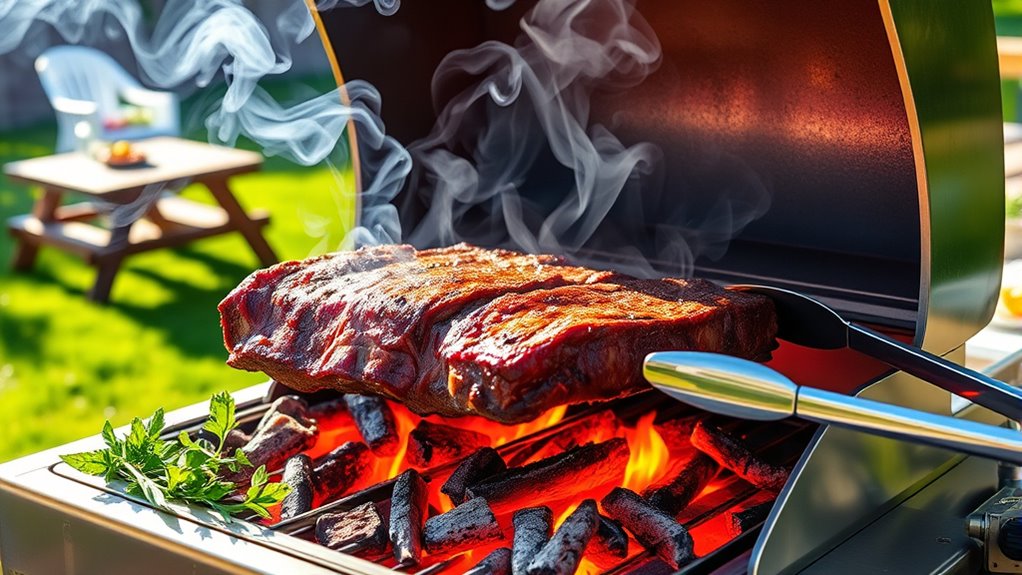
Place the ribs bone side down away from the direct heat of the coals. Keep the grill lid closed to maintain a consistent temperature of 225-250°F. This slow and steady cooking method ensures the ribs become tender and juicy.
Cook the ribs until they are tender, then remove them from the grill and let them rest before serving. Want to master every step, including expert seasoning tips and how to check for doneness? Keep going for the full guide.
Preparing the Beef Ribs for Grilling
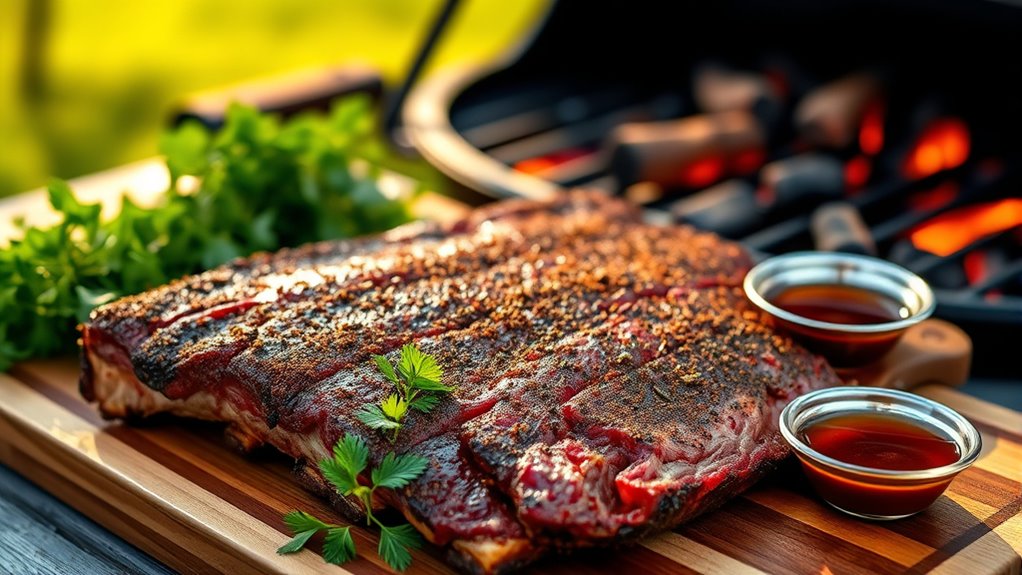
Before you fire up the grill, you’ll want to properly prepare the beef ribs to guarantee they cook evenly and develop great flavor.
First, pat the ribs dry with paper towels to remove excess moisture; this helps the seasoning stick and promotes better browning.
Next, trim any excess fat or silver skin from the ribs to prevent flare-ups and ensure tenderness.
Then, apply a dry rub or marinade, covering all sides evenly.
Let the ribs sit at room temperature for about 30 minutes so the seasoning penetrates and the meat cooks more consistently.
Finally, bring the ribs out of the fridge early enough to avoid shocking the meat when it hits the grill.
This preparation sets the stage for juicy, flavorful beef ribs every time.
Setting Up Your Charcoal Grill

With your beef ribs prepped and seasoned, it’s time to get your charcoal grill ready for cooking. Setting up your grill properly guarantees even heat distribution and perfect smoky flavor.
Start by cleaning the grill grate to remove any residue.
Begin by thoroughly cleaning the grill grate to ensure a fresh, residue-free cooking surface.
Next, arrange the charcoal for indirect heat by piling coals on one side, leaving the other side empty.
Adjust the grill vents to control airflow and temperature.
Finally, place a drip pan under the grill grate on the empty side to catch fat drippings and avoid flare-ups.
- Clean the grill grate thoroughly
- Arrange charcoal for indirect heat
- Adjust vents to control airflow
- Place a drip pan under the grate
This setup creates the ideal environment for slow-cooking your beef ribs evenly.
Lighting and Managing the Charcoal

Once your charcoal is arranged, lighting it properly guarantees a steady, even heat for grilling your beef ribs. Use a chimney starter for the best results. Fill it with charcoal, place crumpled newspaper underneath, and light it.
The coals will ignite evenly within 15-20 minutes. Once they’re covered with a light gray ash, carefully pour the hot coals onto your grill’s charcoal grate. Spread them out to create distinct heat zones: pile coals on one side for direct heat and leave the other side with fewer coals for indirect cooking.
Manage airflow by adjusting the grill’s vents; opening them increases heat, while closing them reduces it. Keep an eye on the temperature, aiming for a steady 225-250°F for slow, even cooking of your beef ribs.
Seasoning and Marinating the Ribs
Although the quality of your beef ribs matters, how you season and marinate them can make all the difference in flavor and tenderness. Start by trimming excess fat to help the seasoning penetrate better.
Use a dry rub with a balanced mix of salt, pepper, garlic powder, and paprika to enhance the meat’s natural taste.
If you prefer marinating, opt for a simple blend of soy sauce, Worcestershire sauce, minced garlic, and a splash of apple cider vinegar for acidity.
Let the ribs sit in the marinade or rub for at least 2 hours, or overnight if possible, in the fridge.
Here’s a quick checklist to get you started:
- Trim excess fat for better seasoning absorption
- Apply a balanced dry rub or marinade
- Marinate for at least 2 hours or overnight
- Store ribs refrigerated while marinating
Cooking the Ribs With Indirect Heat
When you cook beef ribs using indirect heat, you allow the meat to cook slowly and evenly, preventing flare-ups and burning. Set up your charcoal grill with coals on one side, leaving the other side empty.
Cooking beef ribs with indirect heat ensures slow, even cooking while avoiding flare-ups and burning.
Place the ribs on the cooler side, bone side down, away from direct flames. Close the lid to maintain consistent heat and smoke circulation. Keep the grill temperature steady around 225-250°F (107-121°C).
You can add wood chips to the coals for extra smoky flavor. Avoid opening the lid too often, as it causes heat loss. Rotate the ribs occasionally to promote even cooking.
This method breaks down connective tissue gently, resulting in tender, flavorful beef ribs without drying them out or charring the surface.
Checking for Doneness and Tenderness
Since beef ribs cook low and slow, you’ll need to check for doneness and tenderness carefully to guarantee they’re perfectly cooked. Doneness isn’t just about reaching a temperature; it’s about that melt-in-your-mouth texture.
Use these tips to check:
Insert a meat thermometer into the thickest part; aim for about 200°F to 205°F.
Test tenderness by gently pulling the rib bones apart; they should separate easily.
Use a fork or skewer to twist the meat—if it slides in and out with little resistance, it’s tender.
Look for a dark, caramelized crust on the outside, indicating a well-rendered bark.
Keep checking periodically to avoid overcooking.
When these signs come together, your beef ribs will be juicy and tender, ready for the final steps.
Resting and Serving Your Grilled Beef Ribs
After your beef ribs have reached perfect tenderness, you’ll want to let them rest before serving to lock in their juices and enhance flavor. Rest your ribs on a cutting board, loosely tented with foil, for about 10-15 minutes. This pause allows the juices to redistribute evenly, keeping each bite moist and flavorful.
When ready, slice between the bones and arrange them on a platter for serving.
| Resting Time | Purpose | Tip |
|---|---|---|
| 10-15 mins | Juices redistribute | Tent loosely with foil |
| Slicing | Easier and cleaner | Cut between the bones |
| Serving | Present nicely | Use a warm platter |
Following these steps ensures your beef ribs stay juicy and impressive every time.
Frequently Asked Questions
What Type of Wood Chips Enhance the Flavor of Grilled Beef Ribs?
You’ll want hickory, mesquite, or oak wood chips to enhance your beef ribs’ flavor. These woods add a rich, smoky taste that complements the meat perfectly.
Don’t forget to soak the chips before grilling!
Can I Use Liquid Smoke Instead of Charcoal for Grilling?
You can’t use liquid smoke instead of charcoal because one’s a flavor enhancer, the other’s your heat source.
Liquid smoke adds smoky taste, but charcoal provides the essential heat you need to grill those ribs properly.
How Do I Store Leftover Grilled Beef Ribs Safely?
You should let the ribs cool, then wrap them tightly in foil or plastic wrap. Store them in an airtight container in the fridge for up to four days or freeze for longer storage.
What Side Dishes Pair Best With Grilled Beef Ribs?
They say, “Variety is the spice of life.” You’ll love pairing grilled beef ribs with coleslaw, baked beans, corn on the cob, and a fresh green salad to balance the rich, smoky flavors perfectly.
Are Beef Ribs Healthier Than Pork Ribs When Grilled?
Yes, beef ribs generally have more fat and calories than pork ribs, but it depends on the cut. You’ll find pork ribs leaner, so if you want healthier, choose pork and watch your portion size.
Conclusion
As the smoky aroma of your perfectly grilled beef ribs fills the air, you’ll know all your careful prep and patience paid off. Picture biting into tender, juicy meat that falls right off the bone, kissed by a subtle char from the charcoal’s glow.
Resting them just right lets the flavors settle, making every bite a mouthwatering experience. Now, dig in and savor the rich, smoky goodness you’ve crafted with your own hands.
Grilling beef ribs on a charcoal grill takes practice, but following these steps ensures delicious results every time. Enjoy the perfect balance of smoky flavor and tender texture that only charcoal grilling can deliver.