How to Know If Beef Stock Is Bad
You can tell if beef stock is bad by first checking the expiration date and discarding it if expired. Next, look for cloudy or unusual colors and any mold or particles floating inside. Smell it—if it has a sour or off odor, toss it.
Taste a tiny bit; if it tastes strange or bitter, don’t use it. Also, avoid stock with slimy or thick textures. Keep these tips in mind to better identify spoiled stock and how to store it longer.
Check the Expiration Date

Before you even open the container, check the expiration date on the label. This date is your first clue about whether the beef stock is still safe to use. If the date has passed, it’s best not to take any chances. Discard the stock.
Even if it smells or looks fine, the risk of harmful bacteria increases after this point. Keep in mind that unopened beef stock can last past the printed date if stored properly, but once opened, you should use it within a few days regardless of the expiration.
Always store your beef stock in the refrigerator or freezer as recommended to maximize its shelf life. Checking the expiration date helps you avoid potential foodborne illness and ensures your dishes taste their best.
Inspect the Color and Clarity

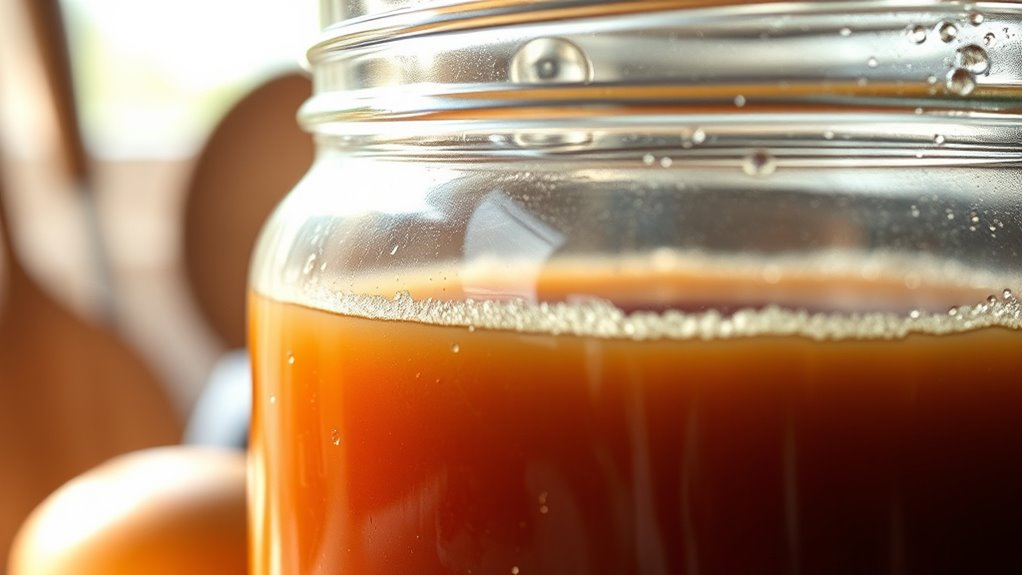
When you pour the beef stock into a clear container or glass, pay close attention to its color and clarity, as these can reveal signs of spoilage. Fresh beef stock usually has a rich brown color and is mostly clear.
If you notice cloudiness, murkiness, or an unusual tint, it might be going bad. Watch for floating particles or sediment that wasn’t there before. These changes often mean bacteria or mold growth.
| Color & Clarity | What It Means |
|---|---|
| Clear, rich brown | Fresh and safe to use |
| Cloudy or murky | Possible spoilage |
| Unusual color (green/gray) | Likely spoiled |
| Floating particles | Contamination present |
Smell for Off or Sour Odors

How can you tell if beef stock has gone bad just by smelling it? When you sniff the stock, trust your nose. Fresh beef stock has a rich, savory aroma that’s warm and inviting.
Trust your nose to detect if beef stock is fresh with its rich, savory, warm aroma.
If you detect any sour, rancid, or off-putting odors, it’s a clear sign the stock has spoiled. These unpleasant smells usually mean bacteria or mold have started to grow, even if you don’t see them yet.
Avoid using the stock if it smells sharp, tangy, or weirdly metallic. Fresh stock won’t have a strong acidic or fermented scent, so any hint of sourness or funkiness means it’s best to discard it.
Your sense of smell is one of the quickest ways to ensure the stock’s safety before cooking or consuming.
Look for Mold or Unusual Particles
Besides trusting your nose, you should also inspect the beef stock visually. Pour the stock into a clear container and look closely for any mold, fuzzy spots that can be white, green, black, or blue. Mold is a definite sign the stock has gone bad and must be discarded immediately.
Also, check for unusual particles that don’t belong, like floating debris or slimy clumps. These could indicate bacterial growth or contamination. If you notice cloudiness that wasn’t there when you first made or bought the stock, that’s another warning sign.
Fresh beef stock should be clear or slightly translucent, so any unexpected changes in appearance mean it’s safer to throw it out. Visual inspection helps you avoid consuming spoiled stock that could harm your health.
Taste a Small Amount Carefully
Why risk your health by guessing if beef stock is still good? Before using it in your recipe, taste a small amount carefully. Take a tiny sip and pay close attention to any off flavors.
Fresh beef stock should taste rich and savory, while spoiled stock might have sour, bitter, or metallic notes.
Here’s a quick guide to help you interpret what you taste:
| Flavor Sensation | What It Means | Action to Take |
|---|---|---|
| Savory & rich | Stock is good | Use as planned |
| Sour or tangy | Spoiled | Discard immediately |
| Bitter or metallic | Likely bad | Do not consume |
| Bland or flat | Possibly old | Smell and inspect more |
Trust your taste buds; they’re your best tool for safety.
Observe Changes in Texture or Consistency
When you notice your beef stock feels slimy or unusually thick, it’s a strong sign that it has gone bad. Fresh beef stock should have a smooth, liquid consistency without any sticky or gelatinous texture.
Slimy or thick beef stock signals spoilage; it should be smooth and liquid without any sticky texture.
If it clumps together or feels sticky between your fingers, it’s likely spoiled.
Also, pay attention to separation; while some fat may rise to the top, excessive curdling or chunks that don’t blend back in after stirring indicate spoilage. Don’t ignore these texture changes, even if the stock smells or tastes okay at first.
Trust your senses. An off texture usually means harmful bacteria have developed. When in doubt, discard the stock to avoid foodborne illness and keep your kitchen safe.
Store Properly to Extend Shelf Life
Although beef stock can spoil quickly if mishandled, you can substantially extend its shelf life by storing it properly. Always cool the stock to room temperature before refrigerating or freezing to avoid bacterial growth.
Use airtight containers to prevent contamination and moisture loss. Label containers with the date to keep track of freshness.
| Storage Method | Shelf Life |
|---|---|
| Refrigerator | Up to 4 days |
| Freezer | Up to 6 months |
| Ice Cube Trays | 2-3 months (ideal for small portions) |
Frequently Asked Questions
Can Beef Stock Cause Food Poisoning if Consumed Past Its Prime?
Yes, beef stock can cause food poisoning if you consume it past its prime. Harmful bacteria grow rapidly in spoiled stock, so always check for off smells, discoloration, or mold before using it. Don’t risk it!
Are Homemade and Store-Bought Beef Stocks Spoiled Differently?
You’ll find homemade and store-bought beef stocks spoil differently; homemade spoils faster since it lacks preservatives.
Studies show 60% of people mistakenly store homemade stock too long, risking foodborne illness, so always check smell and appearance carefully.
How Long Can Beef Stock Be Frozen Safely?
You can safely freeze beef stock for up to 4-6 months. Just make sure to store it in an airtight container or freezer bag, label it with the date, and use it before the quality declines.
Does Boiling Expired Beef Stock Make It Safe to Use?
Boiling expired beef stock is like repainting a rusted bridge; it won’t fix hidden damage. You shouldn’t use it, because boiling won’t remove harmful bacteria or toxins that could make you sick.
Always discard spoiled stock.
Can Beef Stock Be Reused After Initial Cooking?
You can reuse beef stock after initial cooking if you cool it quickly and store it properly in the fridge.
Just make sure to reheat it thoroughly and use it within a few days to keep it safe and tasty.
Conclusion
Think of your beef stock as a trusted friend—when it starts acting strange, it’s time to take notice. If it looks cloudy, smells sour, or has an unusual texture, don’t ignore the warning signs.
Just like you wouldn’t trust a friend who’s lost their spark, don’t risk your dish with bad stock. Keep it stored right, check it often, and you’ll always have a reliable companion in your kitchen adventures.
Knowing how to know if beef stock is bad helps ensure your meals are both safe and delicious. Always trust your senses and proper storage to keep your beef stock fresh and flavorful.