How to Make Beef Puree for Baby in 3 Simple Steps
Choose fresh, lean beef like sirloin and trim any fat or gristle for the best texture when making beef puree for baby. Cooking the beef gently by steaming or simmering ensures it becomes tender and easy to shred, which usually takes about 20-40 minutes.
Then, blend the cooked meat with some cooking liquid, breast milk, or formula until smooth and lump-free. Serve the puree warm, not hot, for your baby’s safety.
Keep going to discover tips on storage and perfecting the puree’s consistency.
Selecting and Preparing the Beef

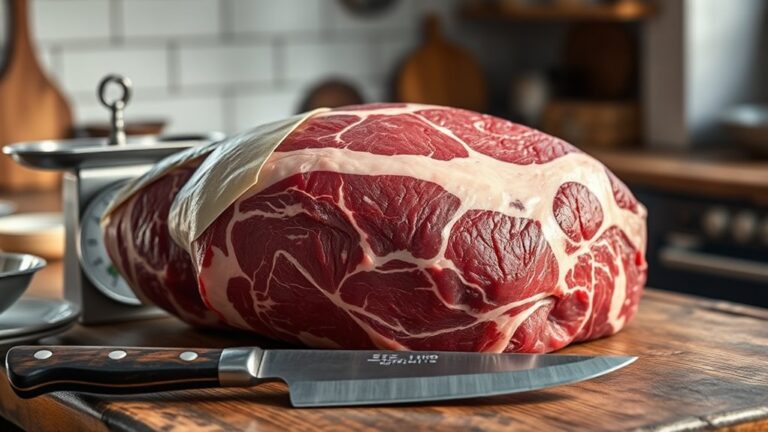
When selecting beef for your baby’s puree, choose lean cuts like sirloin or tenderloin to guarantee a tender texture and minimal fat. You’ll want fresh, high-quality meat without any added seasonings or marinades. Check the color; fresh beef should be bright red with a firm texture.
Opt for fresh, lean cuts like sirloin or tenderloin for a tender, mild beef puree perfect for your baby.
Avoid cuts with excessive marbling or gristle, as these can be tough and harder to puree smoothly. Before you start cooking, trim away any visible fat or connective tissue to ensure a mild flavor and easy digestion.
Rinse the meat under cold water and pat it dry with paper towels. Proper handling helps prevent contamination and keeps the puree safe for your baby.
Now your beef is ready for the next step, cooking it to achieve perfect tenderness.
Cooking the Beef for Optimal Tenderness

Although cooking beef for your baby requires some care, you can easily achieve a tender texture by using gentle methods like steaming, boiling, or slow cooking. These approaches help break down the meat fibers, making it easier for your baby to eat and digest.
Here’s how you can cook the beef for ideal tenderness:
- Steam: Place the beef in a steamer basket over boiling water and steam for 20-30 minutes until tender.
- Boil: Simmer the beef in water or broth gently for 30-40 minutes, checking for softness.
- Slow Cook: Use a slow cooker on low for 4-6 hours with some liquid to keep it moist.
- Avoid High Heat: Don’t fry or grill, as high heat toughens the beef.
These methods ensure soft, tender beef perfect for pureeing.
Blending and Serving the Puree

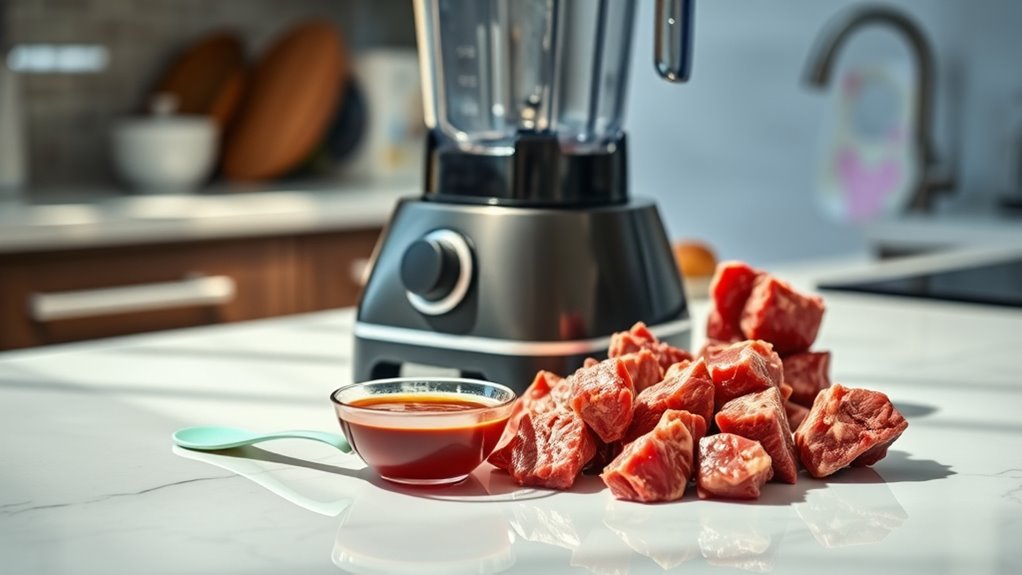
Once the beef is tender and cooked through, you can move on to blending it into a smooth puree that’s easy for your baby to eat. Start by placing the beef chunks into a blender or food processor.
Add a little cooking liquid, breast milk, or formula to achieve a creamy consistency. Blend until smooth, stopping occasionally to scrape down the sides. If the texture feels too thick, add more liquid gradually. Avoid lumps that might be hard for your baby to swallow.
Once you reach the desired texture, transfer the puree to a clean bowl. Serve it warm, not hot, to ensure safety and comfort.
Store any leftovers in an airtight container in the fridge for up to 48 hours or freeze for longer use.
Frequently Asked Questions
When Can I Introduce Beef Puree to My Baby’s Diet?
You can introduce beef puree around 6 to 8 months, once your baby’s ready for solids. Make sure to consult your pediatrician first, and watch for any allergies or reactions after feeding it for the first time.
What Are the Nutritional Benefits of Beef for Babies?
Beef provides your baby with essential iron, zinc, and protein, supporting healthy growth, brain development, and a strong immune system. It also offers B vitamins that boost energy and overall development during these vital early months.
Can I Freeze Homemade Beef Puree for Later Use?
When Sarah froze homemade beef puree, she found it stayed fresh for up to three months. You can definitely freeze it in airtight containers or ice cube trays, then thaw portions as needed. Perfect for busy days!
How Do I Know if My Baby Is Allergic to Beef?
You’ll know if your baby’s allergic to beef if they develop hives, swelling, vomiting, diarrhea, or difficulty breathing after eating. Always introduce beef slowly and watch for reactions.
Then consult your pediatrician if you notice symptoms.
What Are Good Complementary Foods to Serve With Beef Puree?
Oh, because babies love eating only one thing forever! You’ll want to mix beef puree with mild veggies like sweet potatoes, carrots, or peas.
Adding rice cereal or applesauce can make meals interesting and nutritious for your little one.
Conclusion
Making beef puree for your baby is as simple as pie when you follow these three steps. Think of it like building blocks—each step adds a layer of flavor and nutrition, just like how a strong foundation supports a sturdy house.
Remember, just as you wouldn’t rush a puzzle, take your time to prepare and blend the beef properly. Your baby’s healthy smile will be the perfect reward for your effort!
By mastering how to make beef puree for baby, you ensure your little one gets essential nutrients in a tasty, easy-to-eat form. This simple process supports your baby’s growth and development while introducing them to new flavors.