
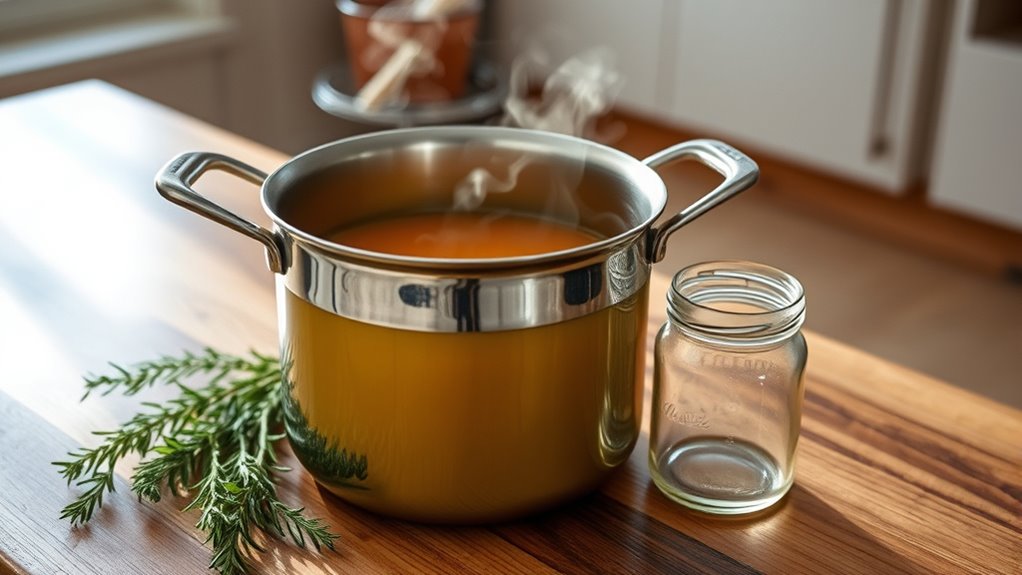
How to Make Beef Tallow for Skin Care in 3 Easy Steps
To make beef tallow for skin care, start by sourcing fresh, high-quality fat such as leaf fat or suet. Trim away any meat or connective tissue to ensure purity. Using the right fat is essential for creating a nourishing skin care product.
Next, slowly render the fat over low heat for a few hours until it melts into a clear liquid. This gentle process preserves the beneficial properties of the tallow. After rendering, strain out any solids to achieve a smooth texture.
Finally, let the liquid cool and solidify in a clean container. Store your beef tallow in a cool, dark place to maintain its quality. Keep going, and you’ll discover tips to perfect and use your tallow effectively.
Sourcing and Preparing Beef Fat

Before you begin rendering beef tallow, you need to find the right beef fat. Look for high-quality, fresh fat from grass-fed or organic cattle if possible. The best types are leaf fat, which surrounds the kidneys, or suet, found around the loin and kidneys.
These fats have a clean, mild scent and yield a smooth tallow perfect for your skin. Avoid fat that smells rancid or has discoloration. Once you have the fat, trim away any meat, blood spots, or connective tissue to ensure purity.
Cut the fat into small, even pieces to help it render evenly. Properly sourcing and preparing your beef fat sets the foundation for producing a clean, nourishing tallow that’s safe and effective for skin care.
Rendering the Fat Into Tallow

Once you’ve prepared your beef fat, you can start rendering it by slowly heating the pieces over low heat to melt the fat without burning it. Use a heavy-bottomed pan or slow cooker to maintain even heat.
Stir occasionally to prevent sticking and promote even melting. As the fat liquefies, you’ll notice solid bits separating; these are cracklings. Let the fat simmer gently for 2-3 hours until most solids settle at the bottom and the liquid appears clear.
Avoid rushing the process with high heat, as that causes a burnt smell and dark tallow.
Once done, carefully strain the liquid fat through a fine mesh or cheesecloth to remove impurities.
Let the strained tallow cool and solidify at room temperature before handling further.
Storing and Using Your Homemade Tallow

After your tallow has cooled and solidified, storing it properly will help maintain its quality and extend its shelf life. Keep your tallow in an airtight container, like a glass jar with a tight lid, to prevent exposure to air and moisture.
Store it in a cool, dark place such as a pantry or cupboard away from direct sunlight and heat sources. If you want to extend its freshness even further, you can refrigerate or freeze it.
When using your homemade tallow for skin care, scoop out a small amount and let it melt between your fingers before applying. Its rich, nourishing properties help moisturize and protect your skin naturally.
Frequently Asked Questions
Is Beef Tallow Safe for All Skin Types?
Beef tallow is generally safe for most skin types, but if you have sensitive or acne-prone skin, you might want to patch test first. It’s natural and moisturizing but can clog pores for some people.
Can Beef Tallow Help With Acne or Eczema?
When it comes to acne or eczema, beef tallow can help soothe inflammation and moisturize deeply, but it’s not a silver bullet. You’ll want to patch test first, as results vary from person to person.
How Does Beef Tallow Compare to Commercial Moisturizers?
Beef tallow hydrates deeply with natural fats, unlike many commercial moisturizers that contain synthetic ingredients. You’ll find it’s less irritating, more nourishing, and eco-friendly, but it might feel greasier and lacks added fragrances or preservatives.
Are There Any Allergens or Sensitivities Related to Beef Tallow?
Worried about allergens in beef tallow? Generally, you won’t find common irritants, but if you’re allergic to beef or have sensitive skin, you might react.
Always patch test first to avoid any unexpected skin issues.
Can Beef Tallow Be Combined With Essential Oils for Fragrance?
Yes, you can combine beef tallow with essential oils for fragrance. Just make sure to mix them well and choose oils that suit your skin type to avoid irritation.
Always do a patch test before full use.
Conclusion
Now that you’ve mastered these three simple steps, making beef tallow for your skin is as easy as pie. From sourcing quality fat to rendering it gently and storing it right, you hold the power to nourish your skin naturally.
So why wait? Let your skin soak in the rich, soothing benefits of homemade tallow—because glowing skin isn’t just a dream, it’s a choice you make every day. Homemade beef tallow for skin care provides natural moisture and promotes healthy, radiant skin.