How Many Calories Are in 1/4 Lb Ground Beef
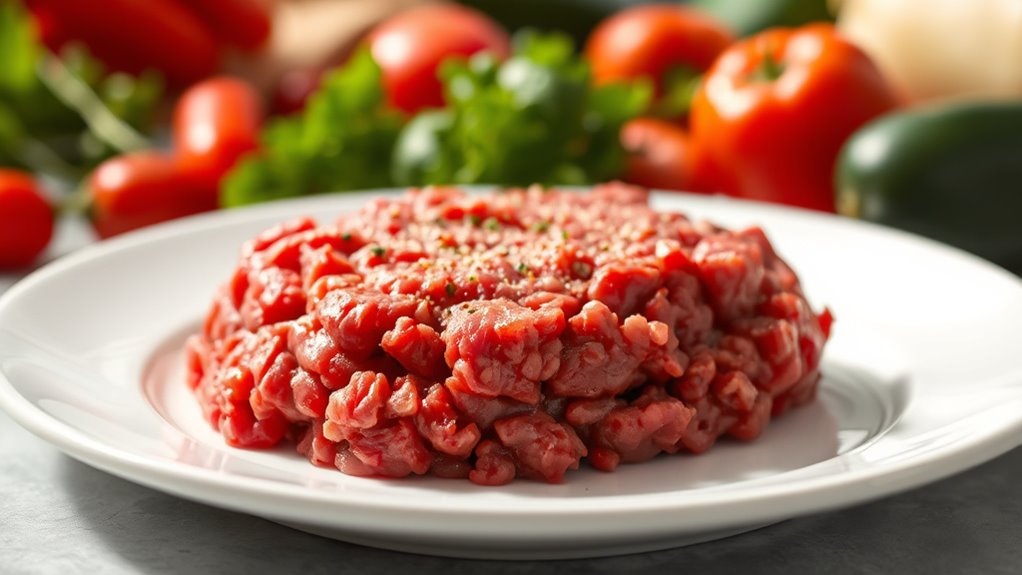
If you’re wondering how many calories are in 1/4 lb ground beef, it varies mainly by fat content. Lean options around 90% contain about 170 to 199 calories, while fattier types like 80% lean have closer to 287 calories. Cooking method also impacts calories since fat and water loss change the final weight.
Knowing these details helps you enjoy ground beef while managing your calorie intake. Keep exploring to find the best choices and cooking tips.
Understanding Ground Beef Fat Content

Although ground beef comes in various fat percentages, understanding its fat content helps you make informed choices about calories and nutrition. Ground beef typically ranges from 5% to 30% fat, affecting both flavor and calorie count.
When you pick leaner options, like 90% lean, you get less fat and fewer calories, but it might be less juicy. Conversely, higher-fat ground beef, such as 70% lean, offers more richness but also packs in more calories.
Knowing these percentages lets you balance taste and health based on your needs. Fat content also influences cooking results; higher fat means more shrinkage and grease.
Calorie Breakdown by Fat Percentage

Understanding the fat content in ground beef sets the stage for seeing how those percentages translate directly into calories.
For example, a 1/4 lb (4 oz) portion of 80% lean ground beef contains about 287 calories, with fat contributing roughly 207 of those calories.
On the other hand, 90% lean ground beef has fewer calories, around 199 per 1/4 lb, because it contains less fat.
Since fat packs 9 calories per gram, higher fat percentages markedly raise the calorie count.
Leaner options, like 93% lean, drop the calories even further to about 170 per 1/4 lb.
When you know the fat percentage, you can quickly estimate calorie intake by multiplying fat grams by 9 and adding protein calories, helping you make smarter dietary choices.
Comparing Raw vs. Cooked Ground Beef Calories

When you cook ground beef, its weight and calorie content change due to water and fat loss. While raw ground beef has a certain calorie count based on its weight, cooking reduces the meat’s weight, concentrating calories per gram. This means a 1/4 lb (4 oz) raw portion will weigh less after cooking, but the total calories remain close to the original amount, just denser.
| State | Weight (oz) | Approx. Calories |
|---|---|---|
| Raw | 4 | 287 |
| Cooked (pan) | 3 | 270 |
| Cooked (grill) | 2.8 | 265 |
Keep this in mind when measuring cooked portions to avoid underestimating calorie intake.
Nutritional Benefits of Ground Beef
While the calorie content shifts between raw and cooked ground beef, you might be curious about what else this protein-packed meat offers. Ground beef is more than just calories; it’s a nutrient-rich choice that fuels your body effectively.
When you include it in your meals, you’re getting essential nutrients that support muscle growth and overall health.
- Rich in high-quality protein, aiding muscle repair and growth
- Packed with iron, which boosts energy and oxygen transport
- Contains zinc to support your immune system and wound healing
- Provides B vitamins like B12, vital for brain function and red blood cell production
How Cooking Methods Affect Calorie Count
Because cooking methods can change the fat content and moisture level in ground beef, they directly impact its calorie count. When you cook ground beef by frying or sautéing, some fat melts and drips away, reducing calories slightly.
However, if you use oils or butter during cooking, those added fats increase the overall calorie content. Grilling or broiling allows excess fat to drip off, which can lower calories compared to pan-frying.
Boiling or steaming ground beef retains most of its fat, keeping calorie counts higher. Also, cooking longer at high heat can cause moisture loss, concentrating calories per serving.
Portion Control Tips for Ground Beef
Adjusting how you cook ground beef can influence its calorie content, but managing portion sizes plays an equally important role in controlling your overall intake. To make sure you’re not overeating, try these practical portion control tips.
First, measure your ground beef before cooking to keep servings consistent. Next, use smaller pans or molds to shape patties or meatballs that fit your desired size. Also, bulk up your meals with vegetables or whole grains to feel full without extra calories. Finally, consider freezing pre-portioned amounts, so you can quickly thaw just what you need.
Weigh ground beef using a kitchen scale.
Shape 1/4 lb patties for precise servings.
Add plenty of veggies alongside your meat.
Freeze single portions in resealable bags.
These habits help you enjoy ground beef without overindulging.
Ground Beef Calories in Popular Recipes
Understanding the calorie content in popular ground beef recipes can help you make smarter meal choices. For example, a classic cheeseburger made with 1/4 lb of 80% lean ground beef typically contains around 350-400 calories, including the bun, cheese, and condiments.
If you’re making tacos, using the same amount of beef will add about 200-250 calories per serving, depending on toppings like cheese and sour cream.
Spaghetti Bolognese with 1/4 lb of ground beef usually ranges from 400-500 calories per plate, depending on the sauce and pasta portion.
Alternatives to Ground Beef for Lower Calories
If you want to cut calories without sacrificing flavor, consider trying alternatives to ground beef. These options can help you enjoy your favorite dishes with fewer calories and often added nutrients.
For example, ground turkey or chicken offers a lean protein source with less fat. Lentils and beans provide fiber and a hearty texture, perfect for meatless meals. Mushrooms add umami and moisture, making them a great filler. You can also try plant-based meat substitutes that mimic the taste and texture of beef with fewer calories.
- Juicy ground turkey simmering in a tomato sauce
- Creamy lentil chili bubbling in a pot
- Sautéed mushrooms browning with herbs
- A sizzling veggie burger on a toasted bun
These swaps keep meals tasty and lighter.
Frequently Asked Questions
How Does Ground Beef Calorie Content Vary by Cattle Breed?
You’ll find ground beef calorie content varies by breed because some cattle store more fat, like Wagyu, increasing calories, while leaner breeds like Angus have fewer.
What Is the Environmental Impact of Producing 1/4 Lb Ground Beef?
You know what they say, “You reap what you sow.” Producing 1/4 lb ground beef uses lots of water, emits greenhouse gases, and requires land, so you’re contributing considerably to environmental strain with each serving.
How Should Ground Beef Be Safely Stored to Maintain Nutrition?
You should store ground beef in the refrigerator at or below 40°F and use it within 1-2 days. For longer storage, freeze it tightly wrapped to maintain nutrition and prevent spoilage.
Are There Any Popular Seasoning Blends That Add Calories to Ground Beef?
Seasoning blends are like storytellers adding flavor chapters. Most popular ones, like garlic or paprika, add minimal calories.
But watch out for sugary or oily mixes; they sneak extra calories in, changing your beef’s “plot.”
How Does Ground Beef Calorie Content Compare Internationally?
You’ll find that ground beef calorie content varies internationally due to differences in fat content and processing. Some countries prefer leaner cuts, so you’ll often see fewer calories compared to fattier blends used elsewhere.
Conclusion
Now that you know how fat content and cooking methods impact calories in your ¼ lb ground beef, you might be wondering—what’s the best choice for your goals? Whether you’re aiming to indulge or stay lean, the answer isn’t as simple as you think.
But here’s the twist: the way you prepare and portion your ground beef could make all the difference.
Ready to reveal the secret to enjoying every bite without guilt? Understanding how many calories are in 1/4 lb ground beef is key to making smart decisions that fit your lifestyle.