How Many Calories Are in Beef Fajitas
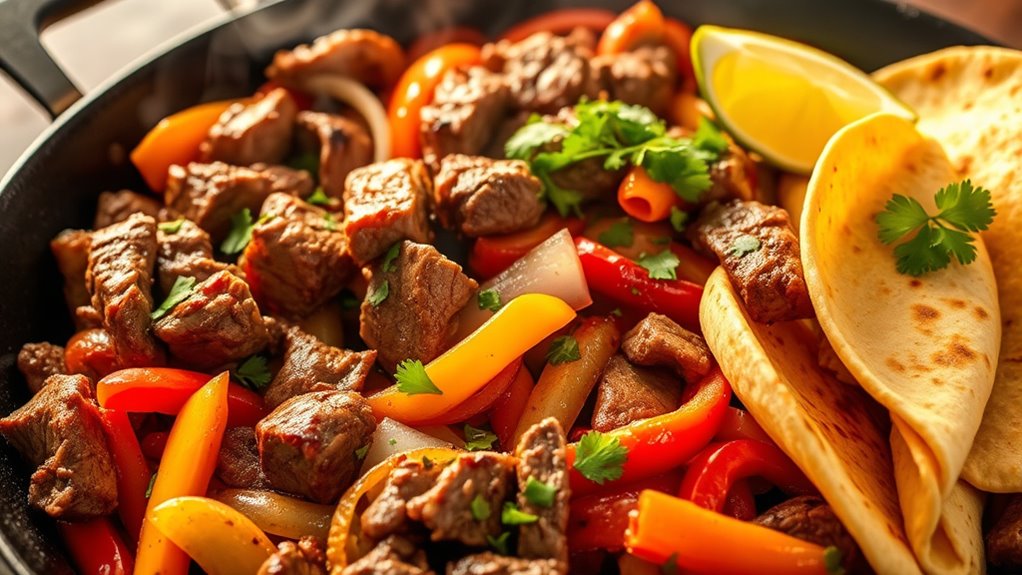
You can expect a typical beef fajita with sautéed peppers, onions, and two small tortillas to have around 350-450 calories. Calories vary based on the cut of beef, amount of oil used in cooking, and toppings like cheese or sour cream.
Using lean cuts, smaller or corn tortillas, and lighter toppings cuts calories without losing flavor. If you want to understand how each ingredient and method tweaks the calorie count, there’s plenty more to explore.
Nutritional Breakdown of Beef

Although beef is often enjoyed for its rich flavor, it also provides essential nutrients you should know about. When you include beef in your fajitas, you’re adding a solid source of protein, which helps build and repair muscles.
Beef also contains important vitamins like B12, which supports your nervous system, and minerals such as zinc and iron, vital for immune function and oxygen transport in your body.
Keep in mind that the cut of beef you choose influences the fat content; leaner cuts have fewer calories and less saturated fat.
Calories in Sautéed Peppers and Onions

When you sauté peppers and onions for your fajitas, you add flavor and nutrients with relatively few calories.
A cup of sautéed bell peppers contains about 40 calories, while a cup of sautéed onions adds around 60 calories.
These numbers can vary slightly depending on the amount of oil or butter you use during cooking.
Using a tablespoon of olive oil adds roughly 120 calories, so it’s important to measure your oil to keep calories in check.
A tablespoon of olive oil adds about 120 calories, so measuring it helps control your calorie intake.
Peppers and onions also provide fiber, vitamins A and C, and antioxidants, making them a healthy addition.
Calorie Content of Tortillas Used in Fajitas

Since tortillas serve as the base for your beef fajitas, knowing their calorie content helps you manage your meal’s overall nutrition. Tortillas vary widely in calories depending on type and size, so choosing wisely makes a difference. Flour tortillas tend to have more calories than corn.
Here’s a quick comparison to guide your choices:
| Tortilla Type | Size | Calories (approx.) |
|---|---|---|
| Flour | 8-inch | 140 |
| Flour | 6-inch | 90 |
| Corn | 6-inch | 50 |
| Whole Wheat | 8-inch | 130 |
| Low-Carb | 8-inch | 70 |
Opting for smaller or corn tortillas helps cut calories without sacrificing flavor.
Impact of Marinades on Calorie Count
Because marinades often contain oils, sugars, and other calorie-dense ingredients, they can substantially affect the total calorie count of your beef fajitas. When you choose a marinade with high amounts of oil or sugar, you add extra calories that can quickly add up, especially if you marinate the beef for several hours.
For example, olive oil adds about 120 calories per tablespoon, while sugary sauces like honey or barbecue can add even more.
To keep calories in check, you might opt for lighter marinades using citrus juice, vinegar, and herbs, which add flavor without many calories.
Being mindful of your marinade choices helps you control the overall calorie content, so your fajitas stay both tasty and aligned with your dietary goals.
How Cooking Methods Affect Calories
Marinades can add hidden calories to your beef fajitas, but how you cook them also plays a big role in the final calorie count.
When you grill or broil your beef, excess fat drips away, reducing calories.
On the other hand, pan-frying in oil or butter adds fat and calories, especially if you use generous amounts. Sautéing with minimal oil or using a non-stick pan helps keep calorie intake lower.
Avoid deep-frying, as it considerably increases calories. Also, cooking at high heat can cause some fat to render out, but if you add sauces or cheese afterward, those extra calories add up fast.
Comparing Homemade vs. Restaurant Beef Fajitas
When you make beef fajitas at home, you have full control over the ingredients and cooking methods, which can considerably reduce calories compared to restaurant versions. You can choose lean cuts of beef, use minimal oil, and add plenty of fresh vegetables without extra sodium or sugar.
Restaurants often add butter or oil liberally and serve larger portions, increasing calorie counts. Plus, they may include calorie-dense sides or toppings like sour cream and cheese.
Restaurants tend to use more butter and oil and serve bigger portions, boosting the calorie content.
At home, you can customize your fajitas with lighter options such as low-fat cheese or skipping high-calorie sauces. This way, you enjoy the same great flavors but with fewer calories.
Preparing fajitas yourself lets you balance taste and nutrition, making it easier to stick to your calorie goals without sacrificing satisfaction.
Portion Sizes and Their Influence on Calories
Although the ingredients in beef fajitas might be the same, the portion size you choose directly impacts the total calorie intake. If you pile your plate high with extra beef, peppers, and tortillas, you’re naturally consuming more calories.
A standard serving typically includes about 3-4 ounces of beef and two small tortillas, totaling roughly 350-450 calories. But doubling that portion can easily push the count past 700 calories.
Even small increases in tortilla size or number add up quickly since tortillas contribute significant carbs and calories. Paying attention to portion sizes helps you manage your calorie goals without sacrificing flavor.
Adding Toppings: Cheese, Sour Cream, and Guacamole
Controlling portion sizes is a great start, but what you add on top of your beef fajitas can also change the calorie count considerably. Toppings like cheese, sour cream, and guacamole pack flavor but add calories quickly, so it’s smart to be mindful of how much you use.
Cheese adds about 110 calories per ounce, giving richness but boosting fat content.
Sour cream contributes roughly 60 calories per two tablespoons, enhancing creaminess.
Guacamole offers healthy fats but still adds around 50 calories per two tablespoons.
Healthier Alternatives to Traditional Beef Fajitas
If you want to enjoy beef fajitas without the extra calories, you can easily swap ingredients and cooking methods to make them healthier. Try using leaner cuts of beef, like sirloin or flank steak, which have less fat but still deliver great flavor.
You can also replace traditional flour tortillas with whole wheat or corn tortillas for added fiber and fewer calories. Instead of cooking with a lot of oil, use a non-stick pan or grill the meat and veggies to cut down on added fat.
Load up on colorful vegetables such as bell peppers, onions, and tomatoes to boost nutrients and volume without adding many calories. These simple swaps help you enjoy your fajitas guilt-free while keeping them delicious and satisfying.
Tips for Reducing Calories Without Sacrificing Flavor
When you want to cut calories in your beef fajitas, you don’t have to sacrifice flavor. You can still enjoy a delicious meal by making smart choices and simple swaps.
Start by using lean cuts of beef to reduce fat content without losing that rich taste.
Incorporate plenty of fresh vegetables like bell peppers and onions to add volume and nutrients without extra calories.
Also, consider using low-calorie seasonings and marinades to keep your fajitas flavorful.
Choose lean beef cuts like sirloin or flank steak for less fat.
Load up on colorful veggies to boost fiber and fullness.
Replace heavy sour cream with Greek yogurt for creaminess and protein.
These tips help you enjoy tasty beef fajitas while keeping calories in check.
Frequently Asked Questions
What Is the Origin of Beef Fajitas?
Beef fajitas originated in Texas, where Mexican ranch workers grilled skirt steak over open flames. You’ll find this tasty dish blends Mexican and Texan flavors, making it a beloved, flavorful staple in Tex-Mex cuisine today.
Can Beef Fajitas Be Made Gluten-Free?
Absolutely, you can make beef fajitas gluten-free by using corn tortillas instead of flour ones and ensuring your seasoning and sauces don’t contain gluten.
It’s like time-traveling from the Wild West to modern health trends effortlessly!
What Are Traditional Spices Used in Beef Fajitas?
You’ll typically use cumin, chili powder, garlic powder, paprika, and oregano in beef fajitas. These spices give your dish that classic smoky, slightly spicy flavor.
Don’t forget a pinch of salt and pepper too!
How Long Should Beef Marinate for Best Flavor?
You should marinate beef for at least 30 minutes to 2 hours to enhance flavor. For best results, marinate up to 24 hours, but don’t exceed that to avoid a mushy texture.
What Side Dishes Pair Well With Beef Fajitas?
You’ll want sides like zesty guacamole, fresh salsa, and warm tortillas to dance with your beef fajitas. Add Spanish rice and refried beans to complete the fiesta, each bite bursting with vibrant, comforting flavors you’ll crave.
Conclusion
When you think about beef fajitas, you might assume they’re always calorie-heavy, but surprisingly, you can enjoy them without overdoing it. Coincidentally, the way you prepare and top your fajitas often impacts calories more than the beef itself.
By choosing lean cuts, controlling portions, and adding fresh veggies instead of heavy toppings, you’ll keep the flavors bold and the calories in check.
So go ahead—savor every bite without guilt! Understanding how many calories are in beef fajitas helps you make smarter choices and enjoy this delicious meal as part of a balanced diet.