How Many Calories Are in a Cup of Beef Stew?
You’ll find about 250 to 300 calories in a cup of beef stew, though it varies with ingredients and beef cuts. Using lean beef like sirloin lowers calories, while fattier cuts boost them. Vegetables add nutrients and carbs, affecting total energy.
Rich broths or heavy sauces increase calories, so choose lighter options to keep it healthy. If you want to enjoy flavorful beef stew without extra calories, understanding these factors will help you make smarter choices.
Understanding the Basic Ingredients in Beef Stew

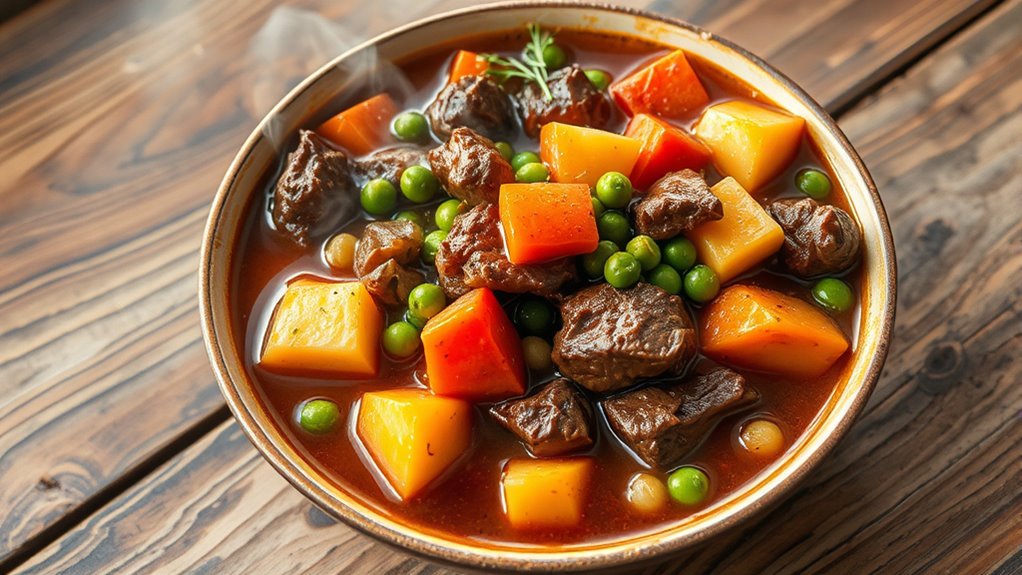
Although beef stew recipes vary, you’ll typically find a few key ingredients that form its hearty base. You’ll start with tender chunks of beef, which provide rich protein and flavor.
Beef stew begins with tender beef chunks, delivering rich protein and deep, savory flavor.
Then, you’ll add vegetables like carrots, potatoes, and onions that bring natural sweetness and texture.
Most recipes include a savory broth, often beef or vegetable stock, to tie everything together. Herbs and seasonings such as thyme, bay leaves, salt, and pepper enhance the stew’s depth.
Some cooks throw in garlic or tomato paste for extra complexity.
When you understand these basics, you see how each component contributes to the stew’s comforting taste and nutritional profile. This knowledge helps you customize the stew to your liking while keeping it balanced and satisfying.
Average Calorie Count in a Standard Cup of Beef Stew

Since beef stew combines protein, vegetables, and broth, its calorie content can vary, but on average, a standard cup contains about 250 to 300 calories.
This range accounts for common ingredients like beef chunks, potatoes, carrots, onions, and a savory broth.
When you serve yourself a cup, you’re getting a balanced mix of nutrients that provide energy without excessive calories.
Keep in mind that the exact count depends on ingredient proportions and cooking methods, but this average gives you a solid baseline.
If you’re tracking your intake, measuring portions carefully helps maintain accuracy.
How Different Cuts of Beef Affect Calorie Content

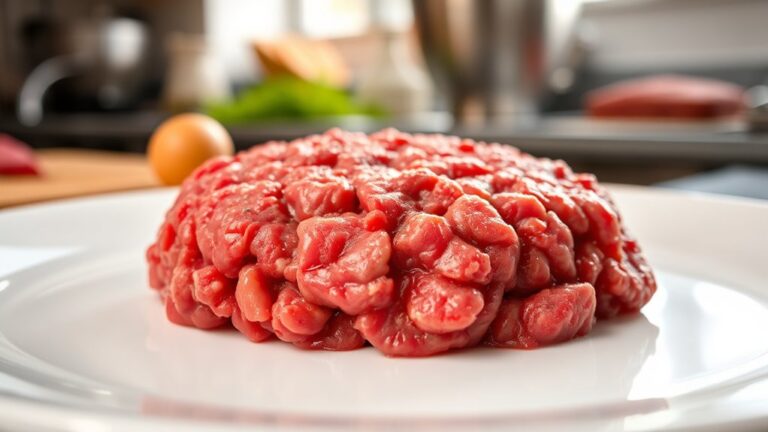
When you choose different cuts of beef for your stew, you’ll notice variations in calorie content because each cut has a unique fat and protein composition. Leaner cuts like sirloin have fewer calories, while fattier cuts like chuck add more richness and calories. Knowing these differences helps you control the stew’s calorie count and flavor.
| Cut of Beef | Calories per 3 oz (cooked) | Fat Content (grams) |
|---|---|---|
| Sirloin | 150 | 6 |
| Chuck | 230 | 15 |
| Round | 170 | 8 |
Pick cuts based on your calorie goals. Leaner cuts reduce calories, fattier cuts enhance taste but increase calories.
The Role of Vegetables in Beef Stew Calories
While beef usually takes center stage in stew, the vegetables you add play a crucial role in shaping the dish’s calorie content.
Root vegetables like potatoes, carrots, and parsnips add natural sweetness and texture but also contribute more calories due to their carbohydrate content.
On the other hand, non-starchy vegetables such as celery, onions, and green beans provide bulk and nutrients with fewer calories.
If you’re aiming to keep your stew lighter, focusing on these lower-calorie veggies helps.
Remember, the quantity and type of vegetables you include can markedly impact the total calories per cup.
Impact of Broth and Sauces on Total Calories
Although broth might seem like a simple base for your beef stew, it can considerably affect the calorie count depending on its type and preparation. Choosing a rich, fatty broth or adding creamy sauces can quickly raise calories, while a clear, low-fat broth keeps them lower.
You’ll want to watch out for added sugars or thickeners in commercial sauces, too. They add calories without much nutrition.
| Broth Type | Calories per Cup | Emotional Impact |
|---|---|---|
| Beef Broth | 40-60 | Hearty, comforting |
| Cream-based | 150-200 | Indulgent, rich |
| Vegetable Broth | 15-30 | Light, revitalizing |
Understanding these differences helps you enjoy your stew without surprises.
Comparing Homemade vs. Store-Bought Beef Stew Calories
How do homemade and store-bought beef stews stack up in calories? When you make beef stew at home, you control the ingredients and portion sizes, which often leads to fewer calories.
Homemade versions typically use lean cuts of beef, fresh vegetables, and minimal added fats or sugars. On the other hand, store-bought stews can contain preservatives, excess sodium, and added sugars or thickeners that increase calorie content. They also tend to have higher fat content from added oils or creams.
While a cup of homemade beef stew might average around 200-250 calories, store-bought options can range from 250 to 350 calories per cup.
Tips for Reducing Calories Without Sacrificing Flavor
If you want to enjoy beef stew without piling on calories, you can make simple swaps that keep the flavor rich and satisfying. Start by choosing lean cuts of beef, like sirloin or round, which reduce fat without losing tenderness.
Next, bulk up your stew with plenty of vegetables—they add volume and nutrients without many calories.
Finally, swap heavy thickeners like flour or cream for alternatives such as pureed vegetables or a small amount of cornstarch.
Use low-sodium broth to control salt and calories.
Add herbs and spices for depth without extra fat.
Trim visible fat from meat before cooking.
These tweaks let you savor every spoonful while keeping your calorie count in check.
Nutritional Benefits Beyond Calories in Beef Stew
While counting calories is important, you’ll also want to contemplate the rich nutritional benefits beef stew offers beyond just its energy content. This hearty dish provides a good source of protein, essential for muscle repair and growth, which helps keep you feeling satisfied longer.
The vegetables in beef stew contribute valuable vitamins and minerals, like vitamin A, C, and potassium, supporting your immune system and heart health. Additionally, the slow-cooked beef contains iron, which is indispensable for oxygen transport in your blood, preventing fatigue.
The stew’s fiber content from vegetables aids digestion and promotes gut health. So, when you enjoy a cup of beef stew, you’re not just fueling your body, you’re nourishing it with essential nutrients that support overall well-being.
Portion Control Strategies for Enjoying Beef Stew
Since beef stew is hearty and calorie-dense, managing your portion size can help you enjoy it without overeating. You don’t have to give up your favorite dish; just be mindful of how much you serve yourself.
Here are some practical strategies:
Use a smaller bowl or cup to naturally limit your serving size.
Measure your portion with a standard cup before eating to stay aware of calorie intake.
Fill half your plate with vegetables or salad to balance the meal and prevent overeating stew.
Pairing Beef Stew With Low-Calorie Side Dishes
Balancing your beef stew with low-calorie side dishes helps keep your meal satisfying without adding too many extra calories. You can complement the rich flavors of beef stew with fresh, light options that won’t weigh you down.
Consider steamed or roasted vegetables, which add fiber and nutrients. Salads with a tangy vinaigrette can also brighten your plate. For a starch alternative, try cauliflower rice or a small portion of whole grains.
| Side Dish | Calories (per serving) | Benefits |
|---|---|---|
| Steamed Broccoli | 55 | High fiber, vitamins |
| Mixed Green Salad | 30 | Low calorie, invigorating |
| Cauliflower Rice | 25 | Low carb, filling |
These choices keep your meal balanced and nutritious.
Frequently Asked Questions
Can Beef Stew Be Frozen Without Losing Nutritional Value?
Yes, you can freeze beef stew without losing much nutritional value. Just cool it quickly, store it airtight, and freeze.
When reheated properly, it retains most nutrients and flavor, keeping your meal healthy and tasty.
How Long Does Beef Stew Stay Fresh in the Refrigerator?
You keep beef stew fresh by refrigerating it for 3 to 4 days. You store it properly, you cool it quickly, and you reheat it thoroughly to enjoy every delicious bite safely and satisfyingly.
What Are Common Allergens Found in Beef Stew?
You might find common allergens like dairy, wheat (from flour), soy, or celery in beef stew. Always check ingredients carefully, especially if it includes broth, seasoning, or thickening agents, to avoid allergic reactions.
Is Beef Stew Suitable for a Low-Carb Diet?
If carbs are a thorn in your side, beef stew can fit your low-carb diet if you skip starchy veggies like potatoes. Stick to meat, broth, and low-carb veggies. Your bowl stays hearty without piling on carbs.
How Does Slow Cooking Affect the Flavor of Beef Stew?
Slow cooking intensifies beef stew’s flavor by breaking down tough meat fibers and melding ingredients together. You’ll get richer, deeper tastes and tender textures that make every bite comforting and satisfying.
Conclusion
You might think counting calories in a cup of beef stew is complicated, but it’s easier than you expect—especially since many ingredients naturally balance each other out. The beef adds richness, while the veggies and broth keep things lighter, surprisingly making your stew both hearty and manageable in calories.
So next time you serve up a bowl, remember: enjoying flavor and watching calories can go hand in hand, often by pure coincidence. Understanding how many calories are in a cup of beef stew helps you make informed choices without sacrificing taste.