How Many Pounds Does a Whole Beef Tenderloin Weigh?
A whole beef tenderloin usually weighs between 4 to 6 pounds, making it perfect for feeding several people without leftover waste. The exact weight can vary depending on the animal’s breed, age, and how much it’s trimmed.
When buying, aim for about half a pound to a pound per person, depending on appetites. If you want to master sizing, cuts, and cooking tips, there’s plenty more to discover about this prized cut.
Typical Weight Range of a Whole Beef Tenderloin

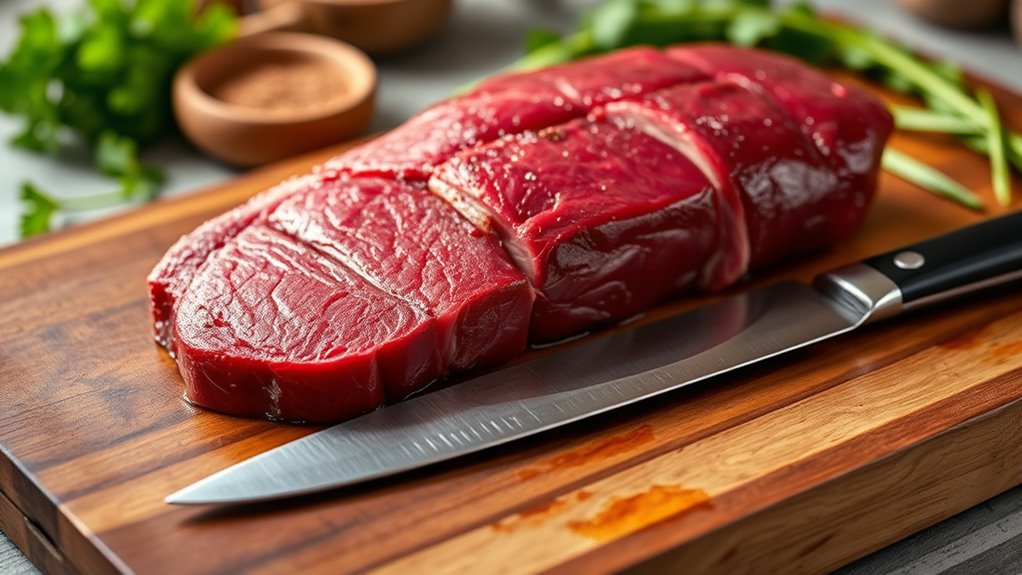
Although the weight of a whole beef tenderloin can vary, it typically falls between 4 to 6 pounds. When you pick up a whole tenderloin, you’ll notice it’s a fairly large cut, often enough to serve multiple people.
This range suits most recipes that call for roasting or grilling the entire cut. Keep in mind, the tenderloin includes the “chain,” a smaller muscle attached to the main part, which some butchers trim off.
You’ll find that the main, trimmed portion usually weighs closer to 4 to 5 pounds, while the untrimmed tenderloin leans toward 5 to 6 pounds.
The trimmed tenderloin weighs around 4 to 5 pounds, while the untrimmed version is typically 5 to 6 pounds.
If you’re planning a meal, knowing this typical weight helps you estimate portions and cooking times more accurately.
Factors Influencing Beef Tenderloin Weight

Because multiple factors affect the weight of a whole beef tenderloin, it’s important to understand what influences the size you’ll get. You’ll find that breed, age, and trimming practices all play key roles. For example, some cattle breeds naturally produce larger tenderloins, while younger animals tend to have smaller cuts.
How butchers trim the tenderloin also impacts final weight.
| Factor | Impact on Weight | Notes |
|---|---|---|
| Breed | Varies | Some breeds yield larger cuts |
| Age | Smaller if younger | Mature cattle have bigger muscles |
| Trimming Style | Reduces weight | More trimming means less meat |
| Feeding | Influences muscle mass | Well-fed cattle produce heavier tenderloins |
Understanding these factors helps you anticipate the size of your beef tenderloin.
Understanding the Different Cuts of Beef Tenderloin

When you break down a whole beef tenderloin, you’ll find it’s divided into distinct cuts, each with unique qualities and cooking methods.
First, there’s the butt, or the head end, which is thicker and ideal for roasts or large steaks like Chateaubriand.
The butt, or head end, is thicker and perfect for roasts or large steaks like Chateaubriand.
Next comes the center-cut, the most tender and uniform section, perfect for filet mignon steaks.
Finally, the tail is thinner and tapers off; it’s less tender but great for dishes requiring smaller cuts or stir-frying.
Knowing these parts helps you cook each section properly, ensuring tenderness and flavor.
Understanding these cuts also guides you when buying or preparing tenderloin, so you get the best out of this prized beef portion.
How to Choose the Right Size for Your Occasion
Deciding on the right size of beef tenderloin depends largely on the number of guests you’re serving and the type of meal you plan to prepare.
Generally, allocate about half a pound to one pound of beef tenderloin per person, depending on whether it’s the main course or part of a multi-course meal.
If you’re hosting a dinner party with hearty eaters, lean toward one pound per guest. For lighter meals or when serving several sides, half a pound per person should suffice.
Also, consider trimming losses; the cooked portion tends to weigh less than the raw cut.
Tips for Buying and Handling Beef Tenderloin
After determining the right size of beef tenderloin for your event, you’ll want to focus on selecting and handling the cut properly to guarantee the best flavor and texture.
First, look for a tenderloin with a bright red color and fine marbling, as this indicates freshness and tenderness.
When buying, consider purchasing from a trusted butcher who can trim the silver skin for you.
Store the tenderloin in the coldest part of your refrigerator and use it within two days of purchase for ideal freshness.
If you need to freeze it, wrap it tightly in plastic and foil to prevent freezer burn.
Finally, always handle the meat with clean hands and avoid cross-contamination to keep it safe and delicious.
Cooking Considerations Based on Tenderloin Size
Since beef tenderloins come in various sizes, you’ll need to adjust your cooking time and method accordingly to guarantee even doneness. Smaller tenderloins, around 4 to 5 pounds, cook faster and are ideal for quick roasting or grilling.
Adjust cooking times based on tenderloin size; smaller cuts roast or grill quickly for perfect doneness.
For larger tenderloins, which can weigh 8 to 12 pounds, consider slow-roasting at a lower temperature to ensure the center cooks evenly without drying out the exterior.
Use a meat thermometer to monitor internal temperature closely, aiming for 125°F to 130°F for medium-rare.
Also, remember to let the meat rest after cooking; larger cuts require longer resting times to redistribute juices properly.
Frequently Asked Questions
What Is the Best Way to Store a Whole Beef Tenderloin?
You should wrap the whole beef tenderloin tightly in plastic wrap, then aluminum foil, and store it in the coldest part of your fridge.
For longer storage, freeze it in a vacuum-sealed bag to keep it fresh.
How Long Does Beef Tenderloin Stay Fresh in the Fridge?
Picture that rich, marbled beef resting in your fridge. It stays fresh for about 3 to 5 days. You’ll want to keep it tightly wrapped, so those flavors don’t fade or dry out on you.
Can You Freeze a Whole Beef Tenderloin Without Losing Quality?
Yes, you can freeze a whole beef tenderloin without losing quality if you wrap it tightly in plastic wrap and aluminum foil or vacuum seal it.
Freeze it quickly and use within 6-12 months for best flavor.
What Are Common Seasoning Options for Beef Tenderloin?
You’ll want to season your beef tenderloin with salt and pepper as a classic base, then add garlic, rosemary, or thyme to symbolize strength and elegance. This enhances its natural flavor while inviting warmth and sophistication to your plate.
How Long Should Beef Tenderloin Rest Before Slicing?
You should let beef tenderloin rest for about 10 to 15 minutes before slicing. This helps the juices redistribute, making your meat juicier and more flavorful. Don’t skip this important step!
Conclusion
When you pick up a whole beef tenderloin, think of it as holding a prized sword—lean, powerful, and ready for your culinary battle. Typically weighing between 4 to 6 pounds, its size varies with factors like trimming and breed.
Choosing the right weight guarantees your feast is perfectly balanced, whether it’s a quiet dinner or a grand celebration. Handle it well, and you’ll carve out a meal worthy of legends.
Understanding how many pounds a whole beef tenderloin weighs helps you plan portions and cooking times effectively. This knowledge ensures your dish is both impressive and delicious every time.