How Much Protein Is in 1/2 Pound of Ground Beef?
If you choose 90% lean ground beef, half a pound gives you about 46 grams of protein, making it an excellent source for a protein-packed meal. Regular ground beef with more fat offers less protein—around 38 to 40 grams per half-pound—since fat takes up space.
Cooking concentrates protein by reducing fat and water, so the protein per ounce increases even as it shrinks.
Keep going, and you’ll find tips to maximize your protein intake from ground beef.
Protein Content in Raw Ground Beef by Fat Percentage
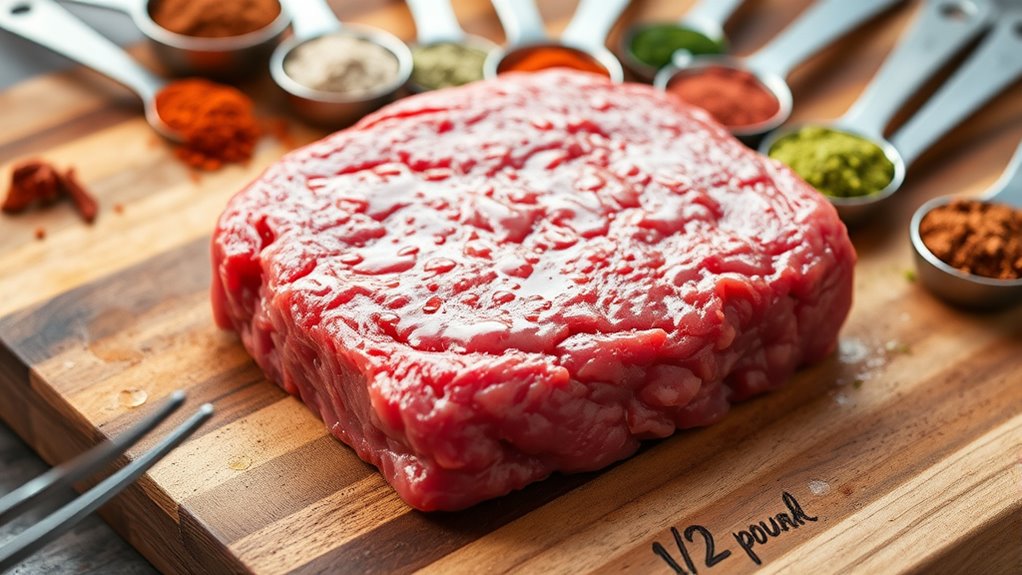
While the fat percentage in ground beef varies, it directly affects the protein content you get per serving. When you choose leaner ground beef, like 90% lean, you’ll find it contains more protein per half-pound than fattier options, such as 70% lean.
That’s because fat takes up space that could otherwise be protein. For example, 90% lean ground beef typically provides about 46 grams of protein per half-pound, whereas 70% lean might offer closer to 38 grams.
If you’re aiming for higher protein intake, opting for leaner ground beef makes sense. Just keep in mind that as fat decreases, protein rises proportionally since the total weight remains constant.
This balance helps you tailor your choice based on nutritional goals without cooking influencing the content yet.
How Cooking Affects Protein Levels in Ground Beef
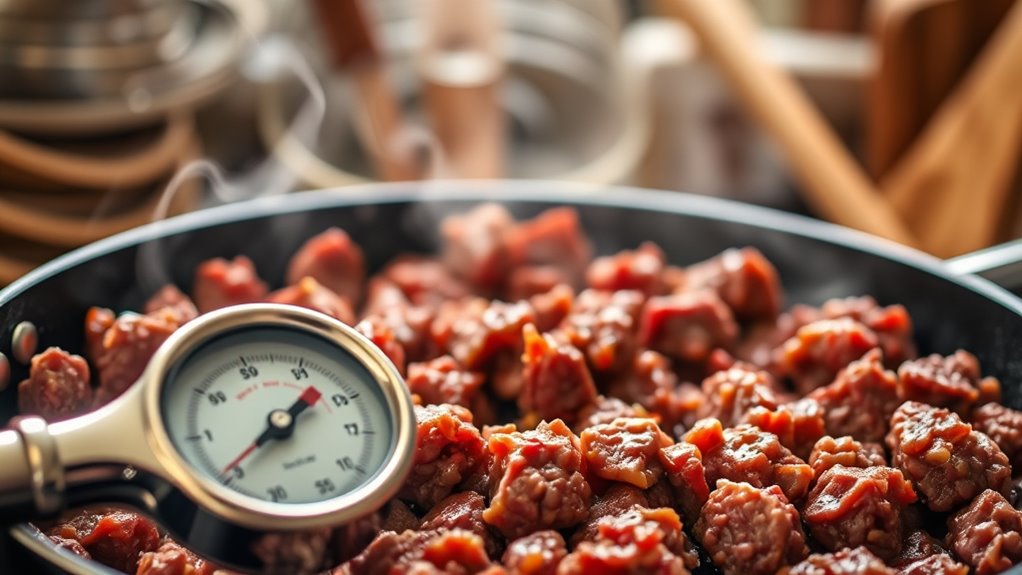
Because cooking causes ground beef to lose water and fat, the protein concentration per serving changes noticeably. When you cook ground beef, moisture evaporates, and fat melts away, which means the beef shrinks and the protein becomes more concentrated by weight.
Cooking ground beef reduces water and fat, concentrating protein per serving as the meat shrinks.
However, the total protein amount you consume stays roughly the same since none of the protein is lost, it’s just denser.
Here’s what you should know:
- Cooking reduces the beef’s weight, increasing protein density per ounce.
- Protein content per cooked serving appears higher, but total protein in the original portion remains constant.
- Overcooking can toughen protein but doesn’t decrease its nutritional value.
Comparing Protein in Lean vs. Regular Ground Beef

If you want to maximize your protein intake, choosing between lean and regular ground beef matters. Lean ground beef, typically labeled as 90% lean or higher, contains more protein per half-pound than regular ground beef, which usually has 70-80% lean meat.
That’s because lean beef has less fat, so a greater portion of its weight comes from muscle, which is rich in protein. For example, half a pound of 90% lean ground beef offers roughly 46 grams of protein, while the same amount of 75% lean ground beef provides about 40 grams.
If protein is your priority, lean ground beef is a better choice, though regular ground beef may suit your taste or budget preferences.
Either way, understanding these differences helps you meet your nutrition goals more effectively.
Incorporating Ground Beef Protein Into Your Daily Diet
To boost your daily protein intake, you can easily include ground beef in various meals without much hassle. Its versatility allows you to enjoy protein-rich dishes that fit your taste and schedule.
Here are three simple ways to incorporate ground beef protein daily:
- Quick stir-fries: Brown ground beef with your favorite veggies for a fast, nutrient-packed meal.
- Taco bowls: Use seasoned ground beef over rice or greens, topped with salsa and avocado.
- Hearty soups: Add ground beef to vegetable or bean soups for extra protein and flavor.
Tips for Maximizing Protein Intake From Ground Beef
When you want to get the most protein from ground beef, choosing lean cuts and proper cooking methods can make a big difference. Opt for ground beef labeled 90% lean or higher to maximize protein while minimizing fat.
Cooking methods like grilling or broiling help reduce fat content without sacrificing protein. Avoid overcooking, as it can degrade protein quality.
Pair ground beef with protein-rich sides like beans or quinoa to boost overall intake.
Portion control matters. Stick to recommended serving sizes to maintain a balanced diet.
In conclusion, consider mixing ground beef with other protein sources, such as eggs or dairy, for variety and a complete amino acid profile.
These tips help you efficiently increase your protein intake from ground beef.
Frequently Asked Questions
Is Ground Beef Protein Better Absorbed Than Plant-Based Protein?
Yes, you absorb protein from ground beef better than plant-based sources because it contains all essential amino acids and is more bioavailable.
However, combining plant proteins can also meet your needs effectively with proper planning.
How Does Ground Beef Protein Impact Muscle Recovery?
Ground beef protein helps you recover muscles quickly because it contains all essential amino acids and is rich in leucine, which triggers muscle protein synthesis. Eating it after workouts supports repair and growth effectively.
Are There Any Allergens in Ground Beef Protein?
Ground beef protein itself isn’t a common allergen, but some people might react to beef if they have a red meat allergy.
Always check for cross-contamination if you’re sensitive to other allergens in processing.
Can Ground Beef Protein Cause Digestive Issues?
Don’t put all your eggs in one basket. You might face digestive issues from ground beef protein if you’re sensitive or eat too much. Your body could react with bloating or discomfort, so listen to how you feel.
What Is the Environmental Impact of Producing Ground Beef Protein?
You’ll find that producing ground beef protein has a significant environmental impact, including high greenhouse gas emissions, water use, and land consumption.
Choosing plant-based proteins or sustainably raised options can help reduce this footprint.
Conclusion
When you’re aiming to boost your protein intake with ground beef, remember that half a pound packs a solid punch, especially if you choose lean options. Cooking might shrink the size, but it won’t steal the protein treasure inside.
Think of ground beef as a reliable fuel source, powering your day with muscle-building nutrients. By picking the right cut and cooking smart, you’ll keep your protein levels soaring like a kite in a strong wind.
In conclusion, understanding how much protein is in 1/2 pound of ground beef helps you make informed dietary choices. Opting for lean ground beef ensures you maximize your protein intake while minimizing fat, making it an excellent addition to your nutrition plan.