How to Cook Roast Beef From Frozen Step-By-Step
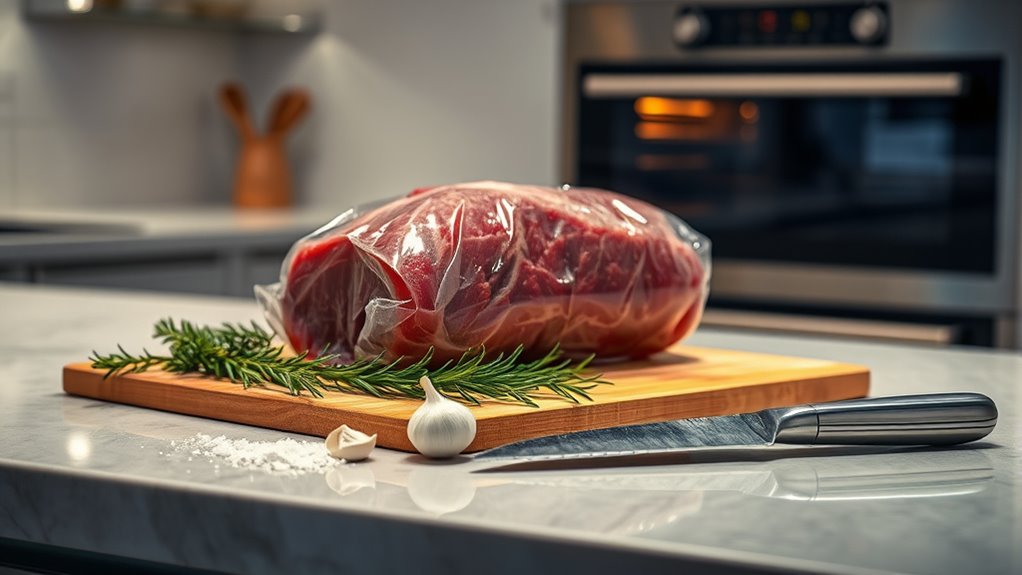
To cook roast beef from frozen, start by selecting a well-marbled cut such as ribeye or sirloin for optimal tenderness. Cooking roast beef from frozen can be a convenient way to prepare a delicious meal without thawing in advance.
Begin by removing all packaging from the meat, then pat it dry with paper towels. Season the roast generously to enhance flavor.
Place the roast on a rack inside a roasting pan to allow air circulation around the meat. This helps in even cooking and browning.
Lower your oven temperature by about 25°F compared to fresh roast beef cooking. Increase the overall cooking time by at least 50% to ensure the meat cooks thoroughly.
Use a meat thermometer to check for doneness; aim for your desired internal temperature. After cooking, let the roast rest before slicing to retain juices.
Keep reading for more tips on ensuring juicy, evenly cooked roast beef every time.
Choosing the Right Cut of Roast Beef for Cooking From Frozen
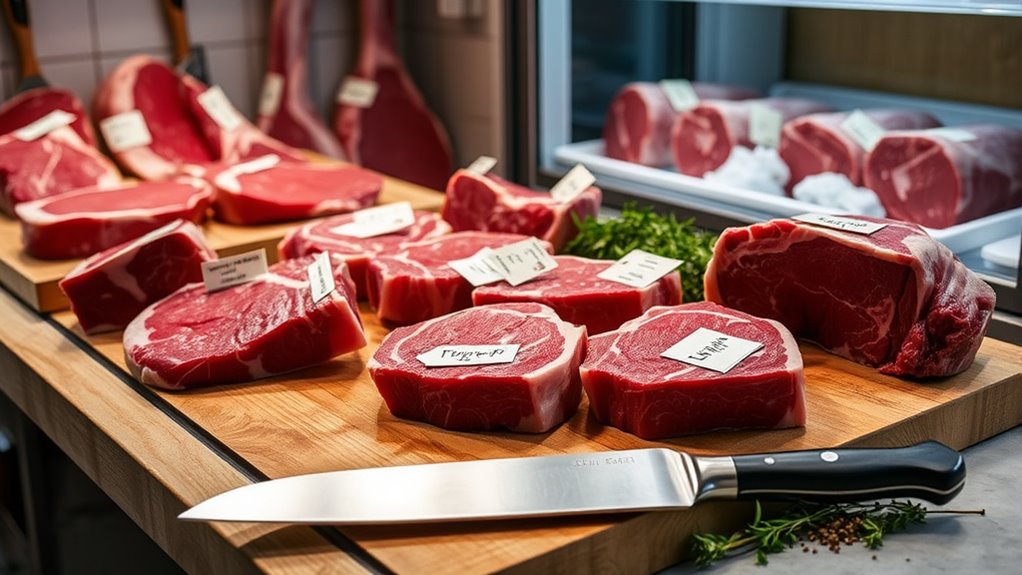
When cooking roast beef from frozen, you’ll want to choose cuts that cook evenly and retain moisture well. Opt for well-marbled cuts like ribeye, sirloin, or chuck roast because the fat helps keep the meat juicy during the extended cooking time.
Avoid leaner cuts like eye of round, which can dry out more easily when cooked from frozen. A uniform shape also matters—it ensures the roast cooks consistently without overcooking thinner areas.
If you pick a bone-in roast, be aware that it might take slightly longer to cook but adds extra flavor. Ultimately, look for cuts that balance tenderness and fat content to get the best results when cooking roast beef straight from the freezer.
Preparing Your Frozen Roast Beef for the Oven
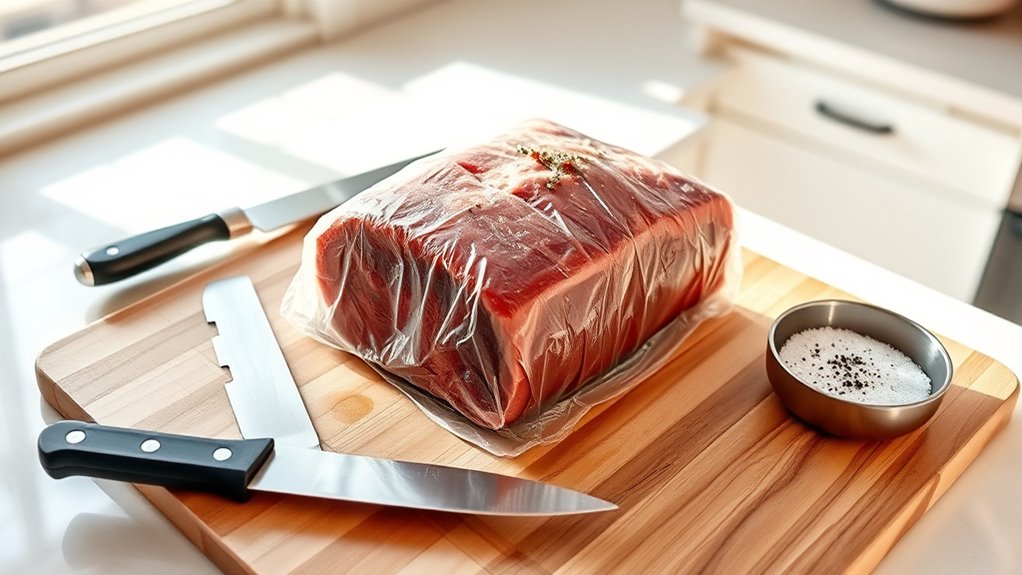
Selecting the right cut sets you up for success, but how you prepare that frozen roast beef before it hits the oven also makes a big difference.
First, remove any packaging to avoid melting or burning in the oven.
Pat the beef dry with paper towels to reduce surface ice, which helps the seasoning stick better.
Season generously with salt, pepper, and your favorite herbs or spices, ensuring even coverage.
If you like, you can also rub the roast with a bit of oil to enhance browning.
Place the roast on a rack in a roasting pan to allow air circulation and even cooking.
Avoid thawing; cooking from frozen preserves texture and flavor.
With these steps, your roast beef is ready for the oven.
Adjusting Cooking Times and Temperatures for Frozen Meat
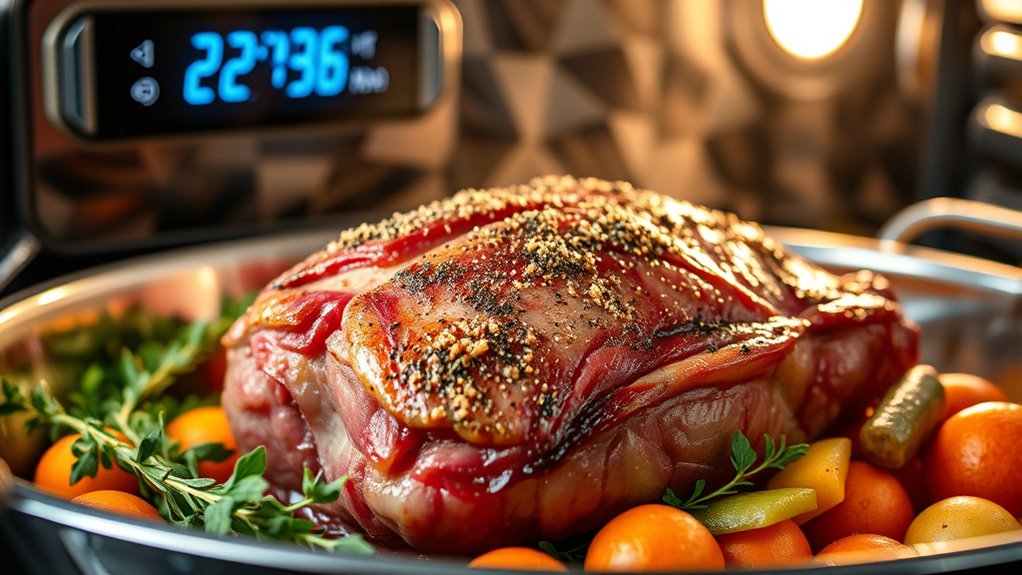
Since frozen roast beef takes longer to cook than thawed meat, you’ll need to adjust both the cooking time and oven temperature to make certain it cooks evenly without drying out.
Start by lowering your oven temperature by about 25°F (around 15°C) compared to the usual setting for thawed roasts.
This slower, gentler heat helps the meat cook through properly without the exterior becoming tough.
Then, increase the cooking time by at least 50%. For example, if a thawed roast takes 1 hour, plan for 1.5 hours when cooking from frozen.
Use a reliable meat thermometer to monitor the internal temperature, aiming for your desired doneness.
These adjustments ensure your roast beef is safe, tender, and flavorful, even when starting from frozen.
Techniques for Ensuring Even Cooking and Juiciness
To guarantee your roast beef cooks evenly and stays juicy, you’ll want to manage heat distribution carefully and retain moisture throughout the process. Start by using a roasting pan with a rack to allow air circulation around the meat.
Cover the roast loosely with foil during the initial cooking phase to trap steam and keep it moist. Rotate the roast halfway through cooking to avoid hot spots.
| Technique | Reason | Benefit |
|---|---|---|
| Use a roasting rack | Air circulates evenly | Even cooking |
| Cover with foil | Traps moisture | Juicier meat |
| Rotate roast halfway | Prevents uneven cooking | Consistent texture |
| Monitor heat zones | Avoids hot spots | Uniform doneness |
Checking Doneness and Resting Your Roast Beef
Once your roast beef has cooked evenly and retained its juiciness, the next step is to check its doneness accurately. Use a meat thermometer inserted into the thickest part of the roast, avoiding bones or fat.
Check doneness by inserting a thermometer into the roast’s thickest part, avoiding bones and fat.
For rare, aim for 125°F; medium-rare, 135°F; medium, 145°F; and well-done, 160°F. Remember, the roast will continue to cook slightly after you remove it from the oven due to residual heat.
After checking, transfer the roast to a cutting board and cover it loosely with foil. Let it rest for at least 15 minutes. Resting allows the juices to redistribute, making your roast tender and flavorful when sliced.
Avoid skipping this step. It’s essential for the best texture and taste in your roast beef.
Frequently Asked Questions
Can I Use a Slow Cooker to Cook Roast Beef From Frozen?
You can use a slow cooker to cook roast beef from frozen, but it’s safer to thaw it first. Cooking frozen meat in a slow cooker risks uneven cooking and potential bacteria growth.
Thaw for best results.
Is It Safe to Season Frozen Roast Beef Before Cooking?
It’s tempting to season frozen roast beef, but you shouldn’t because it won’t absorb flavors well. Instead, wait until it’s partially thawed so your seasoning can stick.
This approach gives you a tastier and safer meal.
How Do I Store Leftover Roast Beef After Cooking From Frozen?
You should cool leftover roast beef quickly, then store it in airtight containers or tightly wrapped in foil or plastic wrap. Keep it in the fridge for up to 3-4 days, or freeze for longer storage.
Can I Cook Frozen Roast Beef on a Grill Instead of an Oven?
Yes, you can cook frozen roast beef on a grill. Just use indirect heat, keep the lid closed, and grill slowly to guarantee even cooking.
It’ll take longer than thawed beef, so monitor the temperature carefully.
What Side Dishes Pair Best With Roast Beef Cooked From Frozen?
Like a perfect dance partner, creamy mashed potatoes and roasted veggies complement roast beef beautifully. You’ll also want to toss in some garlic bread and a fresh salad to balance flavors and keep your meal exciting.
Conclusion
Cooking roast beef from frozen might seem tricky, but it’s totally doable and just as delicious. You might worry it won’t cook evenly or stay juicy, but by adjusting your temperature and cooking time, you’ll get a perfectly tender roast every time. Just remember to check doneness carefully and let it rest before carving.
With these simple steps, you’ll save time without sacrificing flavor or quality—no need to thaw in advance! Cooking roast beef from frozen is a convenient method that ensures a tasty and satisfying meal even when you’re short on time. Follow the step-by-step guide to enjoy a juicy roast beef that’s cooked to perfection.