How to Make Ground Beef Stick Together for Hamburgers
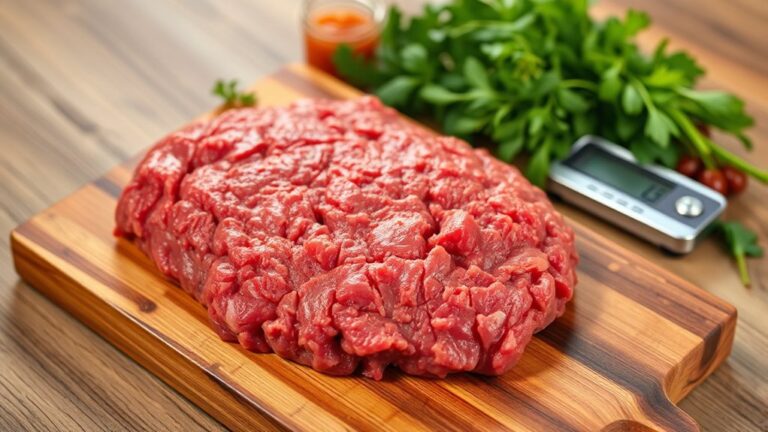
To make ground beef stick together for hamburgers, start with a blend that has about 20% fat, like chuck or chuck-sirloin mix. Using the right fat content is essential for binding and flavor. Add a beaten egg and about ¼ cup of breadcrumbs per pound of meat to help bind it.
Mix gently to avoid overworking the meat, which can make patties tough. Form patties carefully, pressing evenly to keep their shape. With a few more tips, you’ll master juicy burgers that hold up perfectly on the grill.
Choosing the Right Ground Beef Blend
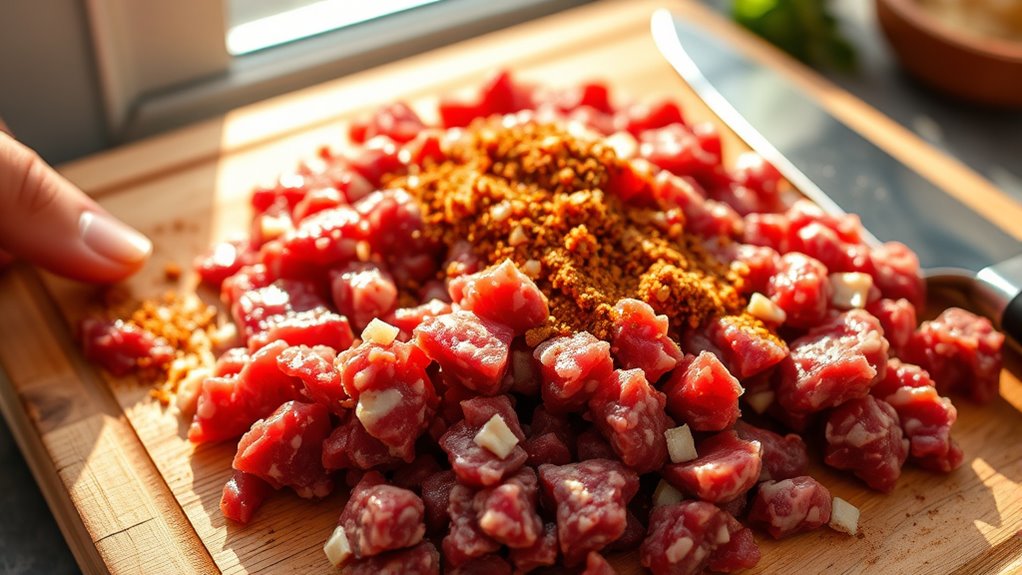
Although any ground beef can work, choosing the right blend is key to making your beef stick together well. You’ll want to select a grind that balances texture and protein structure.
Look for ground beef that includes a mix of coarser and finer grinds, as this combination helps the meat bind more effectively. Avoid meat that’s overly ground or too finely minced because it can become mushy and won’t hold shape.
Additionally, freshly ground beef tends to bind better than pre-packaged, processed options. When shopping, consider blends labeled as chuck or a mix of chuck and sirloin, as these provide a sturdy texture without being too lean or too soft.
Picking the right blend sets a solid foundation for your patties to hold up during cooking.
The Role of Fat Content in Binding
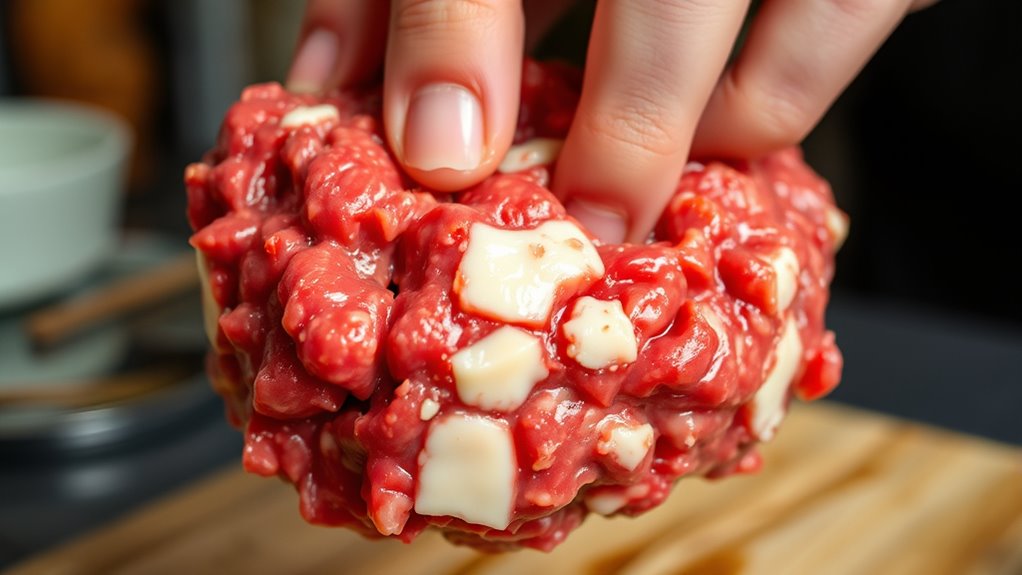
Since fat plays a crucial role in how ground beef binds, understanding its content can help you achieve better results. Fat acts as a natural adhesive, helping the meat particles stick together when you form your patties.
If you choose lean beef with very low fat, your burgers may fall apart more easily because there’s less fat to hold everything in place.
On the other hand, a higher fat content, like 20%, provides more moisture and binding power, resulting in juicier, firmer patties that hold their shape well during cooking.
Keep in mind that while fat is indispensable for binding, too much can cause excessive shrinkage and flare-ups on the grill.
Aim for a balanced fat ratio to ensure your hamburgers stay together without sacrificing taste or texture.
Adding Natural Binders to Your Meat
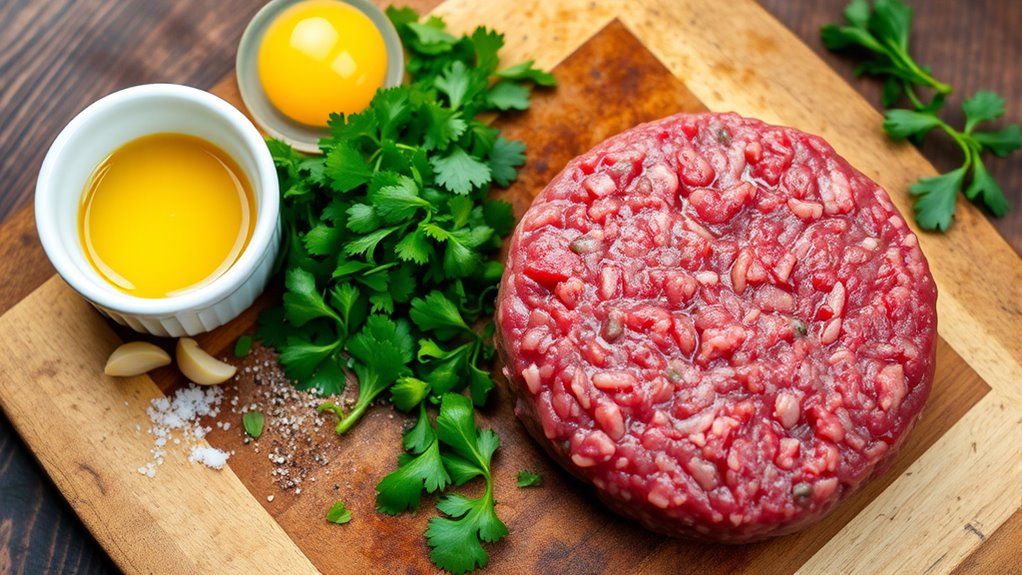
A simple way to improve how ground beef sticks together is by adding natural binders to the mix. These ingredients help hold the meat’s moisture and structure without overpowering the flavor.
When you’re preparing your patties, consider incorporating:
- Eggs: Their proteins coagulate during cooking, acting like glue.
- Mashed potatoes: They add moisture and help bind without changing taste.
- Ground oats: These absorb juices and create a firmer texture.
Using Breadcrumbs and Other Fillers
Using breadcrumbs and other fillers can substantially improve how ground beef holds together while cooking. When you mix in breadcrumbs, they absorb moisture and fat, creating a sticky texture that helps bind the meat without changing the flavor much.
You can also try crushed crackers, oats, or cooked rice as alternatives. They work similarly by soaking up juices and adding structure. Just be careful not to add too much filler, or your patties might turn out dense or dry.
Start with about 1/4 cup of breadcrumbs per pound of meat and adjust based on how your mixture feels. Mixing fillers evenly ensures every bite holds together. These simple additions make shaping and cooking your burgers easier, preventing them from falling apart on the grill or in the pan.
Incorporating Eggs for Better Cohesion
When you add eggs to ground beef, they act as a natural binder that holds the meat together more effectively. Eggs help create a firmer texture, preventing your patties from falling apart during cooking. This makes them especially useful if you’re dealing with lean meat that lacks fat and stickiness.
Here’s why eggs work well for cohesion:
- The proteins in eggs coagulate when heated, locking the meat particles together.
- Eggs add moisture, which keeps the burger juicy without making it mushy.
- They improve the overall structure, making patties easier to shape and handle.
Properly Mixing Your Ingredients
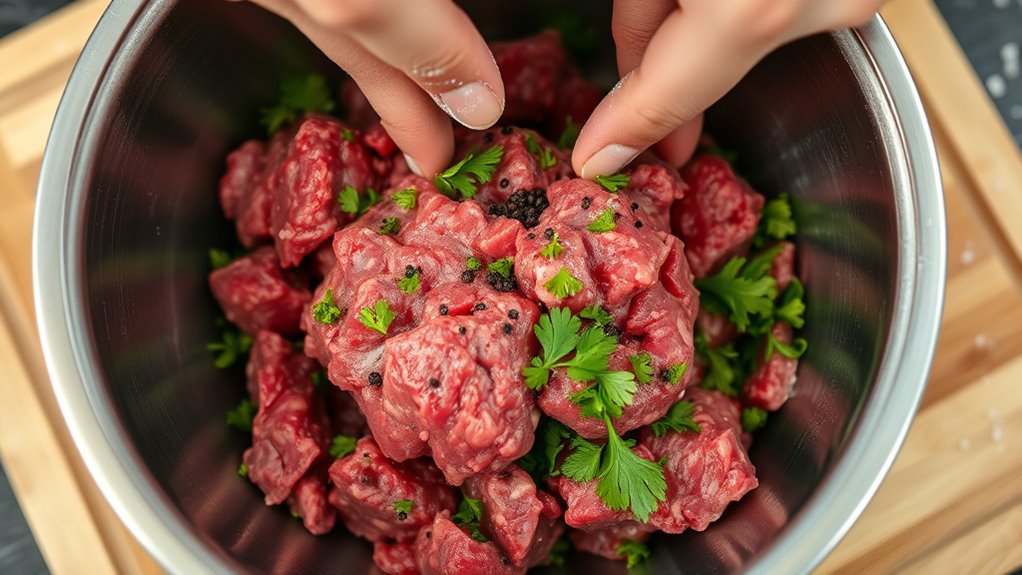
Adding eggs can greatly improve how well your ground beef holds together, but the way you mix your ingredients plays a big role too. You want to combine everything evenly without overmixing. Use your hands or a fork to gently fold the ingredients. This ensures the egg, seasoning, and beef bind uniformly, creating a firm but tender patty.
Here’s a quick guide to mixing techniques:
| Technique | Effect on Patties |
|---|---|
| Gentle folding | Even distribution, tender |
| Overmixing | Tough texture, dense |
| Using hands | Best control, uniform mix |
| Fork mixing | Less uniform, quicker |
| Mixing briefly | Prevents tough patties |
Stick to gentle folding and brief mixing for perfect cohesion!
Forming Patties Without Overworking the Meat
Although it’s tempting to press the meat firmly while shaping your patties, you need to handle it gently to keep them tender. Overworking the ground beef can make your burgers tough and dense.
Instead, use a light touch and just enough pressure to form the shape without compacting the meat too much.
To form perfect patties without overworking:
Use your hands just enough to combine the ingredients evenly. Gently shape the mixture into a round, flat disc about ¾ inch thick.
Make a small indentation in the center to prevent puffing during cooking.
Tips for Cooking Patties to Maintain Shape
To keep your patties from falling apart during cooking, you’ll want to start with a hot, well-oiled grill or skillet. This guarantees a quick sear, which helps the meat hold its shape.
Avoid pressing down on the patties while they cook; this squeezes out juices and weakens the structure.
Flip them only once, gently using a spatula to prevent breaking.
Also, make an indentation in the center of each patty before cooking to prevent puffing up.
Cook over medium-high heat to form a crust without overcooking the inside.
Let the patties rest for a few minutes after cooking to allow the juices to redistribute, keeping them moist and intact.
Following these tips will help your burgers stay together and taste great.
Frequently Asked Questions
Can I Freeze Formed Patties Without Losing Their Shape?
Yes, you can freeze formed patties without losing their shape. Just place them on a baking sheet and freeze until firm.
Then stack them with parchment paper between each patty. This keeps them separate and maintains their shape perfectly.
How Long Can Ground Beef Patties Be Stored in the Refrigerator?
You can store ground beef patties in the refrigerator for 1 to 2 days. Make sure to keep them tightly wrapped or in an airtight container to maintain freshness and prevent contamination during that time.
What Is the Best Grill Temperature for Cooking Hamburgers Evenly?
Think of your grill as a gentle sun warming the earth; set it to medium-high, about 375-400°F. This temp cooks your burgers evenly, locking in juices while giving you that perfect sear every time.
Are There Vegetarian Alternatives That Mimic Ground Beef Texture?
Yes, you can try textured vegetable protein, seitan, or finely chopped mushrooms. These alternatives mimic ground beef’s texture well, giving you that satisfying bite without meat.
Just season and cook them like you would beef.
How Do I Prevent Hamburgers From Drying Out During Cooking?
To prevent your patties from drying during cooking, keep them juicy by gently grilling at moderate heat, adding a splash of moisture like Worcestershire sauce, and avoiding overcooking because burnt burgers barely bring blissful bites.
Conclusion
To make your hamburgers stick together perfectly, remember that fat content plays a huge role—ground beef with 15-20% fat gives the best balance of flavor and binding. Adding natural binders like eggs or breadcrumbs helps, too.
Studies show that burgers with 20% fat retain juiciness and shape better during cooking, making every bite satisfying. So, choose your blend wisely, mix gently, and enjoy patties that hold firm and taste amazing every time!
In conclusion, to make ground beef stick together for hamburgers effectively, focus on the right fat content, use natural binders, and handle the meat gently. This approach ensures delicious, juicy burgers that hold their shape throughout cooking.