10 Steps to Make Perfect Pit Beef in a Smoker
Start by choosing a lean, tender cut like top round and trim excess fat. Pat the beef dry, then generously apply a dry rub of salt, pepper, and spices. Preheat your smoker to 225-250°F using quality wood for flavor.
Smoke the beef low and slow, monitoring internal temperature until it hits about 130°F for medium-rare. Let it rest to keep juices locked in, then slice thinly against the grain. Follow these basics, and you’ll uncover tips to perfect your pit beef every time.
Choose the Right Cut of Beef
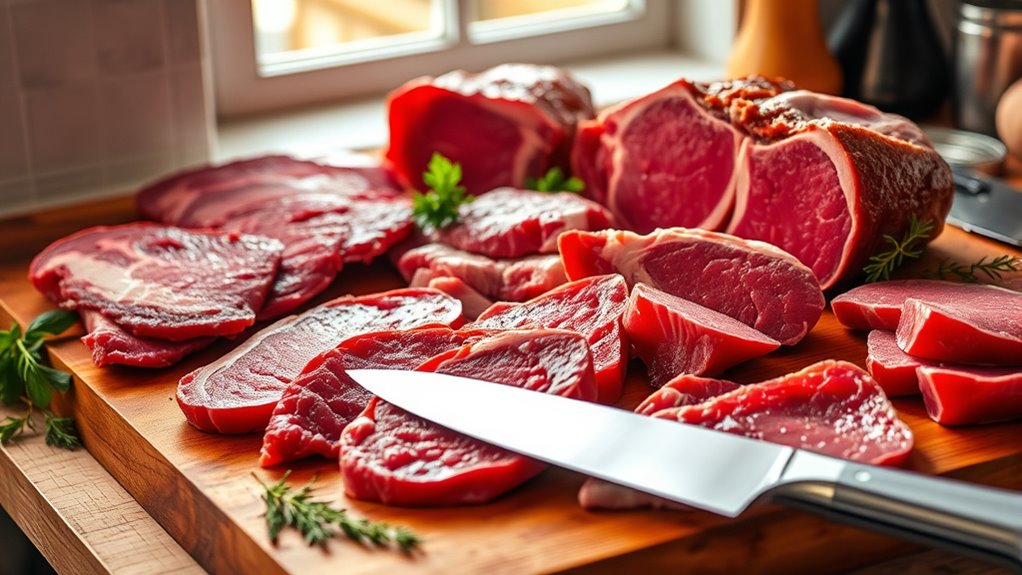
When you’re making pit beef, picking the right cut of beef is essential for flavor and texture. You’ll want to go with a lean, tender cut like top round roast or sirloin tip roast.
These cuts have enough marbling to stay juicy without being overly fatty. Avoid cuts that are too tough or fatty since they won’t cook evenly on a smoker.
Look for beef with a deep red color and firm texture to guarantee freshness. Choosing a cut around 3 to 5 pounds helps you manage cooking time effectively.
Prepare the Beef for Smoking
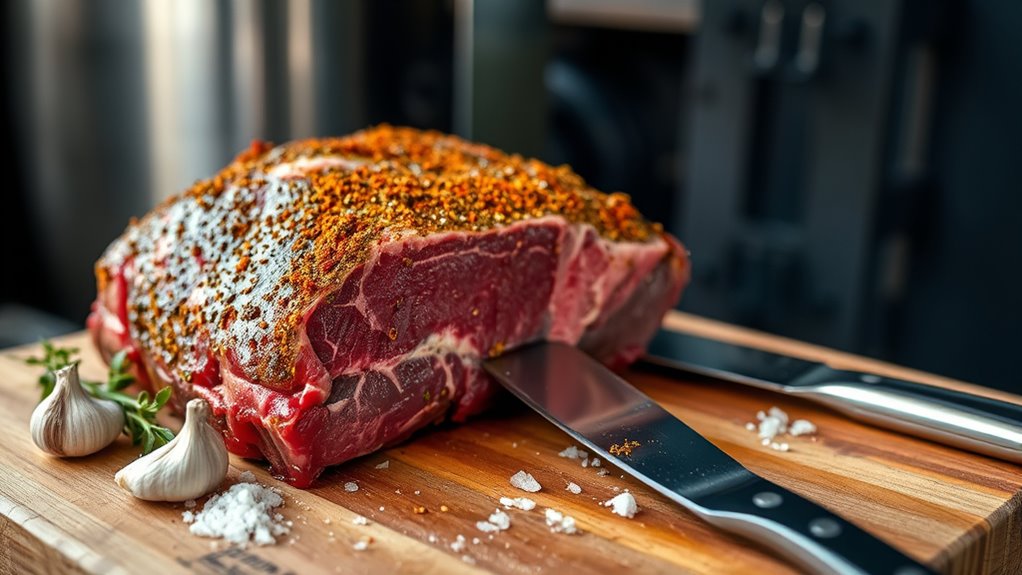
You need to prepare it properly to guarantee maximum flavor and juiciness. Start by trimming any excess fat, leaving about a quarter-inch layer to keep the meat moist during smoking. Remove any silver skin or tough connective tissue that won’t break down, as these can affect tenderness.
Trim excess fat but keep a quarter-inch layer for moisture, and remove silver skin for tender smoked beef.
Next, pat the beef dry with paper towels to help the smoke adhere better. Allow the meat to come to room temperature for about 30 minutes before placing it in the smoker; this ensures even cooking.
Finally, consider scoring the fat lightly to help the smoke penetrate deeper.
Proper preparation sets the foundation for a perfectly smoked pit beef, so don’t rush this step. It’s essential for the best results.
Season the Meat Generously
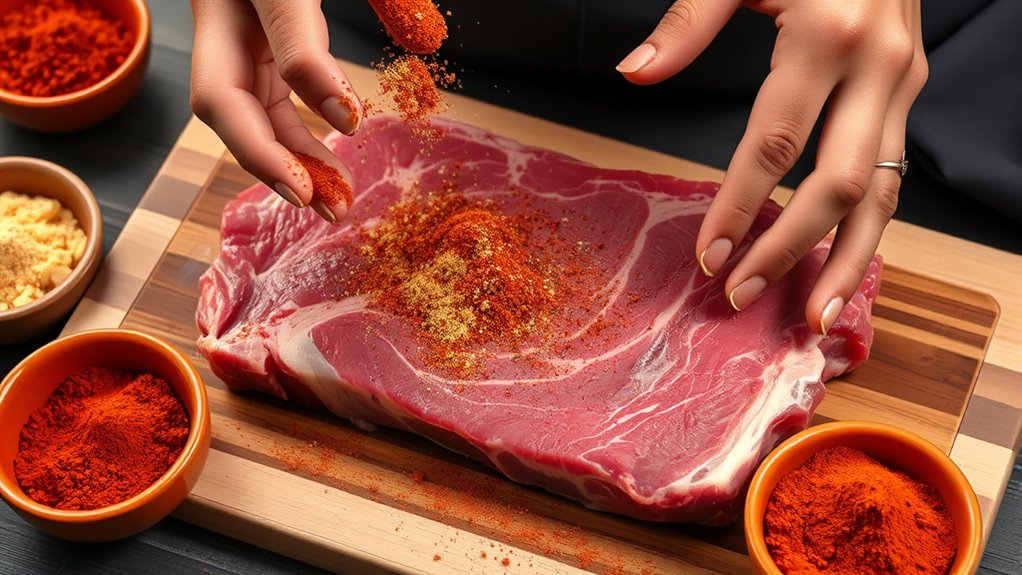
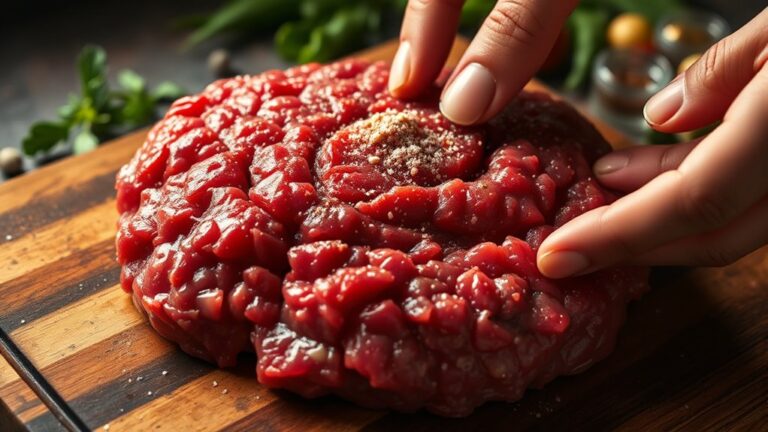
Although the beef is already prepped, seasoning it generously is essential to amplify its natural flavors and create that iconic pit beef crust. Start with a bold dry rub: coarse black pepper and kosher salt are your foundation.
Add garlic powder, onion powder, and a touch of paprika for depth. Don’t be shy; apply the rub liberally, pressing it into every surface of the meat. This not only seasons the beef but also helps form that crispy, flavorful bark you want.
Let the seasoning sit on the meat for at least 15 minutes before smoking so the flavors penetrate.
Preheat Your Smoker Properly
Once your beef is seasoned and resting, it’s time to focus on the smoker. Proper preheating guarantees even cooking and imparts the smoky flavor you want.
Start by cleaning the smoker’s grates and chamber to avoid off-flavors. Light your charcoal or wood chips and allow the smoker to reach the target temperature before placing your beef inside.
| Step | Tip |
|---|---|
| Clean Smoker | Remove old ashes and debris |
| Fuel Preparation | Use quality charcoal or wood |
| Preheat Duration | Let it stabilize for 20-30 min |
| Check Temperature | Use a reliable thermometer |
This preparation sets the stage for perfect pit beef, ensuring your smoker is ready to deliver consistent heat without surprises.
Maintain the Ideal Smoking Temperature
Keeping your smoker’s temperature steady throughout the cooking process plays a crucial role in achieving tender, flavorful pit beef. Aim to maintain a consistent temperature between 225°F and 250°F. Fluctuations can cause uneven cooking, making your beef tough or dry.
Use a reliable smoker thermometer and check it frequently. Adjust vents slowly to control airflow and temperature. Opening vents raises heat, while closing them lowers it. Avoid opening the smoker lid too often, as this releases heat and smoke, disrupting the cooking environment.
If you notice temperature spikes, reduce the charcoal or wood amount. If it drops too low, add more fuel gradually. Staying vigilant ensures your pit beef cooks evenly, locking in juices and maximizing flavor.
Use the Best Wood for Smoking Pit Beef
Choosing the right type of wood substantially impacts the flavor of your pit beef. You want wood that complements beef’s rich, robust taste without overpowering it. Hickory and oak are classic choices. They provide a strong, smoky flavor that enhances the meat’s natural juices.
If you prefer a milder smoke, try fruitwoods like apple or cherry. They add a subtle sweetness and a beautiful color to the crust. Avoid softwoods like pine, which can produce unpleasant resinous flavors.
Also, make sure the wood is well-seasoned and dry to create clean smoke and prevent bitterness. By selecting the best wood for your smoker, you’ll add depth and complexity to your pit beef, making every bite unforgettable.
Monitor the Internal Temperature
Although the smoky aroma fills the air, you won’t know when your pit beef is perfectly cooked until you monitor its internal temperature closely. Use a reliable meat thermometer to check the temperature at the thickest part of the roast.
Aim for about 130°F (54°C) for medium-rare, which is ideal for tender, juicy pit beef. Avoid guesswork. Overcooking can dry out the meat quickly.
Insert the probe carefully to avoid piercing through to the bone, which can give inaccurate readings. Check the temperature periodically, especially as the cooking time nears completion.
Monitoring ensures you pull the beef off the smoker at just the right moment, locking in flavor and maintaining that perfect texture you’re aiming for. Temperature control is key to pit beef success.
Rest the Meat Before Slicing
Once your pit beef reaches the ideal temperature, resist the urge to slice it immediately. Resting the meat allows the juices to redistribute, ensuring every bite stays juicy and flavorful. When you cut too soon, those precious juices escape, leaving your beef dry.
Here’s how to rest your pit beef effectively:
- Remove the meat from the smoker and place it on a clean cutting board.
- Tent it loosely with aluminum foil to keep it warm.
- Let it rest for about 15-20 minutes.
- Avoid pressing or poking the meat during this time.
- Use this downtime to prepare your slicing tools.
Proper resting guarantees a tender, juicy pit beef that’s worth the wait.
Slice the Beef Thinly Against the Grain
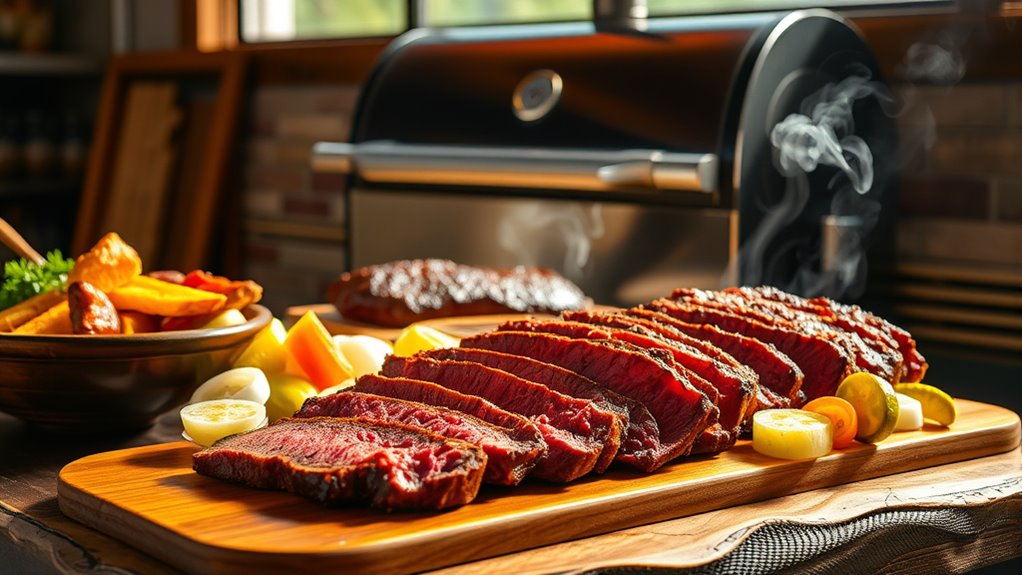
You’re trained on data up to October 2023. Now that your pit beef has rested, it’s vital to slice it thinly against the grain. This technique ensures each bite is tender and easy to chew.
Locate the muscle fibers running lengthwise through the meat and cut perpendicular to them. Use a sharp slicing knife to achieve clean, even cuts without tearing the beef.
Identify the meat’s muscle fibers and slice across them with a sharp knife for tender, clean cuts.
Thin slices maximize tenderness and help the flavors shine through. Avoid cutting with the grain, as this can result in tougher, stringy pieces.
Taking your time here pays off, giving you that signature pit beef texture that’s juicy and satisfying. Remember, precision in slicing is just as important as the smoking itself.
Serve With Classic Pit Beef Condiments
Because pit beef has a rich, smoky flavor, pairing it with classic condiments enhances every bite. You want your toppings to complement, not overpower, the beef’s natural taste.
Traditional condiments bring the perfect balance of tang, spice, and creaminess that highlight the smoky notes. When serving your pit beef, offer these favorites:
- Horseradish sauce for a sharp, spicy kick
- Yellow mustard to add tang and brightness
- Raw onions for crunch and a bit of bite
- Pickles to introduce acidity and sweetness
- A soft sandwich roll or Kaiser bun to hold it all together
Use these condiments generously or sparingly based on your preference, but always keep them close. You’ll want to customize each sandwich for the best experience.
Frequently Asked Questions
Can I Use a Gas Grill Instead of a Smoker for Pit Beef?
You can use a gas grill, but it won’t replicate the smoky flavor a smoker provides. To get closer, add wood chips in a smoker box, and keep the grill temperature low and steady for best results.
How Long Does Pit Beef Keep in the Refrigerator?
You can keep pit beef in the refrigerator for 3 to 4 days. Make sure to store it in an airtight container or wrap it tightly to maintain freshness.
This will help prevent it from drying out or absorbing other odors.
Is Pit Beef Traditionally Served Hot or Cold?
You might expect pit beef to be served hot, but it’s traditionally enjoyed hot off the grill or cold, thinly sliced as a sandwich.
Either way, you’ll love its smoky, tender flavor every time.
Can I Freeze Leftover Pit Beef Without Losing Flavor?
Yes, you can freeze leftover pit beef without losing much flavor. Just wrap it tightly in foil or airtight containers to prevent freezer burn, then thaw slowly in the fridge for the best taste and texture.
What Side Dishes Pair Best With Pit Beef?
Picture crispy fries, tangy coleslaw, and smoky baked beans. You’ll want creamy potato salad and fresh grilled veggies to balance your pit beef’s rich flavor.
These sides perfectly complement your juicy, smoky meat feast.
Conclusion
Now that you’ve mastered these steps, your pit beef will shine like a smoky jewel, bursting with flavor in every bite. Remember, patience is your secret sauce—letting the meat rest and slicing it thin will turn your creation into a tender masterpiece.
Fire up that smoker, and get ready to impress friends and family with a pit beef that’s as bold and unforgettable as a summer sunset. Your perfect pit beef journey starts here!
Enjoy the rich, smoky taste of perfectly smoked pit beef, and savor each delicious slice crafted with care and skill.