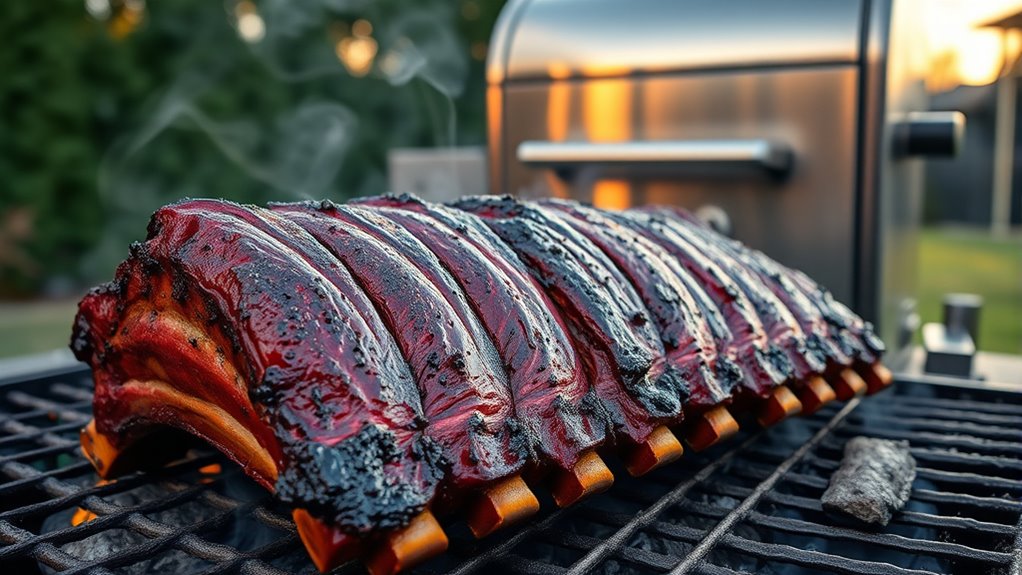
10 Steps to Perfectly Smoke Beef Ribs in a Smoker
To perfectly smoke beef ribs, start by selecting well-marbled ribs and trimming off the silver skin and excess fat. Applying a generous dry rub is essential to build flavor.
Next, prepare your smoker by thoroughly cleaning it, adding wood chunks for smoke, and preheating to a steady temperature between 225°F and 250°F. Place the ribs bone-side down, away from direct heat, and maintain a consistent temperature with thin blue smoke for optimal results.
If needed, use the Texas Crutch method to speed up cooking. Cook the ribs until they reach an internal temperature of about 203°F and become tender. Finally, rest the ribs before slicing to retain juices.
By following these steps closely, you’ll master each phase of smoking beef ribs and enjoy perfectly smoky, tender results every time.
Choose the Right Cut of Beef Ribs
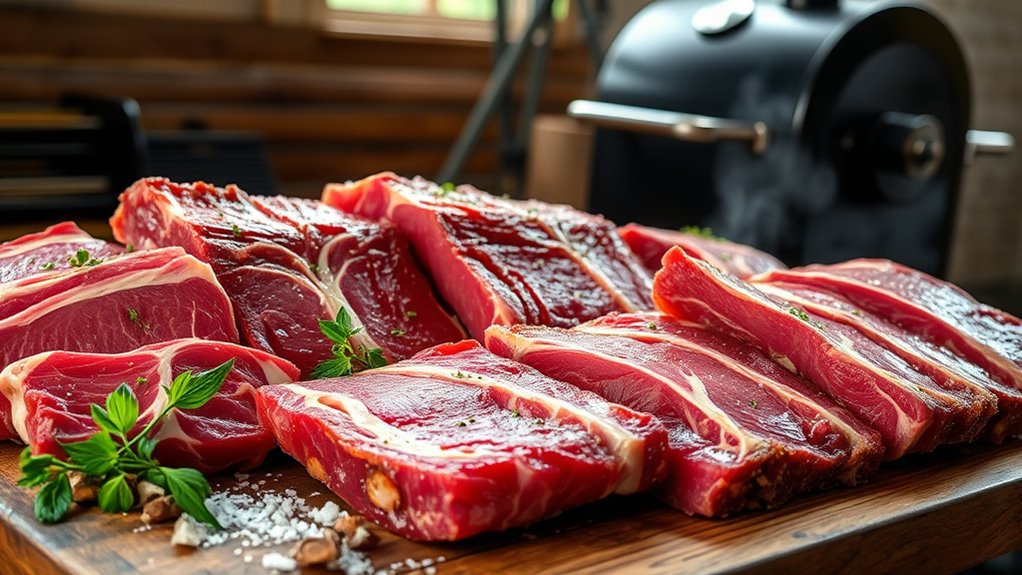
When choosing beef ribs for smoking, you’ll want to pick the cut that best matches your taste and cooking style. You have two main options: back ribs and short ribs.
Back ribs come from the rib section and are leaner with less meat, ideal if you prefer a lighter, more tender bite.
Short ribs, cut from the plate section, pack more meat and fat, offering richer flavor and a heartier chew.
If you like your ribs meaty and juicy, short ribs are your go-to.
For a more delicate texture and quicker cook time, back ribs work well.
Also, check for well-marbled meat and avoid ribs with excessive silver skin, which can toughen when smoked.
Choosing the right cut sets the stage for a great smoking experience.
Prepare Your Smoker for Low and Slow Cooking

Before you start smoking, you’ll need to get your smoker ready for low and slow cooking, which means stabilizing the temperature around 225°F to 250°F. This guarantees your beef ribs cook evenly and absorb smoky flavor perfectly. Follow these steps:
- Clean out any ash or old residue to promote proper airflow.
- Fill the water pan to regulate moisture and keep ribs juicy.
- Preheat your smoker to the target temperature, adjusting vents for steady heat.
- Add your choice of wood chunks or chips, like hickory or oak, for rich smoke.
Trim the Ribs for Optimal Smoke Penetration
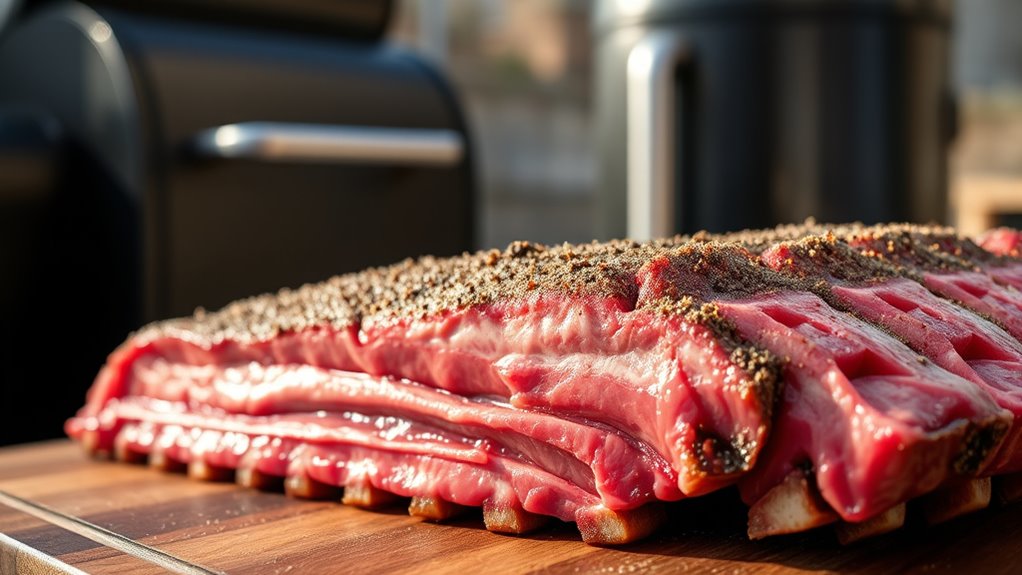
Although trimming might seem like a small step, it plays an essential role in ensuring your beef ribs soak up smoke evenly. Removing excess fat and the silver skin allows the smoke to penetrate the meat deeply, enhancing flavor and tenderness.
Use a sharp knife to carefully trim away large fat deposits and the membrane on the bone side.
Here’s a quick guide to trimming:
| What to Trim | Why It Matters |
|---|---|
| Silver skin/membrane | Prevents smoke absorption |
| Excess fat | Avoids greasy texture |
| Flaps of loose meat | Ensures even cooking and smoke flow |
Apply a Flavorful Dry Rub or Marinade
Trimming your beef ribs sets the stage for flavor to truly soak in. Now, it’s time to apply a dry rub or marinade that complements the meat’s rich taste. Follow these steps for best results:
- Choose your seasoning base: salt, pepper, garlic powder, and paprika work well.
- Mix in additional spices like brown sugar, chili powder, or cumin for depth.
- Generously coat the ribs, pressing the rub into the meat to ensure it adheres.
- If using a marinade, soak the ribs in the fridge for at least 2 hours to enhance tenderness and flavor.
This step infuses your ribs with bold flavors that will shine through the smoking process.
Preheat the Smoker to the Ideal Temperature
Once you’ve seasoned your ribs, you’ll want to preheat your smoker to the ideal temperature to guarantee even cooking and maximum smoke absorption. Aim for a steady 225°F to 250°F, the perfect range for low and slow smoking.
Use a reliable thermometer to monitor the temperature inside the smoker, ensuring it stays consistent throughout the cooking process. Avoid opening the smoker lid frequently, as this causes heat and smoke to escape, disrupting the temperature.
If your smoker runs hot, adjust the vents or add water to the water pan to stabilize the heat. Don’t rush this step; allowing your smoker to reach the target temperature before adding the ribs sets the foundation for tender, flavorful beef ribs.
Place the Ribs in the Smoker Correctly
Before you place the ribs in the smoker, make certain you arrange them so the heat and smoke circulate evenly. This guarantees each rib cooks uniformly and absorbs that rich smoky flavor.
- Position the ribs bone-side down to protect the meat from direct heat.
- Leave space between each rack to allow air and smoke to flow freely.
- Avoid stacking ribs; use multiple racks if needed to keep them flat.
- Place the ribs away from the smoker’s direct heat source to prevent burning.
Maintain Consistent Temperature and Smoke Levels
Although maintaining the right temperature can be challenging, keeping it steady is essential for perfectly smoked beef ribs. You want your smoker to stay between 225°F and 250°F throughout the cook.
Consistency in temperature, ideally 225°F to 250°F, is key for perfectly smoked beef ribs.
Avoid opening the lid frequently, as it causes heat and smoke loss, leading to fluctuations.
Use a reliable thermometer to monitor the smoker’s internal temperature continuously. Adjust vents and fuel supply carefully to stabilize heat.
For smoke, aim for a thin, blue smoke rather than thick, white billows, which can make the ribs bitter.
Adding small amounts of wood chunks or chips gradually helps maintain consistent smoke levels.
Use the Texas Crutch Method if Desired
If you find your beef ribs drying out or stalling during cooking, you can use the Texas Crutch method to speed up the process and retain moisture. This technique involves wrapping the ribs tightly in foil to lock in heat and steam, helping the meat stay juicy and tender.
Here’s how you do it:
- Remove the ribs from the smoker when they hit the stall (usually around 160°F).
- Wrap them tightly in heavy-duty aluminum foil, adding a small amount of liquid like beef broth or apple juice.
- Return the wrapped ribs to the smoker and continue cooking until they reach your target temperature.
- Carefully unwrap the ribs for the last 20-30 minutes to firm the bark before serving.
Using the Texas Crutch can save time without sacrificing flavor.
Check for Doneness and Tenderness
Once the ribs have cooked for several hours, you’ll want to verify for doneness and tenderness to make sure they’re perfectly smoked. Use a meat thermometer to check the internal temperature, aiming for about 203°F (95°C) for maximum tenderness. Also, test tenderness by inserting a probe or toothpick; it should slide in with little resistance.
| Indicator | What to Look For |
|---|---|
| Internal Temp | ~203°F (95°C) |
| Probe Test | Slides in easily without resistance |
| Bone Pullback | Bones slightly exposed from meat |
These checks ensure your beef ribs are juicy and tender, avoiding undercooking or overcooking. Always rely on both temperature and tenderness tests for the best results.
Rest and Slice the Beef Ribs for Serving
While the ribs rest, their juices redistribute, making each bite more flavorful and tender. Don’t skip this vital step; resting helps the meat stay juicy when you slice it.
Here’s how to rest and slice your beef ribs properly:
- Remove the ribs from the smoker and place them on a cutting board.
- Tent them loosely with foil to keep warm and let them rest for 20-30 minutes.
- Use a sharp knife to cut between the bones, slicing the ribs into individual portions.
- Serve immediately to enjoy the perfect balance of smoky flavor and tender texture.
Following these steps ensures your smoked beef ribs are juicy, tender, and ready to impress your guests.
Frequently Asked Questions
What Type of Wood Pairs Best With Beef Ribs for Smoking?
You’ll want to use hickory or oak wood for smoking beef ribs because they provide a robust, smoky flavor that complements the meat’s richness.
Mesquite works too, but use it sparingly to avoid bitterness.
How Long Can Smoked Beef Ribs Be Safely Stored in the Refrigerator?
You can safely store smoked beef ribs in the refrigerator for 3 to 4 days. Make sure to wrap them tightly or use an airtight container to keep them fresh and prevent drying out.
Can I Use a Gas Smoker Instead of a Traditional Charcoal Smoker?
You can definitely use a gas smoker instead of charcoal; about 60% of backyard smokers prefer gas for convenience. It offers consistent heat and easier control, making it a great choice for smoking beef ribs efficiently.
What Are Common Mistakes to Avoid When Smoking Beef Ribs?
Don’t rush the process or open the smoker too often. Avoid using too much heat, skipping seasoning, or neglecting to wrap the ribs during cooking.
Keep moisture in check, and you’ll get tender, flavorful beef ribs every time.
How Do I Reheat Smoked Beef Ribs Without Drying Them Out?
Like reviving a classic tune, gently reheat smoked beef ribs wrapped in foil with a splash of broth at 250°F. This keeps them juicy, so you won’t end up with a dry, forgotten melody.
Conclusion
By following these steps, you’ll master smoking beef ribs that are tender, flavorful, and downright irresistible. Coincidentally, just as the smoke infuses every bite, your patience will reward you with a meal worth waiting for.
So, fire up your smoker, trust the process, and get ready to impress yourself—and anyone lucky enough to share your perfectly smoked ribs. Who knew great BBQ could be this satisfying and surprisingly simple?
With these tips, you’ll achieve the perfect balance of smoky goodness and juicy tenderness that defines the best smoked beef ribs. Enjoy your delicious BBQ journey!