How to Store Beef Tallow After Opening
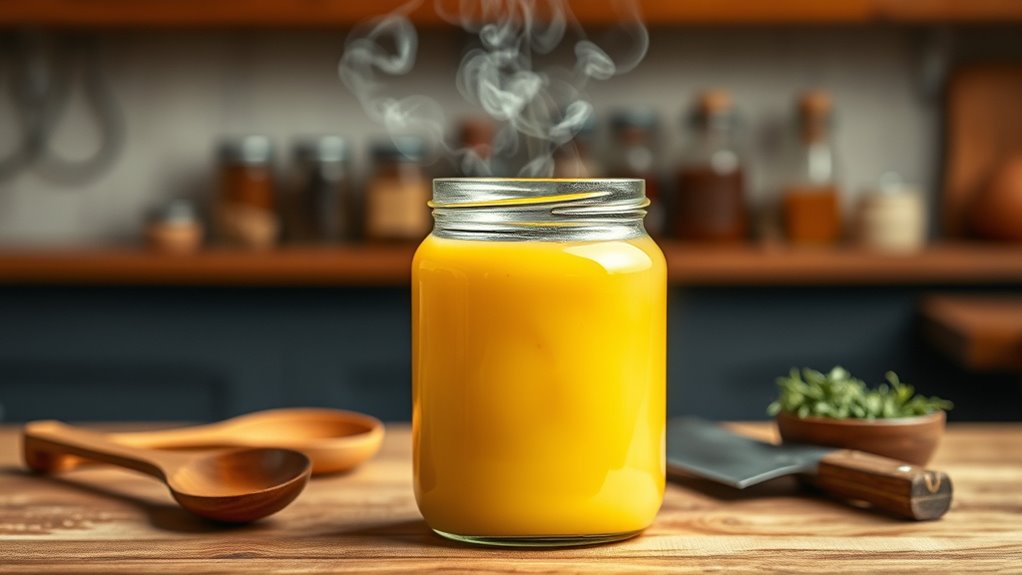
After opening beef tallow, proper storage is essential to maintain its quality and extend its shelf life. Store it in an airtight, dark container like a glass jar to block light, which can degrade the fat.
Keep the container in a cool spot between 50°F and 70°F, or refrigerate it if your kitchen tends to be warmer. Always use clean utensils and seal the container tightly to prevent contamination.
Watch for any rancid smell or discoloration as signs it’s gone bad. If you want to keep your beef tallow fresh longer and use it safely, there’s more to contemplate.
Understanding the Shelf Life of Beef Tallow
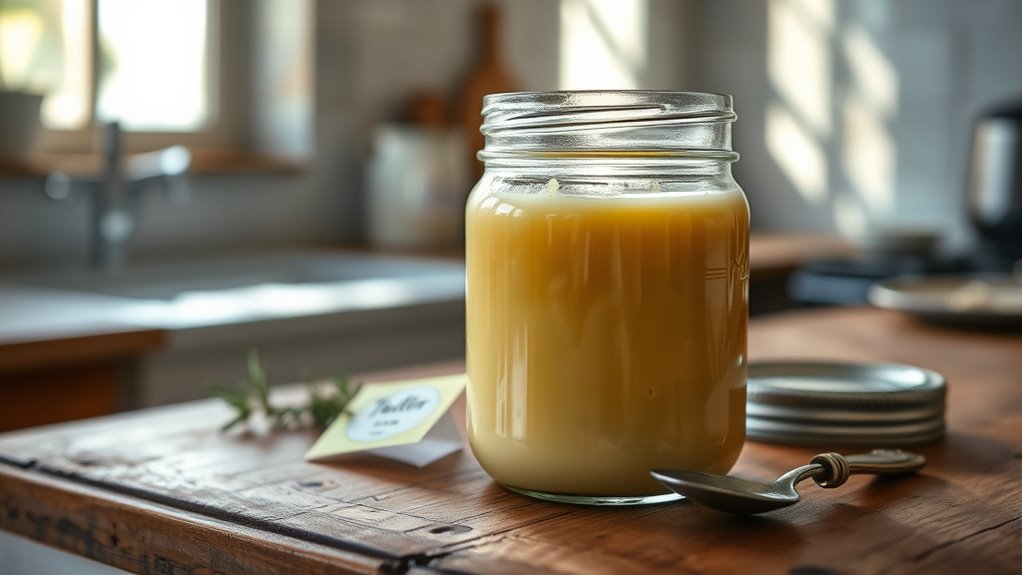
Although beef tallow is known for its long shelf life, how you store it considerably affects how long it stays fresh.
Proper storage plays a crucial role in maintaining beef tallow’s freshness and extending its shelf life.
When stored properly, beef tallow can last up to a year or more without spoiling.
You’ll want to keep it in a cool, dark place, as heat and light speed up rancidity.
Once opened, exposure to air can cause oxidation, so minimizing air contact is key.
Fresh, clean beef tallow generally has a neutral aroma and a creamy texture.
If it smells sour or turns yellowish, it’s time to discard it.
You should also note that homemade tallow may have a shorter shelf life than commercially rendered versions due to differences in processing and purity.
Understanding these factors helps you maximize your tallow’s freshness and usability.
Ideal Storage Containers for Beef Tallow
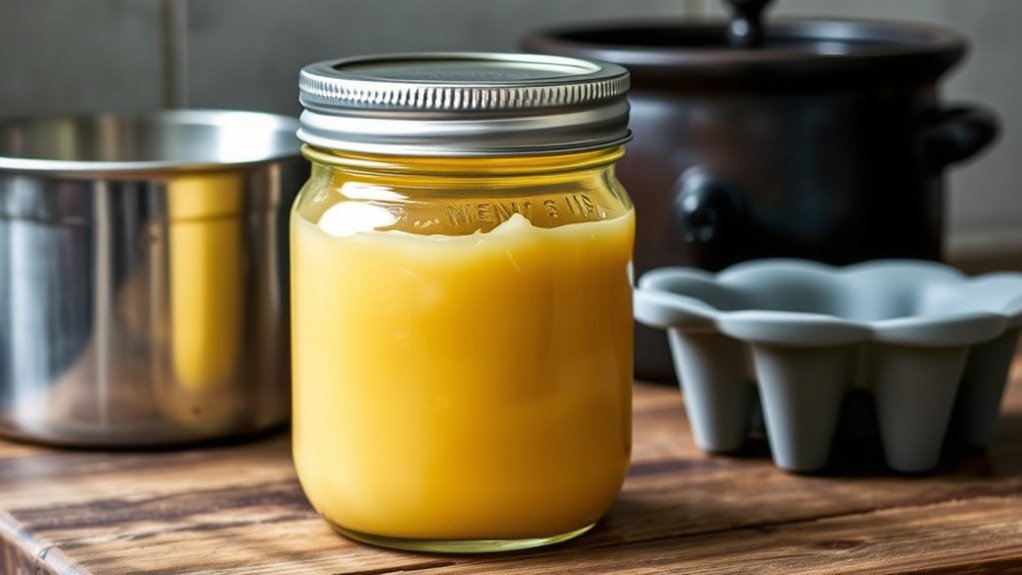
Since exposure to air and light can degrade beef tallow, choosing the right storage container is essential to preserving its quality. You’ll want an airtight container that prevents oxygen from reaching the tallow, slowing down oxidation.
Glass jars with tight-fitting lids work perfectly. They don’t absorb odors or stains and are easy to clean.
If you prefer plastic, pick food-grade containers designed for fats and oils to avoid chemical leaching.
Avoid metal containers unless they’re stainless steel, as some metals can react with the fat.
Dark-colored or opaque containers help block light, further protecting the tallow.
Make sure the container seals well to keep moisture and contaminants out, ensuring your beef tallow stays fresh longer and maintains its flavor and texture.
Best Temperature Conditions for Storing Beef Tallow
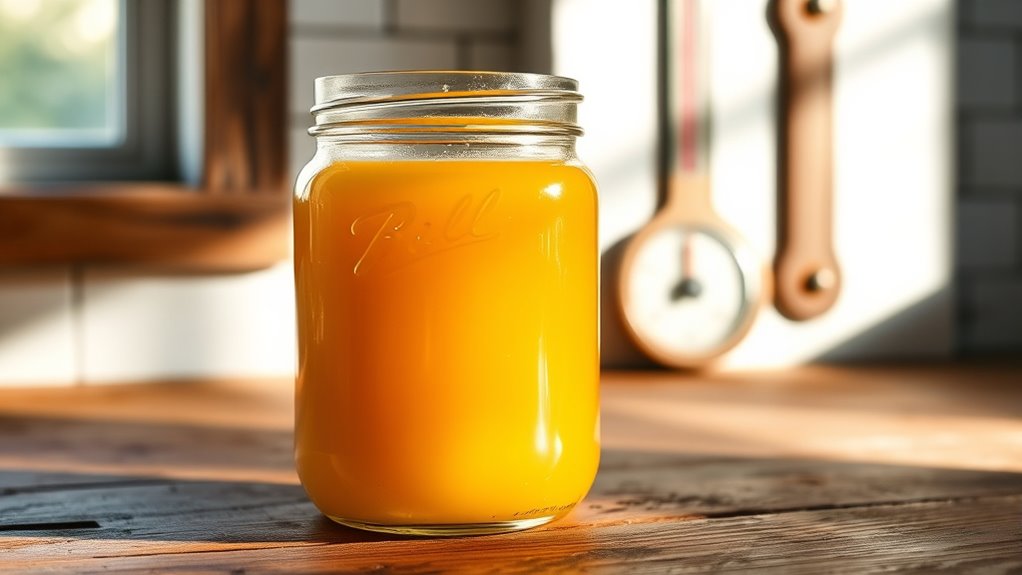
Choosing the right container helps protect your beef tallow, but storing it at the proper temperature plays an equally important role in maintaining its quality. Ideally, keep your beef tallow in a cool, dark place at temperatures between 50°F and 70°F (10°C to 21°C).
This range prevents it from melting or going rancid *considerably*. If your kitchen tends to get warm, storing beef tallow in the refrigerator is a smart choice. Refrigeration slows oxidation and extends shelf life *markedly*.
Avoid freezing unless you have large quantities, as frequent thawing can affect texture. By maintaining these temperature conditions, you’ll preserve the flavor and consistency of your beef tallow, ensuring it stays fresh for cooking or other uses over several months.
How to Prevent Contamination and Spoilage
To keep your beef tallow fresh and safe, you need to handle it carefully to prevent contamination and spoilage. Always use clean utensils when scooping out tallow to avoid introducing bacteria. Avoid double-dipping or touching the tallow with your fingers.
Store it in a sealed, airtight container to minimize exposure to air, which can cause oxidation. Keep it away from strong-smelling foods to prevent flavor absorption. Finally, label the container with the date you opened it to track freshness.
Here are five key steps to prevent contamination and spoilage:
- Use clean, dry spoons or utensils
- Avoid direct hand contact
- Seal the container tightly after use
- Store in a cool, dark place or refrigerator
- Keep away from strong odors and moisture
Following these tips will help maintain your beef tallow’s quality longer.
Signs Your Beef Tallow Has Gone Bad
Even with proper storage, beef tallow can eventually spoil. You’ll notice a sour or rancid smell, which is a clear sign it’s no longer safe to use.
The texture might change too — if it becomes grainy, sticky, or slimy, it’s best to discard it.
Watch for discoloration; fresh tallow is creamy white to pale yellow, so any darkening or unusual spots indicate spoilage. Mold growth on the surface is another obvious warning.
If you see any of these signs, don’t risk it by using the tallow in cooking or skincare. Trust your senses.
When in doubt, throw it out to avoid foodborne illness or skin irritation.
Tips for Freezing Beef Tallow to Extend Freshness
While freezing isn’t necessary for short-term storage, it’s a great way to extend the shelf life of your beef tallow. To freeze it properly, start by portioning the tallow into small, manageable amounts. This way, you only thaw what you need, reducing waste.
Use airtight containers or freezer bags to prevent freezer burn and odors. Label the containers with the date so you can keep track of freshness. When ready to use, thaw the tallow in the refrigerator to maintain quality.
Here are some tips for freezing beef tallow:
- Portion into small containers or silicone molds
- Use airtight, freezer-safe packaging
- Remove as much air as possible before sealing
- Label with the freezing date
- Thaw slowly in the fridge, not at room temperature
Using Stored Beef Tallow Safely in Cooking
When you’re ready to cook with stored beef tallow, ensuring its safety and quality is essential.
First, always check for any off smells, discoloration, or mold before use. If the tallow smells rancid or looks cloudy with dark spots, it’s best to discard it.
Use a clean utensil to scoop out the amount you need to prevent contamination.
When cooking, keep the heat moderate to avoid burning the tallow, which can alter its flavor and produce harmful compounds.
Store leftover tallow promptly in a sealed container in a cool, dark place or refrigerator to maintain freshness.
Frequently Asked Questions
Can Beef Tallow Be Reused After Frying?
Yes, you can reuse beef tallow after frying. Just strain out food particles, store it in a clean, airtight container, and keep it cool.
It maintains flavor and lasts longer when properly handled.
Is Beef Tallow Safe for Skincare Applications?
Yes, you can safely use beef tallow for skincare since it’s rich in vitamins and fatty acids that nourish skin. Just guarantee it’s pure, properly rendered, and stored hygienically to avoid contamination or irritation.
How Does Beef Tallow Compare to Other Cooking Fats?
You might think beef tallow is just a stubborn old cow’s gift, but it’s actually richer and more stable than many oils. Unlike fragile vegetable oils, it withstands heat and adds a deep, savory flavor you’ll crave.
Can You Mix Beef Tallow With Other Oils?
Yes, you can mix beef tallow with other oils to combine flavors or adjust smoke points. Just make sure the oils you choose complement each other and suit your cooking needs for the best results and taste.
Does Beef Tallow Have Any Dietary Restrictions?
Beef tallow can fit most diets, but you should avoid it if you’re vegan, vegetarian, or have certain religious restrictions.
It’s high in saturated fat, so watch intake if you’re managing cholesterol or heart health.
Conclusion
To keep your beef tallow fresh, store it in airtight containers. Chill it in the fridge to maintain its quality. Freeze extra portions for later use to prevent waste.
Watch for changes in smell, color, or texture to spot any spoilage early. Always use clean utensils to avoid contamination. Seal the container tightly after each use.
By caring for your beef tallow properly, you’ll preserve its quality and extend its shelf life. This careful storage ensures you enjoy rich, flavorful cooking every time you reach for beef tallow. Proper storage is key to maintaining the freshness and taste of your beef tallow.