7 Simple Steps to Use a Dehydrator for Beef Jerky
To make beef jerky with a dehydrator, start by choosing lean beef cuts like sirloin or eye of round. Using a dehydrator for beef jerky ensures even drying and delicious results. Trim fat and slice thin against the grain.
Marinate your meat in a flavorful mix for several hours, then preheat the dehydrator to 160°F. Arrange slices in a single layer without overlap, dry evenly while rotating trays, and check for a bend-and-crack texture.
Once cool, store jerky airtight or frozen to keep fresh. Follow these steps to unveil perfect homemade jerky every time.
Selecting the Right Cut of Beef
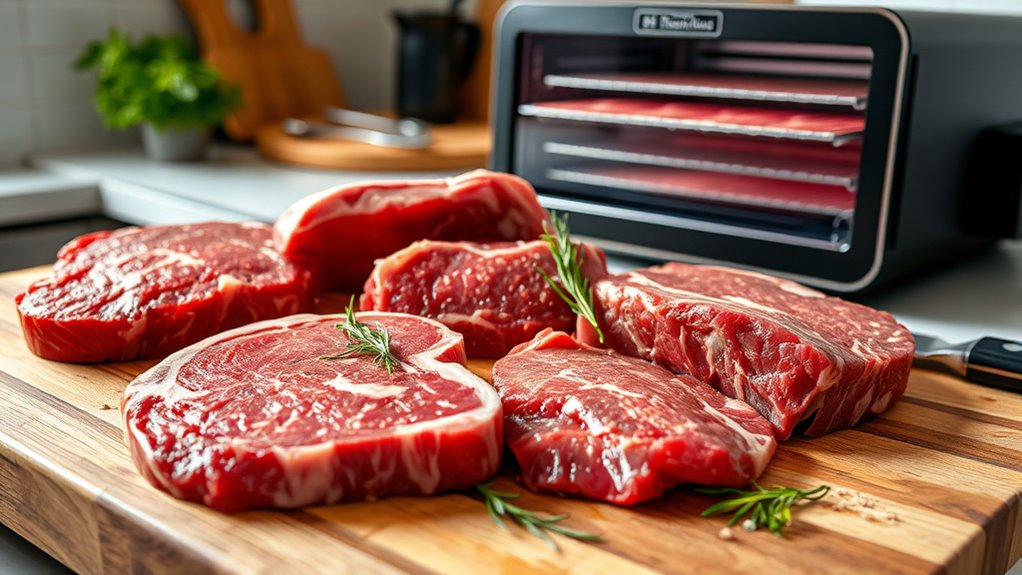
Before you begin making beef jerky, you need to select the right cut of beef. Choose lean cuts with minimal fat because fat can cause your jerky to spoil faster. Top choices include eye of round, bottom round, and sirloin tip.
These cuts are affordable, easy to slice, and yield tender jerky. Avoid marbled or fatty cuts like ribeye or brisket since excess fat won’t dehydrate well and affects texture. When shopping, look for firm, bright red meat free of blemishes.
Freshness matters because fresh meat produces better flavor and longer-lasting jerky. By picking a lean, fresh cut, you set yourself up for jerky that’s both tasty and safe to store.
This initial step is vital for a successful dehydrating process.
Preparing and Slicing the Meat
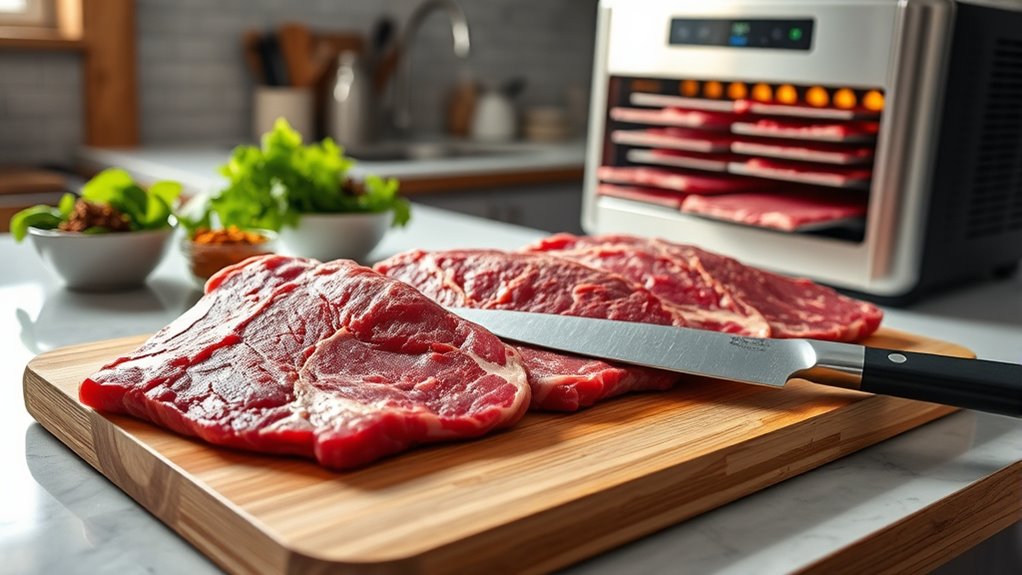
Once you’ve chosen a lean cut of beef, the next step is to prepare and slice the meat properly. Trim off all visible fat to prevent spoilage, then partially freeze the meat for 1-2 hours to make slicing easier. Aim for uniform strips about 1/8 to 1/4 inch thick to ensure even drying.
| Tip | Reason |
|---|---|
| Trim fat | Prevents rancidity |
| Partially freeze | Easier to slice thin strips |
| Slice against grain | More tender jerky |
| Uniform thickness | Consistent drying |
| Use a sharp knife | Clean cuts, safer handling |
Following these steps helps you get perfect jerky strips ready for drying in your dehydrator.
Marinating for Maximum Flavor
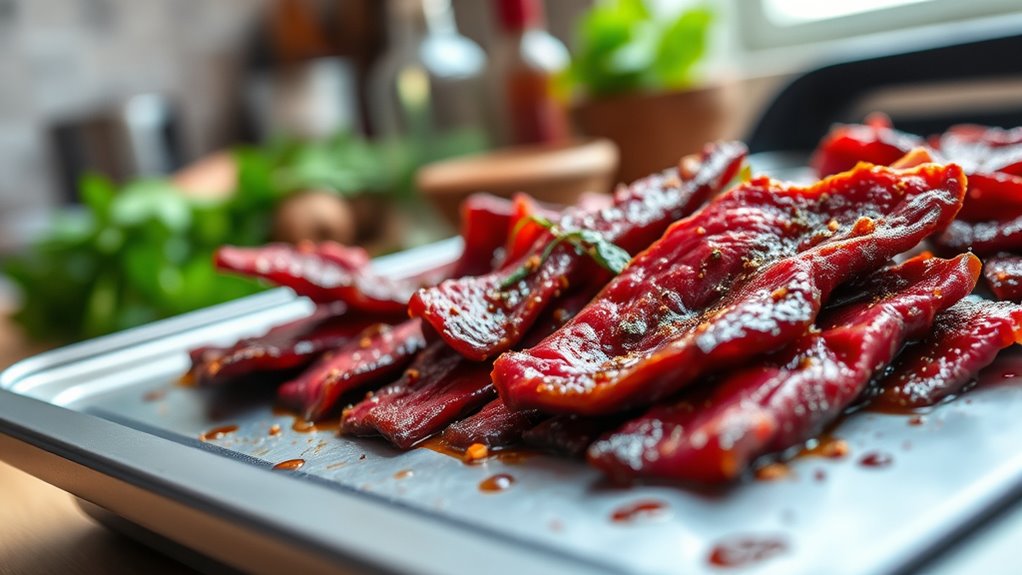
Although slicing the meat properly sets the foundation, marinating is what really infuses your beef jerky with bold, lasting flavor. To start, choose a marinade that balances salty, sweet, and spicy elements to suit your taste.
Combine ingredients like soy sauce, Worcestershire sauce, brown sugar, garlic, and pepper in a bowl.
Mix soy sauce, Worcestershire, brown sugar, garlic, and pepper to create a flavorful marinade base.
Submerge the sliced beef evenly in the marinade, ensuring every piece is coated.
Cover and refrigerate for at least 4 to 6 hours, but overnight marinating is best for deeper flavor penetration. Don’t rush this step; the longer the meat soaks, the more flavorful it becomes.
Remember to drain excess marinade before dehydrating to prevent uneven drying and ensure a perfect jerky texture.
Preheating and Setting Up the Dehydrator
Since proper temperature and airflow are essential, you’ll want to preheat your dehydrator to about 160°F (71°C) before placing the marinated beef slices inside. This guarantees the jerky begins drying immediately, reducing the risk of bacterial growth.
While the dehydrator warms up, double-check that all trays are clean and dry to maintain hygiene.
Make sure the unit is on a stable, flat surface with good ventilation around it to promote proper airflow.
If your dehydrator has adjustable vents or fans, set them to optimize air circulation according to the manufacturer’s instructions.
Avoid overcrowding or blocking vents, as this can hinder even drying.
Preheating and setting up correctly sets the stage for perfectly dried, safe, and delicious beef jerky.
Arranging the Meat on Dehydrator Trays
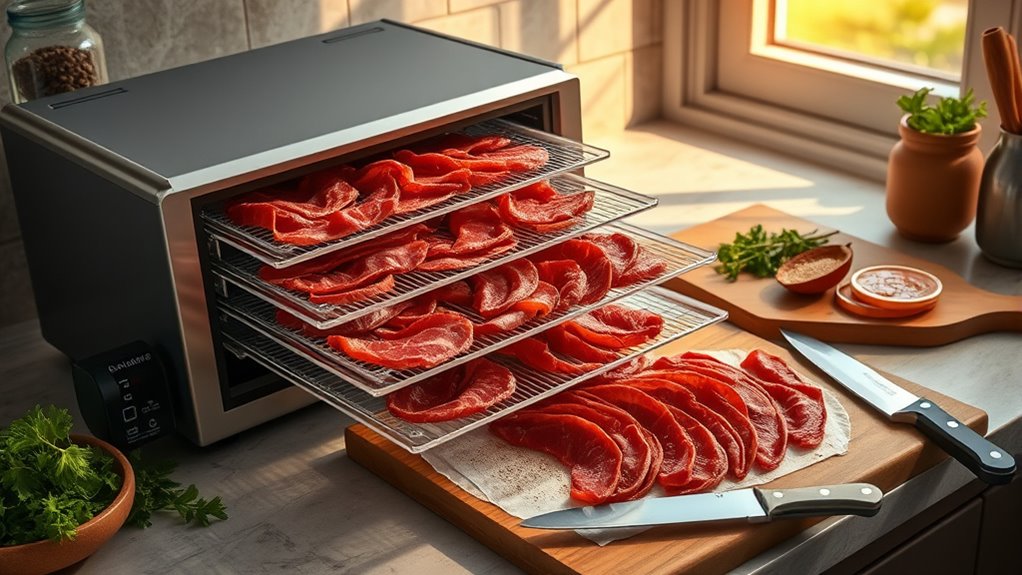
Before placing the beef slices on the dehydrator trays, make sure they’re arranged in a single layer without overlapping. Overlapping can cause uneven drying, leaving some pieces undercooked or overly dry.
Lay each slice flat, ensuring air can circulate freely around every piece. If your trays have gaps or mesh, position the meat to maximize airflow and prevent sticking.
Avoid crowding the trays; it’s better to use multiple trays than to stack slices on top of each other.
If the slices are too close, drying time will increase, and the jerky’s texture might suffer. Take your time arranging the meat carefully to guarantee consistent results.
Proper spacing is key to making delicious, evenly dried beef jerky every time.
Monitoring the Drying Process
Once you’ve arranged the meat evenly on the trays, it’s time to keep a close eye on the drying process. Monitoring ensures your beef jerky comes out perfectly dried without being too tough or underdone.
Here’s how you can stay on top of it:
1. Check Regularly
Open the dehydrator every few hours to inspect the texture. The jerky should bend and crack without breaking.
2. Rotate Trays
Swap the top and bottom trays midway to promote even drying and prevent hot spots.
3. Note Drying Time
Keep track of how long it takes your jerky to dry. Times vary by thickness, humidity, and dehydrator model, so this helps with future batches.
Storing Your Homemade Beef Jerky
Properly storing your homemade beef jerky is key to maintaining its flavor and texture. After dehydrating, let the jerky cool completely to prevent moisture buildup.
Store it in an airtight container or vacuum-sealed bag to keep out air and humidity, which can cause spoilage.
For short-term storage, keep the jerky in a cool, dry place like a pantry for up to two weeks.
If you want to store it longer, refrigerate or freeze it. In the fridge, jerky can last up to a month, while freezing extends its shelf life to several months.
Always check for any off smells or mold before eating.
Frequently Asked Questions
Can I Use a Dehydrator for Other Types of Jerky Besides Beef?
Yes, you can use a dehydrator for other types of jerky like turkey, venison, or even fish. Just adjust drying times and marinating flavors to suit the meat, and you’ll get delicious results every time.
How Long Does Homemade Beef Jerky Last in the Refrigerator?
Your homemade beef jerky lasts about 1 to 2 weeks in the refrigerator. Make sure you store it in an airtight container or ziplock bag to keep it fresh and prevent moisture from spoiling it.
Is It Safe to Eat Jerky Without Marinating the Meat?
It’s safe to eat jerky without marinating, but marinating adds flavor and helps tenderize the meat.
If you skip it, just make sure to dry the meat thoroughly to prevent spoilage and guarantee safety.
What Temperature Kills Bacteria During the Dehydration Process?
You don’t need a magic wand. Just heat your jerky to 160°F (71°C) to kill bacteria during dehydration. Don’t trust fairy tales; bacteria love low temps, so play it safe and keep that heat steady.
Can I Use Frozen Meat to Make Beef Jerky?
You shouldn’t use frozen meat directly for beef jerky because it won’t dry evenly. Thaw it completely first, then slice and marinate.
This guarantees proper dehydration and safer, tastier jerky you’ll enjoy.
Conclusion
Now that you’ve mastered these seven simple steps, making beef jerky with your dehydrator will be a breeze. Just like turning raw clay into a masterpiece, you’ve transformed simple beef into a flavorful, chewy snack.
Keep an eye on the drying process, store your jerky properly, and enjoy your homemade creation anytime. With practice, you’ll have delicious dehydrated beef jerky ready to fuel your adventures or satisfy your cravings at a moment’s notice.
Using a dehydrator for beef jerky not only preserves the meat but also enhances its taste and texture. Embrace these tips, and your homemade beef jerky will become a tasty, protein-packed treat you can rely on.