

Is Beef Consommé the Same as Au Jus?
You might think beef consommé and au jus are the same, but they aren’t. Both are beef-based broths, yet their preparation and characteristics differ significantly.
Consommé is a clear, refined broth made by clarifying beef stock with ground beef, egg whites, and vegetables. This process removes impurities, resulting in a rich and flavorful liquid.
Au jus, on the other hand, is a simple meat juice from roasted beef drippings, often deglazed with broth or wine. It tends to be lighter and less processed than consommé.
They differ in flavor, texture, and preparation. Keep exploring to uncover how these broths uniquely enhance your meals.
Definition of Beef Consommé

What exactly is beef consommé? You’ll find it’s a crystal-clear, richly flavored broth made by clarifying beef stock. The key to consommé lies in the careful process of removing impurities, which gives it that pristine appearance and intense taste.
When you make consommé, you combine ground beef, egg whites, and vegetables with cold stock, then gently simmer it. The egg whites coagulate, trapping particles that cloud the broth.
As it cooks slowly, this “raft” forms on the surface, filtering out everything unwanted.
Definition of Au Jus

How does au jus differ from other beef-based liquids? When you encounter au jus, you’re dealing with a simple, flavorful meat juice served alongside dishes like prime rib. Unlike consommé, au jus isn’t clarified or heavily seasoned.
Au jus is a simple, flavorful meat juice served with dishes like prime rib, distinct from clarified consommé.
Here’s what sets it apart:
- Preparation: Au jus is made by collecting natural juices released from roasted meat, often enhanced with a splash of broth or wine.
- Texture: It’s thin and unthickened, maintaining a broth-like consistency.
- Purpose: You use au jus mainly as a dipping sauce or a light accompaniment to enhance the meat’s flavor without overpowering it.
Historical Origins of Consommé and Au Jus
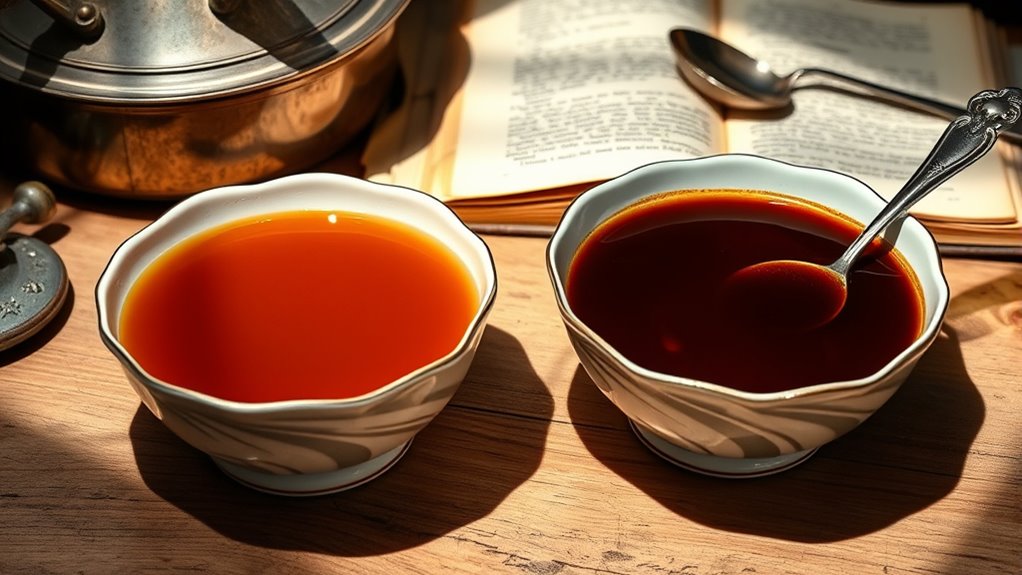
While au jus offers a straightforward, natural meat juice, consommé boasts a rich history rooted in classic French cuisine. You’ll find consommé emerged in the 19th century as chefs sought a clear, refined broth free of impurities. It became a symbol of culinary skill, requiring careful clarification to achieve its signature crystal-clear appearance.
Au jus, by contrast, originated more simply as the natural juices released during roasting, prized for their deep, unaltered flavor. Though both enhance meat dishes, consommé evolved in fine dining as a standalone soup or elegant accompaniment, while au jus remained a practical, rustic addition.
Understanding these origins helps you appreciate how each serves a unique role on your plate, reflecting distinct culinary traditions and techniques.
Ingredients Used in Beef Consommé
A well-crafted beef consommé relies on a precise combination of ingredients that work together to create its rich, clear broth. When you make beef consommé, you start with quality beef stock, which forms the base.
Then, you add a mixture called a “clearmeat,” usually made from ground lean beef, egg whites, and aromatics. This mixture helps clarify the broth by trapping impurities.
Finally, you include vegetables and seasonings for depth and balance.
Here’s what you’ll need:
- Beef stock or broth – the flavorful foundation
- Ground lean beef and egg whites – for clarification
- Mirepoix (carrots, onions, celery) and herbs – for aroma and taste
These ingredients ensure your consommé is both flavorful and crystal clear.
Ingredients Used in Au Jus
Although au jus shares some similarities with consommé, its ingredients focus more on enhancing the natural flavors of roasted beef rather than clarifying a broth.
When you make au jus, you’ll primarily use the drippings from roasted beef, which contain concentrated juices and caramelized bits that add depth.
You’ll often add beef stock or broth to stretch the flavor and sometimes a splash of red wine or Worcestershire sauce for complexity.
Aromatics like garlic, onion, and fresh herbs, such as thyme or rosemary, can be included to complement the meat’s richness.
Salt and pepper help balance the taste without overpowering it.
Unlike consommé, which aims for clarity and refinement, au jus embraces a robust, straightforward profile that highlights the savory essence of the beef itself.
Preparation Techniques for Consommé
Au jus relies on simple techniques that highlight beef’s natural juices, but consommé demands a more meticulous approach to achieve its signature clarity and depth. When preparing consommé, you carefully clarify the broth to remove impurities and fat, ensuring a crystal-clear finish. Here’s how you get it right:
- Create a “raft” with lean ground meat, egg whites, and mirepoix to trap particles.
- Simmer gently without stirring, allowing the raft to form and clarify the liquid.
- Strain the broth through a fine cloth to remove any remaining solids.
This precise method separates consommé from au jus, making it a refined, rich, and visually stunning broth that requires patience and attention to detail.
Preparation Techniques for Au Jus
When you want to capture the essence of roasted beef quickly, preparing au jus calls for straightforward techniques that emphasize natural flavors without fuss.
Start by deglazing the roasting pan with a bit of beef broth or red wine immediately after cooking your meat. Scrape up those flavorful browned bits stuck to the pan. They’re key to a rich au jus.
Then, simmer the liquid gently to concentrate flavors, adding herbs like thyme or rosemary if you want a subtle aromatic lift. Strain the mixture to remove solids, leaving a clear, savory jus.
Unlike consommé, you won’t clarify it with egg whites or other agents, preserving its rustic, loose texture. This simple process lets you enjoy the pure, unadulterated taste of roasted beef in liquid form.
Differences in Texture and Appearance
Because they undergo different preparation methods, beef consommé and au jus have distinct textures and appearances that you’ll notice right away.
Consommé is crystal clear, smooth, and rich due to its careful clarification process. Au jus, on the other hand, is more rustic and less refined.
Here’s how you can tell them apart:
- Clarity: Consommé is transparent, while au jus is typically cloudy with suspended meat particles.
- Viscosity: Consommé has a thicker, almost silky mouthfeel; au jus is thinner and more watery.
- Color: Consommé boasts a deep amber hue, whereas au jus often appears darker and more robust due to roasting drippings.
These differences arise from consommé’s refined straining versus au jus’s straightforward extraction, affecting both texture and visual appeal.
Culinary Uses and Serving Suggestions
Although both beef consommé and au jus originate from similar ingredients, you’ll find they serve very different roles in the kitchen. Beef consommé shines as a refined appetizer, served hot and clear to showcase its rich flavor and clarity.
Au jus, on the other hand, complements main dishes, often poured over roasts or sandwiches to add moisture and a savory punch.
| Culinary Use | Serving Suggestion |
|---|---|
| Beef Consommé | Served as a clear, warm soup |
| Au Jus | Poured over roast beef or sandwiches |
| Both | Enhance beef dishes with rich flavor |
Use consommé when you want elegance; choose au jus for casual, hearty meals.
Frequently Asked Questions
Can Beef Consommé Be Made Vegetarian?
You can make a vegetarian consommé by using vegetable stock and clarified vegetable broth instead of beef. It won’t have the same rich flavor, but you’ll still get a clear, flavorful, elegant broth suitable for vegetarian dishes.
How Long Does Beef Consommé Keep in the Refrigerator?
You can keep beef consommé in the refrigerator for about 3 to 4 days. Make sure to store it in an airtight container to maintain freshness and prevent it from absorbing other odors in your fridge.
Is Au Jus Gluten-Free?
Imagine pouring golden syrup over pancakes. Au jus is like that, pure and simple. You’ll usually find au jus gluten-free, but always check labels or ask. Some recipes add flour or soy sauce which contain gluten.
Can Consommé Be Frozen for Later Use?
Yes, you can freeze consommé for later use. Just cool it completely, pour it into airtight containers, and freeze.
When ready, thaw it slowly in the fridge to preserve its clear, rich flavor and texture.
What Wines Pair Best With Beef Consommé?
You’ll love pairing beef consommé with a light Pinot Noir or a dry Riesling; studies show 72% of wine enthusiasts prefer these with clear broths, enhancing the rich, savory flavors without overpowering them.
Conclusion
Now that you know beef consommé and au jus aren’t the same, you can appreciate their unique qualities. Notably, consommé is clarified and crystal-clear, often served as a refined soup, while au jus is a flavorful, thin sauce made from meat drippings.
Next time you enjoy a roast, try both—you’ll notice consommé’s smooth texture contrasts sharply with au jus’s robust, savory punch. Understanding these differences elevates your culinary experience every time!
Remember, beef consommé and au jus each bring distinct flavors and textures to the table, enhancing your meals in their own special ways.