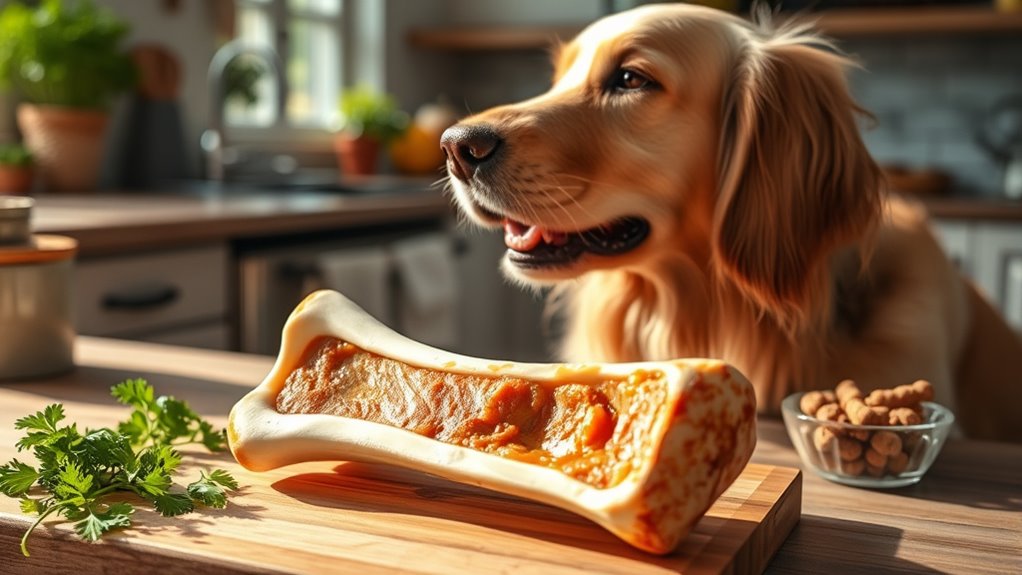
How to Safely Give Beef Marrow Bones to Dogs for Good Health
To safely give your dog beef marrow bones for good health, start by choosing fresh, raw femur or knuckle bones from a trusted source. Ensure the bones are sized appropriately to match your dog’s muzzle to avoid choking hazards.
Rinse and carefully inspect the bones for any cracks or splinters before offering them to your pet. Begin with short, supervised chewing sessions and gradually increase the time if your dog handles the bone well.
Limit marrow bone treats to once or twice a week, and always watch for signs of discomfort or digestive issues. Keep these tips in mind, and you’ll find the best way to boost your dog’s health with marrow bones safely.
Benefits of Beef Marrow Bones for Dogs
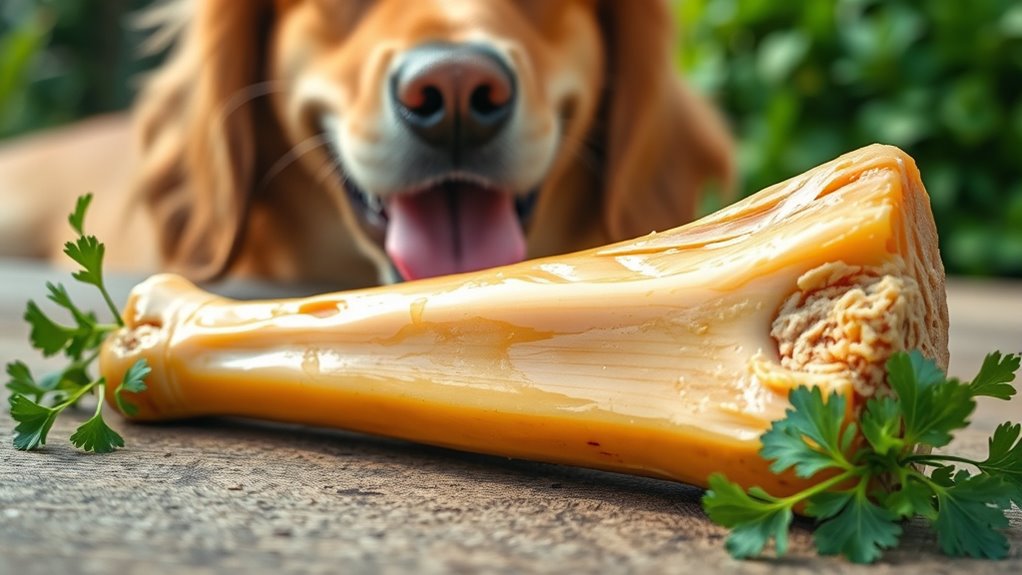
Beef marrow bones offer your dog essential nutrients that support overall health. When you give your dog these bones, they get a rich source of calcium and phosphorus, which are crucial for strong teeth and bones.
The marrow inside is packed with healthy fats that provide energy and promote a shiny coat. Chewing on marrow bones also helps clean your dog’s teeth by reducing plaque and massaging gums, contributing to better oral hygiene.
Marrow bones deliver healthy fats for energy and a shiny coat while naturally cleaning teeth and massaging gums.
Plus, the act of chewing can reduce stress and boredom, keeping your dog mentally stimulated.
You’ll find that incorporating beef marrow bones into your dog’s diet can enhance their physical health and happiness, making it a beneficial treat when given safely and appropriately.
Choosing the Right Type of Beef Marrow Bone
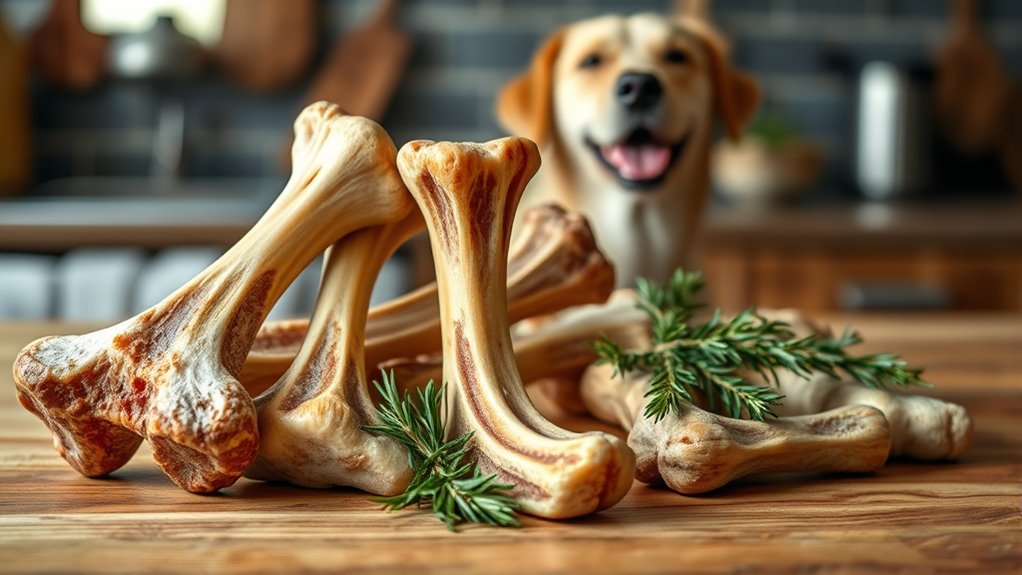
To make the most of the benefits marrow bones offer, you need to pick the right type for your dog. Focus on fresh, raw beef marrow bones rather than cooked ones, as cooking can make bones brittle and unsafe.
Look for femur or knuckle bones, which contain ample marrow and are less likely to splinter. Avoid weight-bearing bones from older animals, as they can be too dense.
Also, choose bones from reputable sources to reduce contamination risks.
| Bone Type | Description |
|---|---|
| Femur | Large, marrow-filled, safe raw |
| Knuckle | Rich in marrow, good size |
| Shank | Less marrow, more cartilage |
| Rib | Small, less marrow, avoid cooked |
| Weight-bearing | Dense, risky, avoid for safety |
Size Matters: Selecting Bones Suitable for Your Dog

Although marrow bones offer great benefits, selecting the right size for your dog is essential to guarantee safety and enjoyment. Too small, and your dog could choke or swallow large pieces; too large, and they might lose interest or struggle to handle it.
To pick the appropriate bone size, consider these points:
- Match the bone length to your dog’s size, ideally at least as long as their muzzle to prevent swallowing whole.
- Ensure the bone’s diameter is thick enough so your dog can’t easily break off large shards.
- Consider your dog’s chewing strength; aggressive chewers need sturdier, larger bones to avoid splintering.
Preparing Beef Marrow Bones for Safe Feeding
When you prepare marrow bones for your dog, proper cleaning and handling are crucial to prevent contamination and guarantee safety. Start by rinsing the bones under cold water to remove any surface debris or blood. Avoid using any soaps or chemicals, as they can be harmful to your dog.
Pat the bones dry with a clean towel. If you’re freezing the bones for later use, wrap them securely to prevent freezer burn.
Before giving the bone to your dog, inspect it for sharp edges or cracks that could splinter.
You can also lightly roast the bones at a low temperature to kill bacteria without making them brittle.
Always store raw bones separately from human food to avoid cross-contamination.
These steps help ensure the marrow bones are safe and enjoyable for your pet.
How to Introduce Marrow Bones Into Your Dog’s Diet
After preparing the marrow bones safely, you’ll want to introduce them gradually into your dog’s diet to monitor their reaction. Start by offering the bone for a short period, allowing your dog to explore the new treat without overwhelming their digestive system.
To do this effectively:
- Give the bone for 10-15 minutes initially to gauge interest and tolerance.
- Observe your dog for any digestive upset or choking hazards during this first exposure.
- Increase the duration slowly over several days if your dog responds well and shows no adverse effects.
Monitoring Your Dog While They Enjoy the Bone
Because marrow bones can pose choking risks and digestive challenges, you need to keep a close eye on your dog while they enjoy the treat. Stay nearby to quickly intervene if they try to swallow large bone fragments or start coughing.
Watch for signs of discomfort, like pawing at the mouth or gagging. Make sure your dog chews slowly and doesn’t gulp pieces down.
If your dog is new to marrow bones, shorter sessions help you gauge their chewing habits safely. Remove the bone once it becomes small enough to swallow whole or if your dog loses interest.
Potential Risks and How to Avoid Them
Although marrow bones offer great nutritional benefits, they also come with risks that you need to manage carefully. To keep your dog safe, focus on these key precautions:
Marrow bones provide nutrition but require careful handling to avoid health and safety risks for your dog.
- Choking hazards: Choose appropriately sized bones to prevent choking. Avoid small or brittle bones that can splinter.
- Digestive issues: Too much marrow can cause upset stomach or diarrhea. Introduce bones gradually and watch for reactions.
- Dental damage: Hard bones might crack teeth. Limit chewing sessions and inspect bones for sharp edges.
Frequency and Portion Control for Bone Treats
Managing the risks of marrow bones goes hand in hand with controlling how often and how much your dog gets. You should limit marrow bone treats to once or twice a week to avoid digestive upset or excessive calorie intake.
Serving too many bones can lead to constipation or obesity, so keep portions appropriate to your dog’s size and activity level. A large marrow bone for a big dog is fine, but smaller dogs need smaller bones or shorter chew times.
Always supervise your dog while they enjoy their bone and remove it before it becomes small enough to swallow whole.
Alternatives to Beef Marrow Bones for Dental Health
If you’re looking to support your dog’s dental health without using beef marrow bones, there are several effective alternatives you can try. These options help reduce plaque and keep your dog’s teeth strong and clean.
- Dental Chews: Specially designed to scrape away plaque and freshen breath, dental chews are a safe, convenient choice.
- Rubber or Nylon Chew Toys: These durable toys encourage chewing, which naturally cleans teeth and massages gums without splintering risks.
- Raw Vegetables: Crunchy veggies like carrots and celery can provide a natural abrasive action that helps maintain oral hygiene.
Frequently Asked Questions
Can Puppies Safely Chew on Beef Marrow Bones?
You shouldn’t give puppies beef marrow bones because their teeth and digestive systems are still developing. Instead, choose softer chew toys or vet-approved treats to keep them safe and healthy while satisfying their chewing needs.
How Should Beef Marrow Bones Be Stored Before Feeding?
You should store beef marrow bones in the refrigerator if you plan to feed them within a few days. For longer storage, freeze them to keep them fresh and safe for your dog’s health.
Are Cooked Marrow Bones Safe for Dogs to Eat?
Though a knight of old might prize a cooked marrow bone, you shouldn’t give them to your dog. Cooked bones splinter easily, risking choking or internal injury. Always opt for raw marrow bones instead.
Can Beef Marrow Bones Cause Allergies in Dogs?
Yes, beef marrow bones can cause allergies in some dogs, especially if they have food sensitivities. Watch for itching, swelling, or digestive upset.
If your dog shows symptoms, stop giving the bones and consult your vet.
What Signs Indicate My Dog Dislikes Marrow Bones?
If your dog dramatically turns away or snubs the marrow bone like it’s a horror movie villain, that’s a clear sign they dislike it.
Watch for drooling, pawing at the mouth, or sudden disinterest as well.
Conclusion
Giving your dog beef marrow bones can be a real win-win for their health and happiness. Just remember to pick the right size, prepare them safely, and keep a close eye while your furry friend enjoys their treat.
Don’t bite off more than you can chew—introduce bones gradually and stick to a healthy routine.
With the right care, marrow bones can be a tasty way to boost your dog’s dental and overall well-being. Safely giving beef marrow bones to dogs is key to promoting good health and happiness.